

October 21, 2026, 10:57 am | Read time: 5 minutes
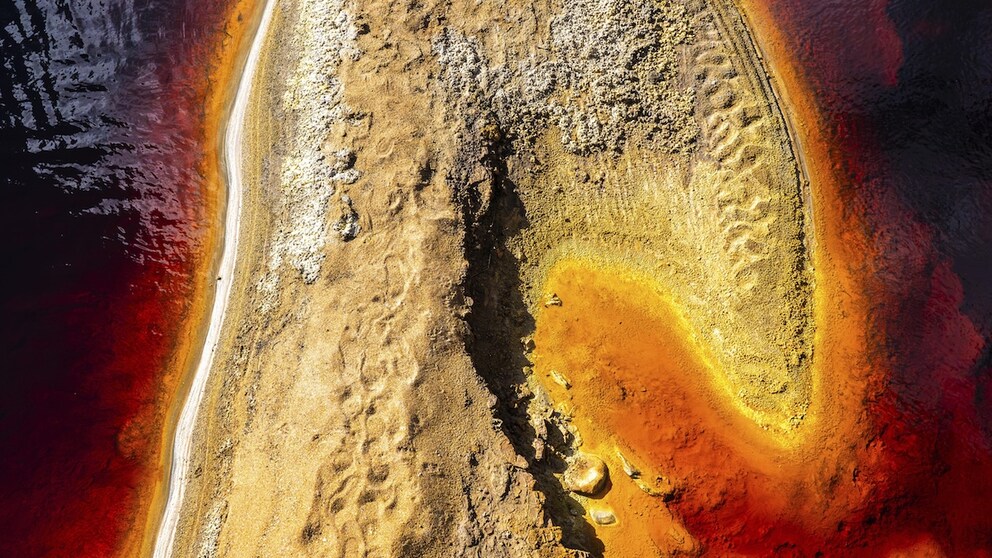
The Rio Tinto River, flowing through the Andalusian province of Huelva, is one of the most extraordinary habitats in the world. Its rust-red water has made it famous far beyond Spain’s borders. For a long time, it was believed that this coloration was due to waste products from the world’s oldest mining area, also located in the region. Then scientists discovered the true, astonishing explanation. Since then, even NASA has taken an interest in the area.
A unique body of water flows through the Spanish province of Huelva in Andalusia. The Rio Tinto, as it is called, originates in the Sierra de Padre Caro and, after nearly 100 kilometers, reaches the mouth of the Río Huelva, where it merges with the Rio Odiel. However, the unusual aspect of the river is not its course but its rust-red color. This early on piqued scientists’ interest in the river. It quickly seemed clear that waste products from the world’s oldest mining area in the Rio Tinto basin were responsible for the unusual coloration. But only recently did they uncover the true origin of why the Rio Tinto has rust-red water. Since then, it has even become significant for space research.
According to the “Fundación Rio Tinto,” the river exhibits several highly unusual properties for a body of water. First and foremost, of course, is its rust-red color. It was long suspected that this was caused by metal residues, which have been mined in the region for over 5,000 years. The Cuchillares mine is documented here as early as the 3rd millennium BC. Greeks and Phoenicians mined metals and minerals here, as did the Romans later. Under their rule, the region developed into a significant center for silver mining. Since then, and until its closure in 2001, the mining area was continuously operated. However, this is not the reason for the unique coloration of the Rio Tinto.
Similar Conditions to Those on Mars
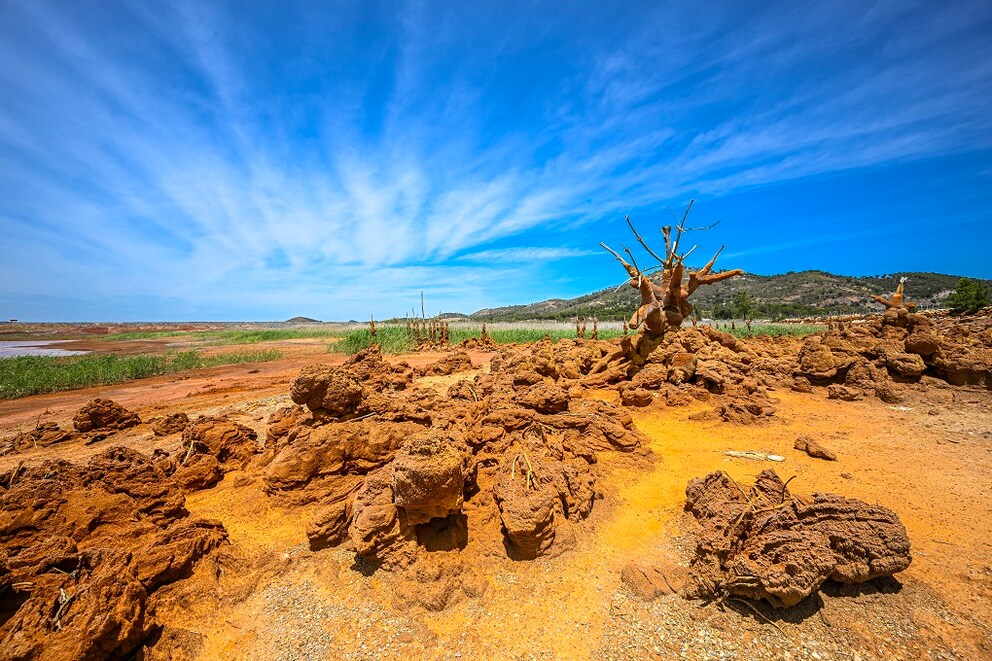
This river is not only rust-red but also remarkable in other ways.
Its water has an extremely low pH value, meaning it is very acidic, and it is also low in oxygen. However, it has an extremely high content of heavy metals, primarily iron, which is responsible for the red water color. Manganese, cadmium, and copper have also been detected here. It’s hard to believe that the Rio Tinto is a unique habitat worldwide because of this. Not for complex organisms, but single-celled and multicellular organisms abound in its water. Scientists have identified bacteria and over a thousand species of fungi. Otherwise, the area around the river looks like a Martian landscape due to the acidic soil. And this very fact makes it interesting for NASA.
Also interesting: Lonar Lake: This lake in India can change its color
Researchers believe that the region around the Rio Tinto likely has similar living conditions to those on Mars. According to the U.S. space agency, the river offers ideal astrobiological conditions in an extremely acidic environment. It is believed that under similar conditions on the Red Planet, life could also arise or already exist. Therefore, researchers launched a special drilling project here, as a test version under the most realistic conditions possible, which could one day be used on Mars. It is named MARTE (Mars Astrobiology Rio Tinto Experiment) in reference to the Spanish name for the planet.
How Does the Rust-Red Water Color Form?
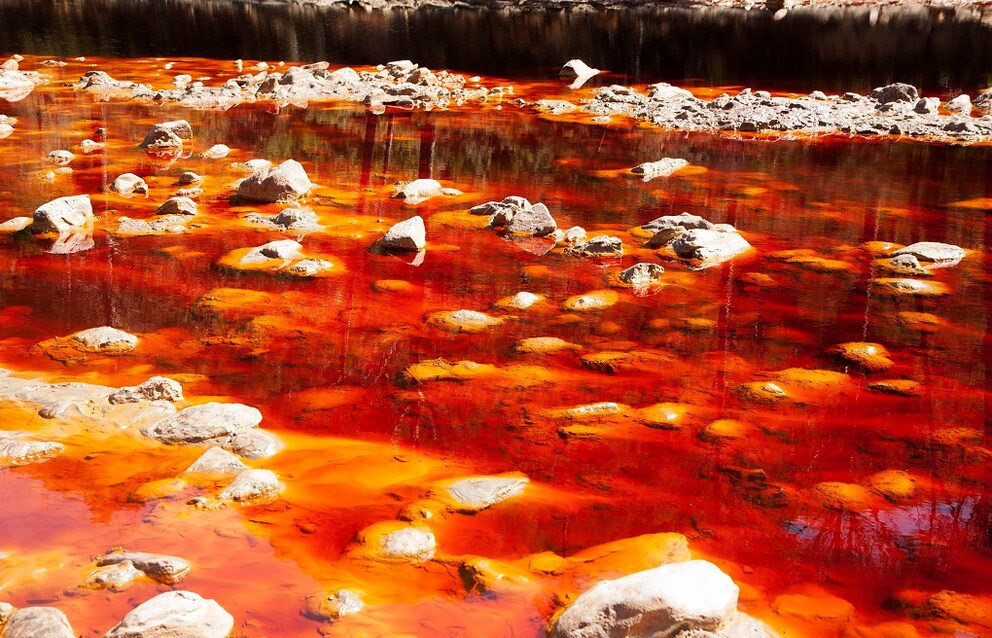
But how exactly does the unique coloration of the Rio Tinto occur? According to the “Fundación Aquae,” so-called chemolithotrophic organisms are responsible. This could be translated as “rock eaters,” as these microorganisms indeed “consume” inorganic substances, such as minerals, by oxidizing them. They use these inorganic compounds as substrates to gain energy and use it in their respiratory metabolism. This ability is called chemosynthesis. The bacteria living in the water “breathe” the iron present in it and convert it into so-called iron(III) sulfate. Through this conversion, the metal imparts its own rust-red color to the water.
Also interesting: Laguna de Torrevieja: Spain’s pink lake
It’s hard to believe that this environment, hostile to human life, has now become one of the biggest tourist attractions in the province of Huelva. The “Fundación Rio Tinto,” which manages the legacy of millennia of mining, is partly responsible for this. Inspired by models in the United Kingdom and Germany, there were already considerations in 1987 to make the region accessible and attractive to visitors. Thus, the historic mining railway was converted into a visitor train, and the old hospital for the miners into a mining museum. Starting in 1996, old mining facilities were restored and turned into tourist attractions.
In the course of the work, more than 1,000 people were trained in various trades in collaboration with vocational schools. The foundation emerged from the last operating company of the mining area, Rio Tinto Minera. It is now funded through various grants and public funding programs. The course of the rust-red river is now designated as a protected landscape area.