

August 26, 2026, 10:03 am | Read time: 5 minutes
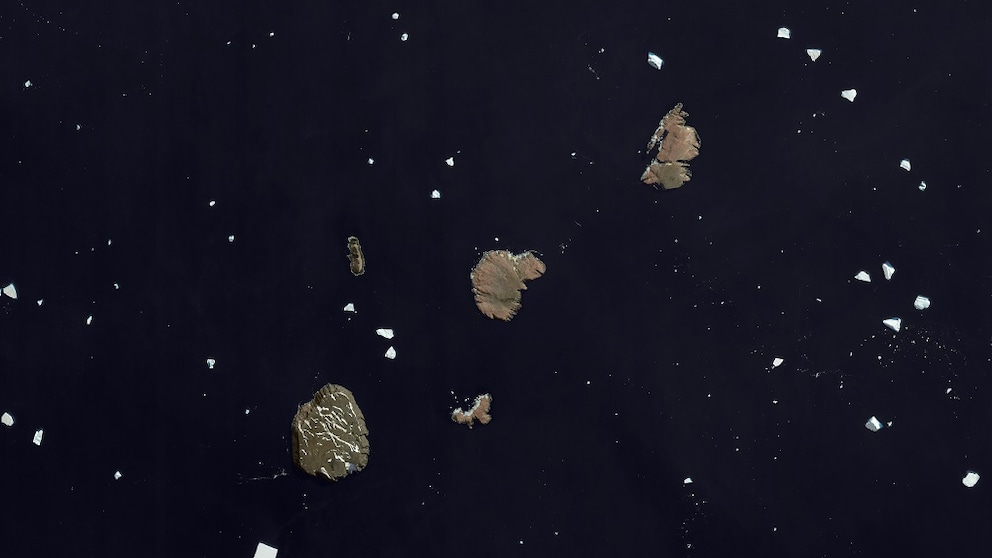
For more than 30 years, Germany has been committed to environmental protection in Antarctica. Under the cryptic name ASPA No. 180, the seven-island archipelago of the Danger Islands has been designated as a protected area initiated by the Federal Republic since June 2024. Among other things, the aim is to preserve the home of the world’s largest colony of Adélie penguins. In fact, there was already a first expedition to the extremely remote islands in November 2025, with more to follow.
ASPA No. 180. Behind this designation lies a project in which Germany is committed to environmental protection. But not in the Federal Republic itself, rather at the other end of the world, in Antarctica. More specifically, on the Danger Islands archipelago, which covers only 4.5 square kilometers and consists of seven islands. Only a few people have ever set foot there, and it is home to the world’s largest colony of Adélie penguins. It is now recognized as a protected area initiated by the Federal Republic under the Antarctic Treaty. A selected team of German scientists was actually on site in November 2025.
ASPA, in plain language according to the Federal Environment Agency involved in the project, stands for Antarctic Specially Protected Area. The Danger Islands are located at the northeastern tip of the Antarctic Peninsula. The Otto-von-Gruber Mountains in Queen Maud Land in East Antarctica were also in the final selection for the first German protected area. In collaboration with the United States, the final proposal for the Danger Islands was submitted and accepted at the annual Antarctic Treaty Consultative Meeting.
Germany Has Been Involved Since 1979
The original Antarctic Treaty was signed by the first twelve countries in 1959 and came into force in 1961. Among other things, it requires member states to completely renounce territorial claims in Antarctica. It also prohibits military activities and promotes scientific cooperation among members. Germany has been active in the association since 1979 and has had a consultative role in decision-making since 1981. Since 1998, the so-called “Madrid Protocol” has also protected Antarctica and thus the Danger Islands.
Fritz Hertel, an ecologist and member of the Polar Team at the Federal Environment Agency, explains Germany’s ambitions upon request from TRAVELBOOK: “Our status not only brings rights but also obligations. Our community wants to build an entire network of protected zones. Currently, we have 76 of these areas across Antarctica.” Regarding investments on the continent, Germany ranks about fifth among the 58 treaty states today. The plan for the Danger Islands has been in the works since 2016, overcoming “numerous formal hurdles.”
Regular Expeditions
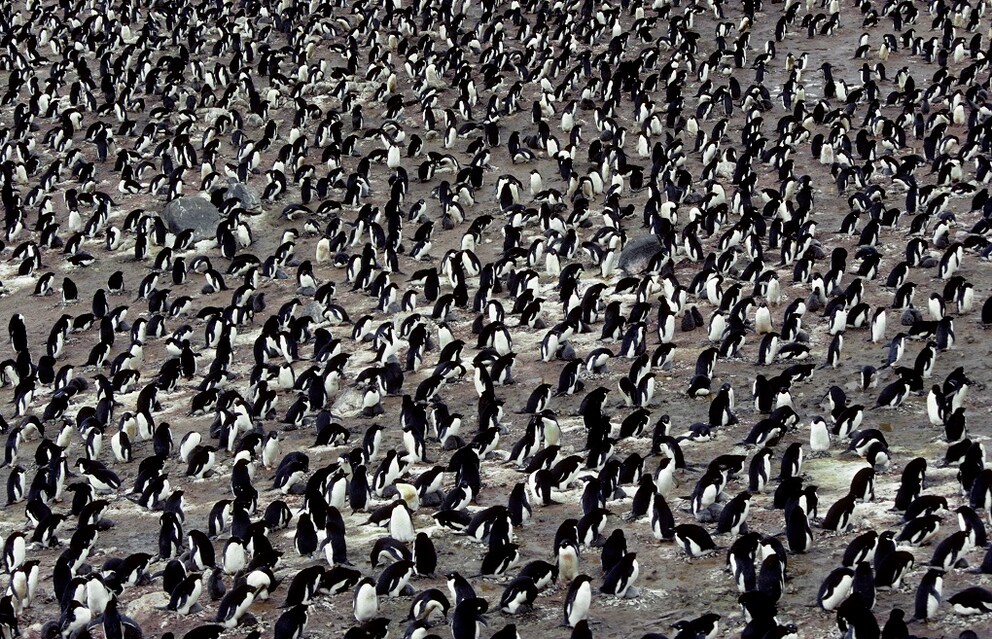
The high diversity of bird species breeding on the Danger Islands is a key argument for Germany’s commitment in Antarctica. A total of ten species find a temporary home there. Notably, the world’s largest colony of Adélie penguins, which according to a recent count, numbers more than one million animals. The aim is to monitor them long-term, map breeding sites and vegetation using drones, and examine the seabirds for diseases. However, the German protected area currently only includes the islands themselves, not the sea in between. “Every five years, we must review and, if necessary, adjust our management plans,” Hertel explains.
Germany has taken on not only the protection but also the responsibility for managing the area. Regular on-site inspections are planned to ensure the task can be fulfilled. According to the Federal Environment Agency, “To detect changes on site, it is necessary to visit the area regularly.” Indeed, there was already a first expedition to the Danger Islands in November 2025, involving bird experts, geologists, and ecologists. The team set sail on the “Malizia Explorer” under the well-known skipper Boris Herrmann.
This Is the Loneliest Island in the World

12 Little-Known Islands in Germany
Crowning Achievement of a Lifetime
Hertel, who has been to Antarctica many times, fondly remembers the journey. “We were on the road for a total of three weeks from Ushuaia, Argentina, in Tierra del Fuego. Unexpected ice formation of up to 100 percent repeatedly challenged us, and we sometimes had to wait out storms that regularly occur in this region. Standing on the islands, which I had only known from theory all these years, was overwhelming.” Laughing, he adds, “The countless penguins also contribute to the smell caused by bird guano.” Ultimately, the visit confirmed that everything had been done correctly. Hertel has worked in polar research for more than 20 years.
Germany’s long-term goal is to also protect the waters around the Danger Islands. According to Hertel, these need to be protected from fishing. However, further research is needed before this can happen. In fact, the Federal Republic can imagine taking on a second protected area, namely the previously mentioned Otto-von-Gruber Mountains with peaks up to 2,800 meters high. A unique, nearly extinct bacterial life form up to 3.5 billion years old is found here. Additionally, one of the largest known colonies of snow petrels lives there. The proposal is to be finally submitted at the Antarctic Treaty Consultative Meeting in 2027. The next expedition to the Danger Islands is also planned for 2027.
Where Does the Name Come From?
But where did the Danger Islands, literally translated as the Islands of Danger, get their name? Well, it was given to them in 1842 by a British expedition led by the legendary Captain James Clark Ross, whose ship nearly ran aground on one of the islands. Today, according to the Alfred Wegener Institute, the islands must be “comprehensively protected from negative impacts of human activities.” This also refers to the increasing tourism in the region. Additionally, climate change is more noticeable on the Antarctic Peninsula than on the rest of the continent. As a result of the protection status, the Danger Islands may only be entered with a special permit for research and management purposes.