

March 8, 2026, 1:32 pm | Read time: 5 minutes
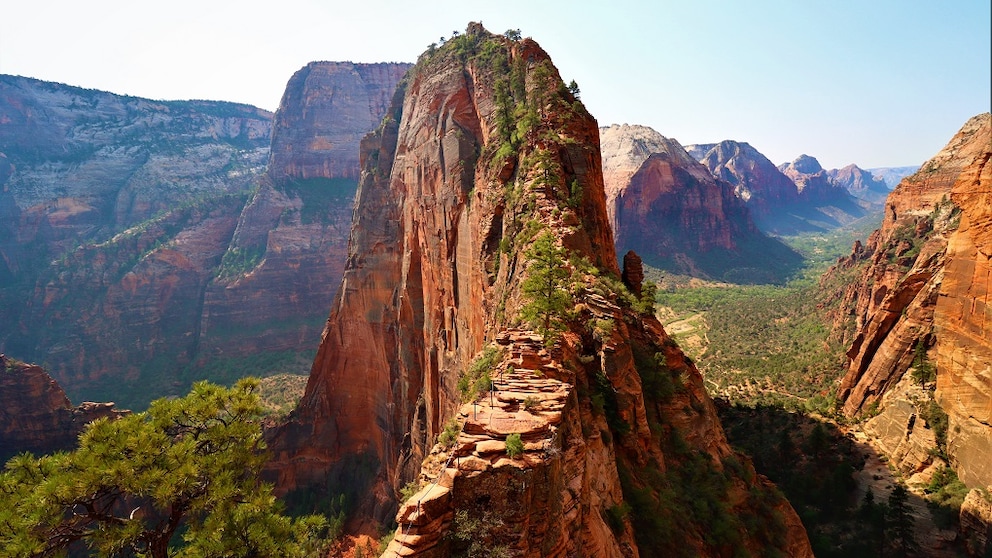
Angels Landing is a unique mountain in Zion National Park in the U.S. state of Utah. As beautiful as the summit is, it is equally dangerous. Since the turn of the millennium, more than a dozen hikers have died here in accidents. The trail is considered one of the most dangerous hiking paths in the world. Yet, there is a massive influx of visitors.
Would you be willing to risk your health or even your life to conquer a summit? Most would likely answer this rhetorical question with a resounding no. Yet, there is a mountain in Zion National Park in Utah that seems to magically attract hikers, despite its deadly danger. An otherworldly beautiful rock known as Angels Landing—the landing place of angels. But what makes the hike so fascinating that people repeatedly risk their entire existence for it? TRAVELBOOK explains the unique trail.
With a height of 1,756 meters, the summit of Angels Landing is not exactly a giant, yet according to the official tourism website of Utah, 13 people have fallen to their deaths here since the turn of the millennium. Other websites report 15 or 20 confirmed fatal accidents. The hike itself is not particularly dangerous or technically demanding, except for the last stretch. And that part is truly challenging. Only those who dare to cross a very narrow ridge, where the rock drops hundreds of meters vertically on both sides of the path, will reach the legendary landing place of angels and be rewarded with a truly breathtaking view.
Angels Landing was named in 1916 by politician Frederick Vining Fisher. During a trip to Zion National Park, he saw the summit and reportedly exclaimed that only an angel could land there. Previously, the mountain bore the equally poetic name “Temple of Aeolus,” named after the Greek god of the winds. Just eight years later, construction of the hiking trail to the spectacular rock began. Since 1926, the trail has been open and has attracted countless adventurers and nature lovers. “Angels Landing in Zion National Park is one of the most spectacular day hikes in the world,” states the Utah tourism website about the trail.
Strong Nerves an Advantage
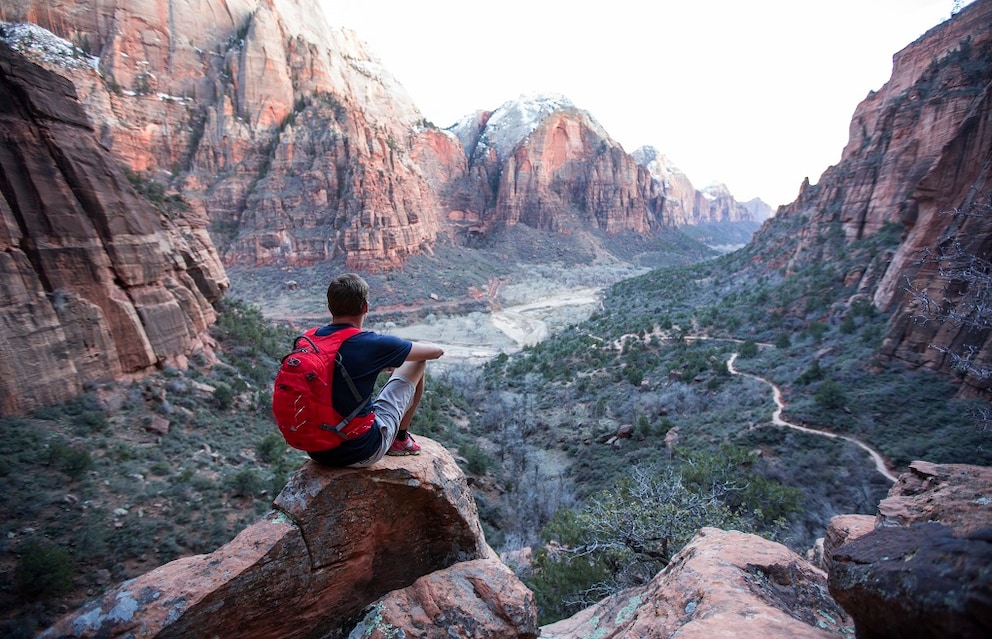
The tour to Angels Landing starts off relatively relaxed. The hike begins at the Grotto Trailhead. If desired, a National Park Service shuttle can drop you off there for just a one-dollar fee. After crossing the Virgin River via a bridge, you pass through Refrigerator Canyon for a while. At the end of this canyon, the sweaty, strenuous, and dangerous part of the tour begins. From here, there’s only one direction: steeply uphill. First, over a stretch of 21 switchbacks known as “Walter’s Wiggles.” These allow you to gain a significant amount of elevation in a short time. They are named after Walter Ruesch, the first director of Zion National Park.

Those who master this section reach a plateau called Scout Lookout. From here, you already have an unparalleled panoramic view of Zion Canyon and the landscape lying deep below, characterized by its rust-red mountains. For the last 150 meters to Angels Landing, strong nerves are required, as the path is now extremely narrow and only partially secured with chains. Here, it’s best to look straight ahead, as dizzying chasms open up on both sides of the path. This section is also responsible for the numerous fatal falls. The official website comments: “You don’t need superhuman nerves, but even experienced hikers must remain vigilant throughout the tour.”
Allocation by Lottery

The reward for the effort, which repeatedly leads people to risk their lives, is an unforgettable 360-degree panoramic view of the vast, rugged land. Anyone who has made the ascent may truly feel like an angel. Pictures and videos of climbing Angels Landing are enough to give ordinary mortals goosebumps. Despite its potential dangers, the trail is so popular that spots are extremely limited and allocated through a daily online lottery by the U.S. National Park Service. The limitation of daily hiker numbers primarily serves general safety during peak season. Participation in the lottery currently costs six dollars.
About five million people visit Zion National Park each year, and since 2022, more than 400,000 permits have been issued for climbing Angels Landing. These are valid for three different time slots daily and are issued either one to three months in advance or for last-minute visitors the day before. Please refer to the National Park Service website for all conditions for participation. Depending on fitness level, the hike to the landing place of angels can take up to four hours. The most recommended time for this is from early spring to fall. Summer should be avoided due to possible extreme heat. The same applies to holidays like July 4, as Zion National Park can be particularly crowded then. The tour is strongly discouraged in unfavorable weather conditions. By the way, those who only want to hike to Scout Lookout do not need a permit.