

January 21, 2026, 10:52 am | Read time: 5 minutes
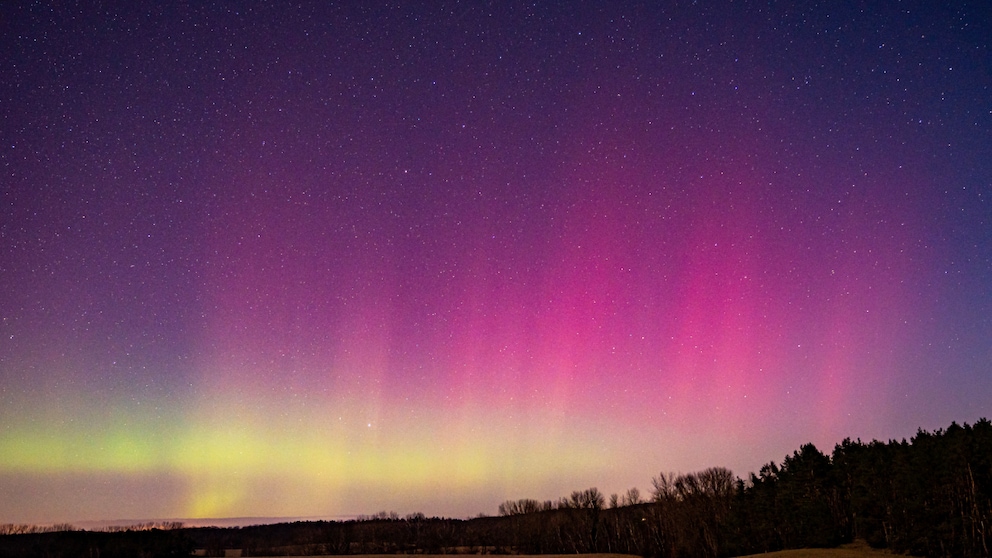
Seeing the Northern Lights with your own eyes is likely on many people’s bucket lists. Magical, fascinating, and unique every time, the natural spectacle of the Northern Lights occurs mainly in the fall and winter months. TRAVELBOOK explains what these celestial lights are and how to have the best chance of experiencing them.
The Northern Lights (scientifically: “Aurora borealis”) captivate people worldwide. To witness this special natural display, many travelers head to Scandinavia and Canada. However, this fascinating natural phenomenon can also be observed in other parts of the world. Even in Germany, the Northern Lights are occasionally spotted. Why this happens and how these fascinating celestial lights are formed, you can learn here.
Overview
Why are Northern Lights seen in Germany?
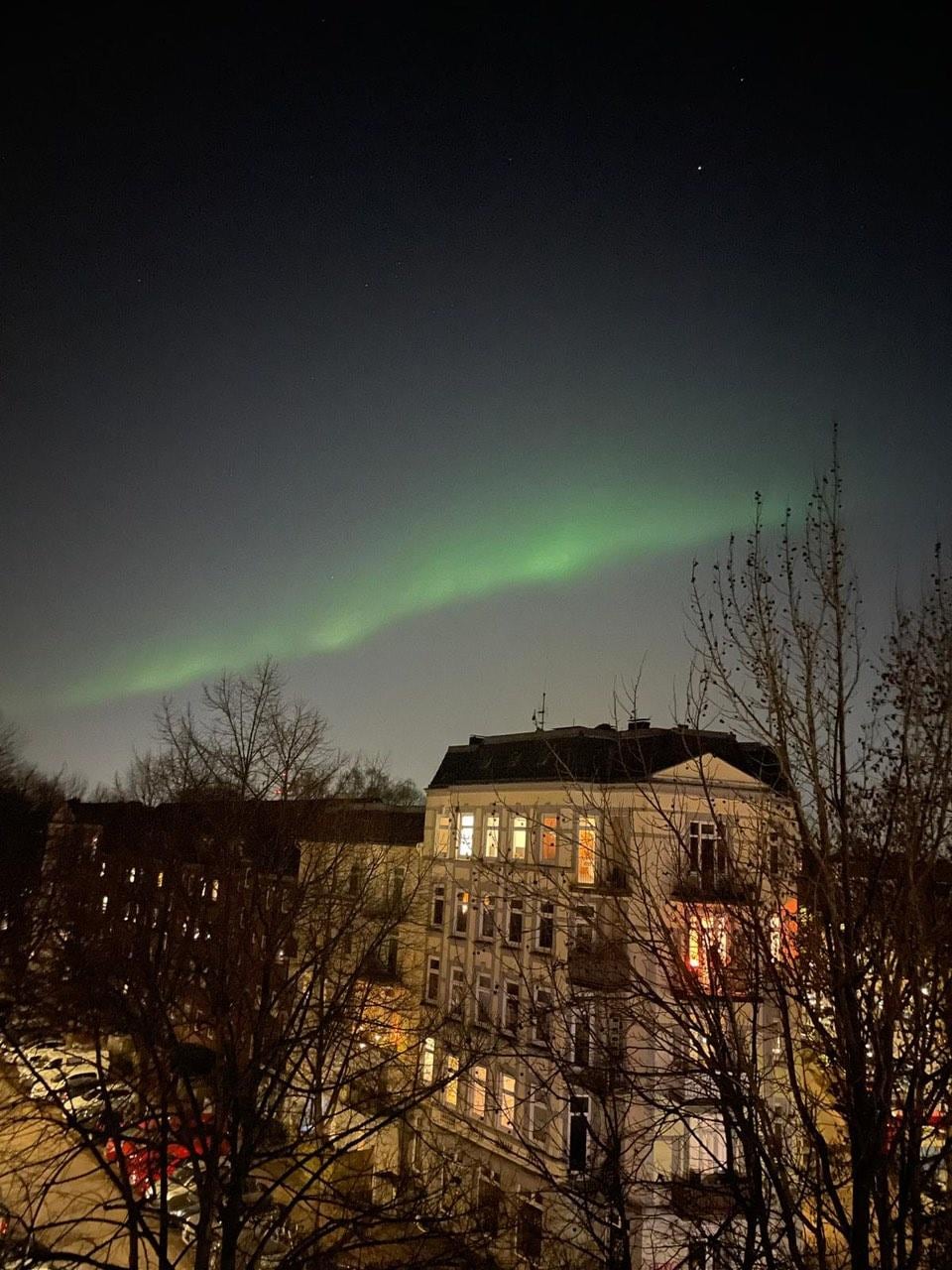
Recently, you didn’t have to travel far to experience the spectacular Northern Lights. Many were lucky enough to see the lights in the sky right here in Germany. Since around 2024, the colorful spectacle has been observed more frequently. But why is that? The answer is simple: The sun’s activity follows an approximately 11-year cycle. As the sun’s activity increases or decreases, so does the number of solar storms, writes “National Geographic.” The lowest activity was last recorded at the end of 2019. The next maximum is between 2024 and 2026–so right now. For this reason, we occasionally have the chance to see the Northern Lights here in Germany. In fact, there is even a website that predicts the Northern Lights in Germany.
Where else can you see the Northern Lights?
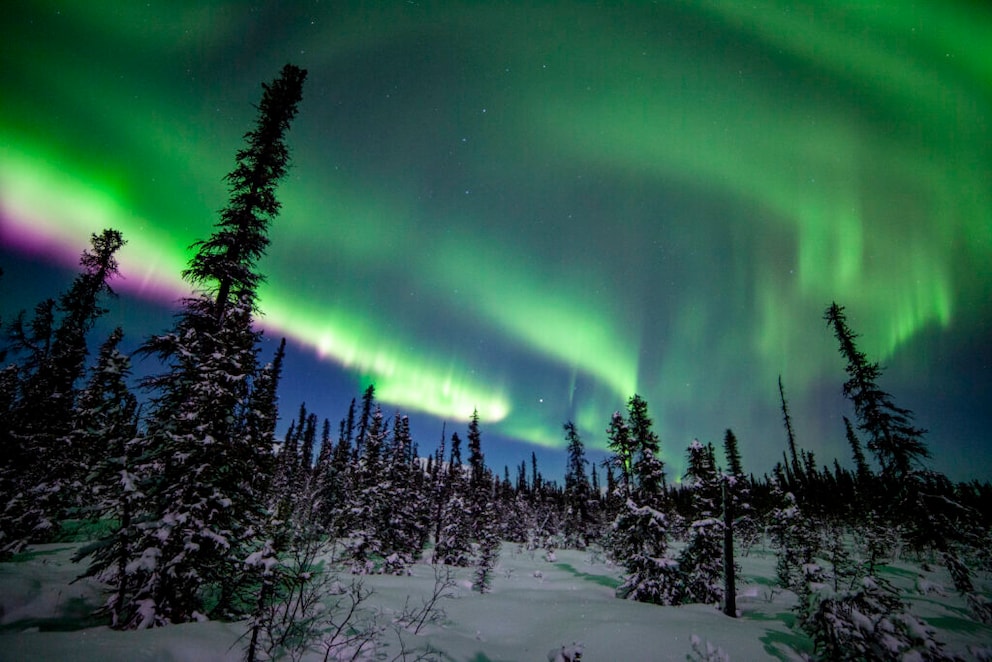
As the name of these celestial phenomena suggests, the lights are mainly visible in the polar regions. The Earth’s magnetic field ensures that the charged particles primarily remain in the polar region. Northern Lights are best seen in the Northern Hemisphere in Norway and Iceland. In the Southern Hemisphere, Australia, New Zealand, and southern parts of Argentina are good places to discover the lights.
Under good conditions, the celestial glow can also be observed in Astrid Lindgren’s homeland, Sweden. Abisko in northern Sweden is considered one of the best places in the world to see the Northern Lights.
Also interesting: The best tips for an Iceland vacation
When is the season for Northern Lights?
The “Northern Lights season” on the Northern Hemisphere spans from September to March. During this time, the lights are best discovered because the nights are longer. Therefore, it tends to be too bright between April and August. The best condition for observing the Northern Lights is a clear sky. Clouds or city light pollution may obscure the Northern Lights, making them invisible to us. So, if you want to see the glow with a high probability and without aids, plan your trip north between September and March. Additionally, patience is essential, as several factors are relevant for spotting the lights. On the Southern Hemisphere, the Northern Lights are best seen from March to September.
How do Northern Lights form?
The solar wind sends electrons in all directions, which excite the oxygen and nitrogen atoms within the Earth’s atmosphere. When the atoms return to their normal state, they emit light. From 100 to 400 kilometers away from this interaction, on Earth, we see this as the Northern Lights. Depending on which atoms are excited, a different color appears in the sky.
Also interesting: The impressive and almost unknown sister of the Northern Lights
Here are the Best Tips for Taking Pictures of the Northern Lights
Why the Sun Doesn’t Rise in These Places for Several Weeks
How do the colors form?
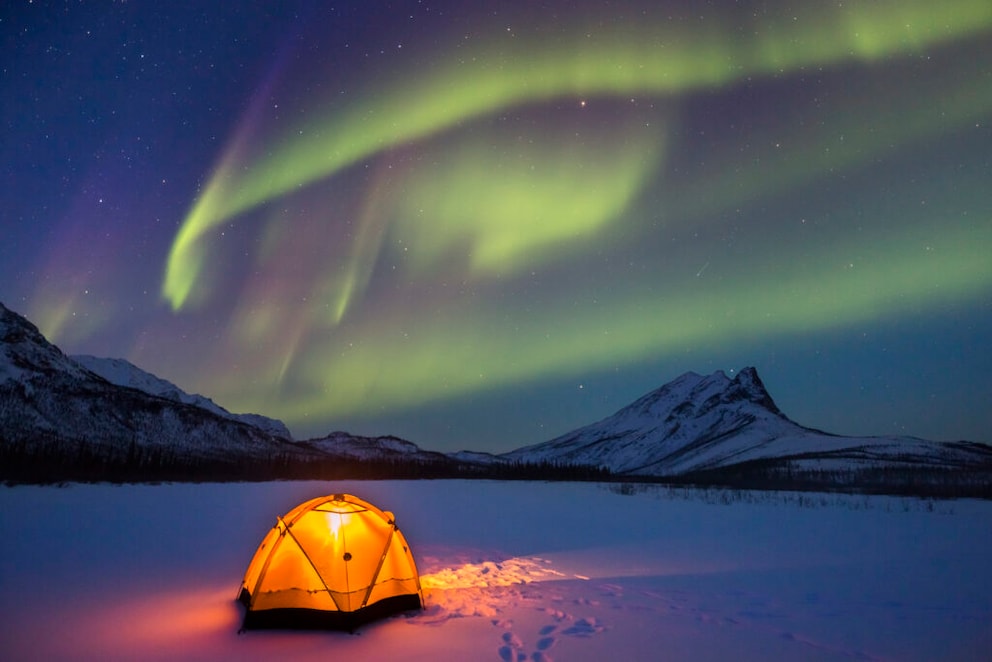
In red, green, blue, and various mixed colors, the luminous phenomena roll across the sky. The color of the Northern Lights depends on which excited atom emits the light. Additionally, the height and region of the atmosphere where it occurs are relevant. If the particles collide with oxygen atoms at a height of about 100 to 150 kilometers, green Northern Lights appear. At a height of 150 to 600 kilometers, red, blue, and violet colors are produced by excited nitrogen atoms. Mixed colors like pink, yellow, or white can also occur.
How to photograph the Northern Lights?
Since Northern Lights move at very different speeds, there is no general guide for photographers. To achieve good results, you must experiment anew depending on the situation. Northern Lights photography means night photography–to shorten the exposure time, a DSLR camera with a fast lens is essential. To capture as much as possible in the frame and achieve spatial depth, a wide-angle lens is recommended. The exposure time should not exceed 10 seconds; otherwise, increase the ISO setting. Autofocus does not work in Northern Lights photography, and the same goes for the flash–the polar glow is simply too far away. So: focus on “infinity” and turn off the flash! A tripod and a remote shutter release are highly recommended accessories.