

August 5, 2026, 8:50 am | Read time: 6 minutes
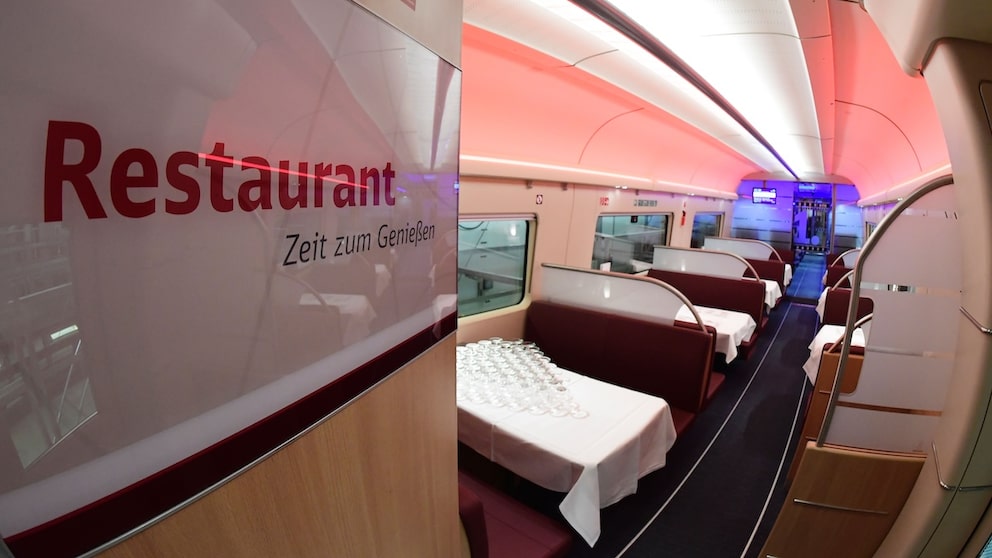
There are passengers who appreciate the Deutsche Bahn’s culinary offerings. Others criticize what they see as heavily processed ready-made meals that are merely heated on board. In conversations with on-board catering staff, TRAVELBOOK gained some fascinating insights–and learned about the strict hygiene standards of the system catering, which can at least dispel any concerns about the safety of the food. But the other facts below were also new to the editorial team.
“The hygiene regulations in the DB restaurant are incredibly strict.” This is assured by a so-called on-board stewardess in a TRAVELBOOK interview; she wishes to remain anonymous. As she reports, she and her colleagues must always be prepared for inspections by the boss–in the past, even food inspectors would come by.
Hygiene standards according to the HACCP guidelines apply, ensuring seamless documentation of cooling chains and food safety. To be proficient in this, employees–even if they “only have to heat pre-packaged food”–undergo two years of training in the catering sector. Additionally, they receive ongoing training in food safety and hygiene.
So, it’s an optimized system catering. You can enjoy it without worry on a trip! And indeed, various dishes on the menu are popular with passengers–some particularly so. Which do you think ranks number one in popularity? We bet you guessed the wrong sausage!
This is the most popular dish in the on-board restaurant
Sure, the currywurst is a perennial favorite in the DB on-board restaurant and bistro. Usually, there is at least one passenger on every trip who orders it, the employee says. But as you may have heard, due to new EU regulations on refrigerants, the railway is phasing out its on-board freezers–and therefore removing fries from the menus. This has been reported by outlets such as “Tagesschau.” It’s quite possible that this change will slightly reduce the classic’s popularity. Recently, another dish has overtaken it in this regard anyway.
“The most popular dish has been the Red Thai Curry for some time now,” the on-board stewardess knows. It is a vegan dish made from vegetables, shiitake mushrooms, and basmati rice. Recently, chicken tikka masala has also been ordered frequently. However, as a connoisseur of Indian cuisine, she can’t quite understand the appeal…
Every shift is also a journey into the unknown
This doesn’t just mean that on-board catering staff can encounter a wide variety of customers during each shift. As the informant explains to TRAVELBOOK, there is no handover or anything similar between crews. In her job, the teams only find out upon entering the on-board kitchen (galley) whether the restaurant and bistro have the full range of offerings–or can even open at all.
From power supply to cooling to the coffee machine: If there is a technical defect, operations on board can quickly be limited. And sometimes it’s about much more than a broken coffee machine. As the on-board stewardess reveals, a dishwasher defect can cause the entire galley to be flooded. Then, the team on duty first has to mop up. “It’s not uncommon for us to have to clean up before we can even open.”
Passengers don’t need to lurk in front of the closed bistro to ambush the shift-leading colleague with questions about when and what food will be available. Because even the staff only find out when they enter the on-board kitchen and can assess the situation.
No phone calls allowed in on-board catering
You might already know this fact–after all, according to the on-board stewardess, there are signs with phone prohibition symbols everywhere in the dining car. Since 2024, the use of mobile phones in the on-board restaurant is officially no longer desired. In practice, however, most on-board catering staff are not that strict: Short conversations that do not disturb other guests are usually tolerated.
What has been officially allowed for some time now, although it was previously prohibited, is working on a laptop in the on-board restaurant. Deutsche Bahn has relaxed the corresponding rule–the reason is unknown. “Most colleagues find it much more annoying than phone calls,” the TRAVELBOOK informant reveals. “When people sit there with laptops, it feels uncomfortable and, according to some employees, is detrimental to sales.”
Favorite dish sold out? Maybe not at the next station
The DB catering never knows for sure how many guests it will serve on a trip. To be as well-prepared as possible, the basic stock is replenished approximately every 48 hours. The required quantity is based on previous sales figures, explains DB in a YouTube video.
If certain products run out faster than expected or individual dishes are completely sold out, the staff can arrange for a restock, our informant explains. For this, she contacts one of the nine DB logistics centers. The needed items can then be provided at a suitable restock station and brought on board there.
This means: If you’re craving, for example, the popular Thai curry but it’s sold out, you might–depending on the duration of your ride, of course–still get to enjoy it at the next station.

DB Employees Warn: “Many Passengers Are Very Reckless”

DB Employees Warn: “Many Passengers Are Very Reckless”
Many employees in the DB restaurant were once flight attendants
…or worked in traditional gastronomy–like our insider. What brought her to the train? The COVID-19 pandemic. As you surely remember, gastronomic businesses had to remain closed temporarily due to COVID-19 protection measures. “An old colleague gave me the tip back then to apply to Deutsche Bahn. They were always looking for employees.”
But if she once worked in “real” gastronomy: Does she enjoy the job in the on-board restaurant, which some colleagues dismissively call “reheaters”? “Absolutely! The working hours are much better. And I can sit in between. That wouldn’t have been possible in my previous job.” She is also more than satisfied with her salary, according to the on-board stewardess.
The aviation industry was also known to be hard hit by the consequences of the COVID-19 measures. Airlines canceled flights, employees were put on short-time work, or lost their jobs. For flight attendants and other aviation employees, Deutsche Bahn became an interesting alternative. Especially since the existing experience fits well with the job.
DB catering staff must not overwork themselves
What clearly distinguishes Deutsche Bahn’s on-board catering from gastronomy beyond the tracks are the strict limits within which the crew’s working hours operate.
For understanding. As is well known, not everything at Deutsche Bahn always runs according to schedule–trains are delayed, connections are missed, and occasionally a trip is even canceled entirely. This is annoying for travelers and can also have consequences for the staff on board.
A shift usually lasts around eight hours. Delays or other disruptions can extend the service. But the crew is subject to legal limits on working hours and mandatory rest periods. In extreme cases, this can mean that the on-board catering must close during an ongoing trip because the employees have to end their shift. And this doesn’t change, even if passengers would still like to order something to eat or drink.