


December 28, 2021, 3:33 pm | Read time: 3 minutes
Japan is considered exemplary in terms of transportation planning. The rail system, in particular, impresses with its ultra-punctual high-speed trains that travel at speeds of up to 600 km/h and more. While the latest Japanese invention is far from reaching such top speeds, it features a technology currently used only in Japan.
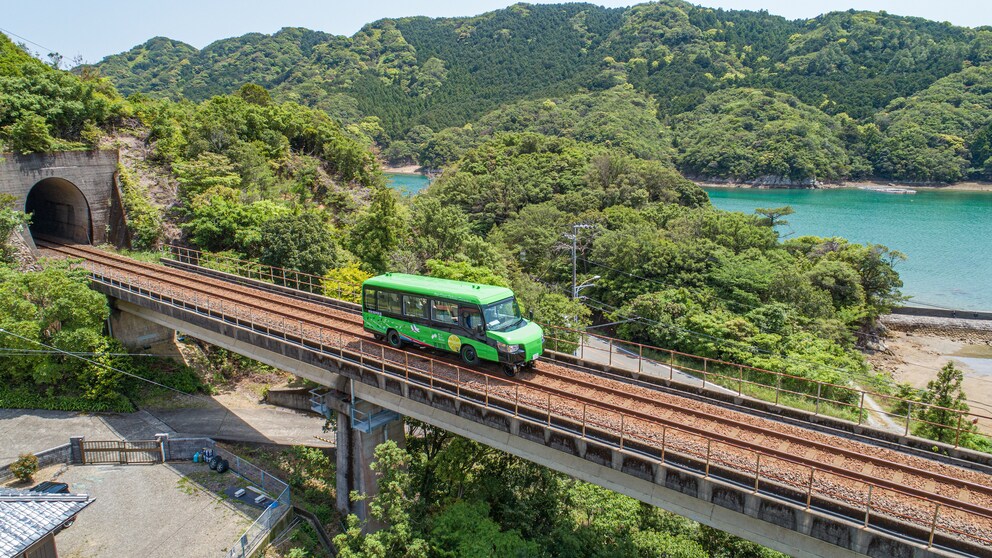
On December 25, it finally happened: For the first time, travelers on the Setouchi Islands could journey from the cultural facility Awa Kainan Bunka Mura in Tokushima Prefecture to the nearly 120-kilometer-distant marina Umi no Eki Toromu (Kochi Prefecture) using public transportation without having to transfer even once. Yet, during their trip, they traveled both on rails and roads. This is made possible by the so-called “Dual-Mode Vehicle” (DMV)–a bus that can transform into a train in a matter of moments.
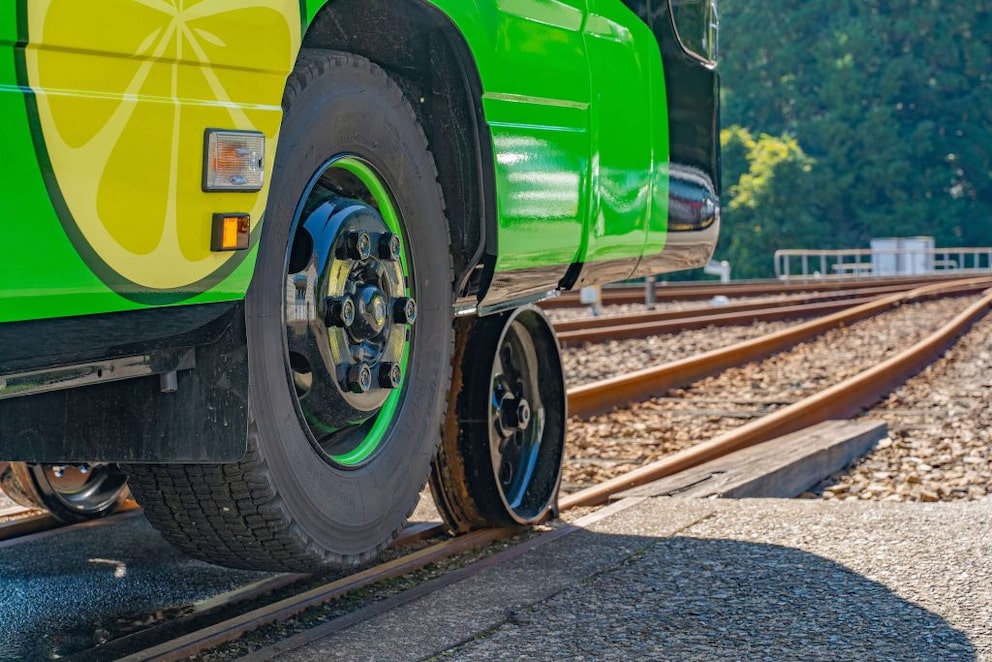
The DMV vehicles are modified diesel-powered buses that can carry 23 people, including the driver. When driving on the road, they move on their tires like any other bus. But once on the tracks of a DMV-specific rail, the front and rear steel rail wheels extend from its underside at the push of a button.
Within 15 seconds, the vehicle’s front tires are completely lifted off the rail, while the rear wheels remain in contact with the tracks. The vehicle can then reach a top speed of 80 km/h.
DMV Concept Not New, but Still Unique in Japan
Vehicles capable of traveling both on roads and rails have existed for some time. An example is rail maintenance vehicles, which are also used in Germany. However, the difference between a rail maintenance vehicle and a DMV bus is that the latter “carries passengers and operates a full commercial service,” a spokesperson from Setouchi DMO, an organization dedicated to revitalizing tourism on the Setouchi Islands, explained to TRAVELBOOK. “It is the first vehicle in the world to transport passengers as a ‘DMV bus’ and be seriously operated,” the spokesperson added.
However, that’s not entirely accurate. In Germany, during the 1950s and 1960s, so-called rail-road buses, or Schi-Stra-Busse, were used for a time. These could also be converted to travel both on roads and rails and carried passengers. However, the system quickly proved to be rather impractical and was soon discontinued.
Riding the DMV in Japan Is Also Worthwhile for Tourists
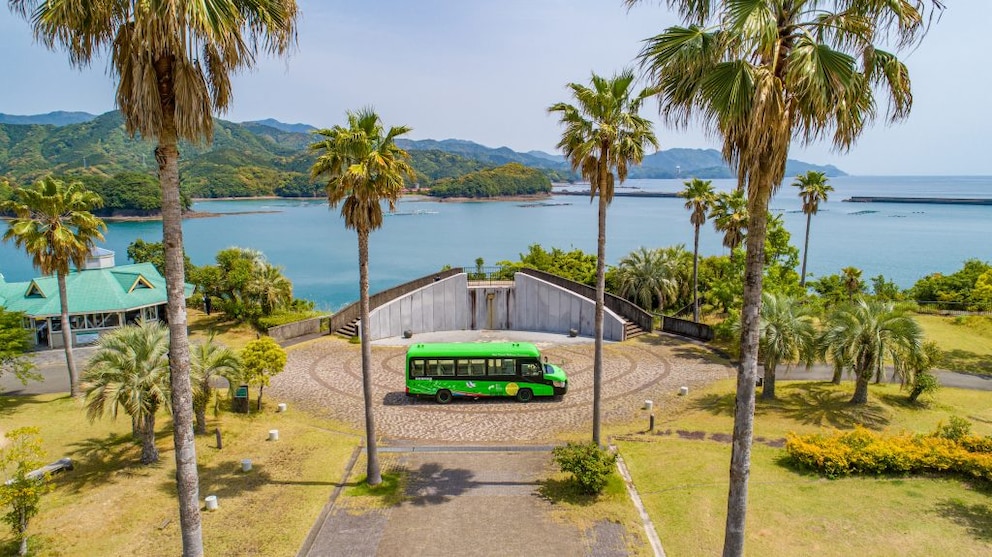
Whether the DMV bus in Japan will last longer and eventually be used elsewhere beyond the Setouchi Islands remains to be seen. However, from a tourist perspective, a ride on the DMV is certainly worthwhile. The route runs along the coast and offers breathtaking views of the Pacific Ocean. It also passes by the hot springs of Shishikui Onsen, one of the region’s most popular tourist attractions. On the 123-kilometer route, the vehicle switches modes twice, from bus to train and back to bus.