

May 15, 2023, 3:57 pm | Read time: 4 minutes
Have you ever wondered why you paid five euros for a bottle of water at the airport? If so, you’re not alone. Passengers are systematically encouraged to spend more money at airports. What tricks are used, which products are truly worth buying duty-free, why food is so expensive at airports, and how to avoid these prices: TRAVELBOOK has the answers.
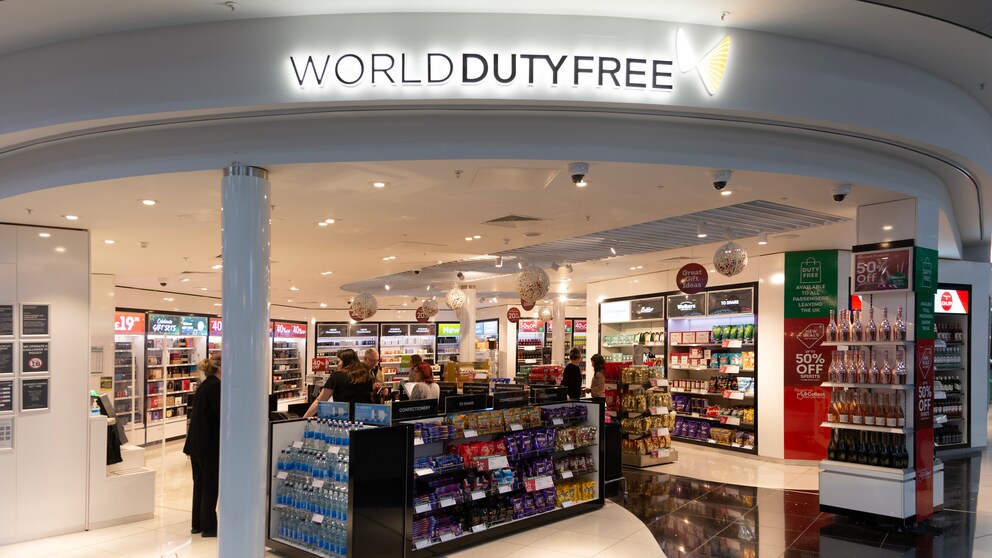
Airports are not just for arriving and departing; they’re also places where an absurd amount of shopping occurs. According to the “Global Airport Retailing Report,” over 33 billion euros were spent at airports worldwide in 2017 alone. This means that each traveler spends an average of between 9 and 118 euros per airport visit. The “blame” doesn’t just lie with travelers wanting to treat themselves on vacation, but also with the airports themselves. They are designed to encourage spending during a stay, often on products that are much more expensive than in regular retail.
One method used to encourage passengers to spend more money is “Recomposure Zones.” These zones are located right after the security check and offer time and space to regroup. After the stressful security screening, travelers can calmly put away their wallets and phones and possibly put their belts or shoes back on. By taking a moment to pause, travelers enter the shopping zone more relaxed–and are more likely to spend money there.
Also interesting: Why you should never charge your phone at the airport USB port
These Tricks Get Passengers to Spend More Money
You have no choice: everyone must pass through the duty-free zone to reach their gate. Nothing is left to chance here. At London Heathrow, for example, the path through the duty-free area goes to the left. The reason is that this leaves more retail space on the right. This is relevant because the majority of people are right-handed and therefore tend to look to the right longer.
Another factor concerns the display of goods. You may have wondered why airport store displays are often arranged diagonally. This, too, is about optimizing purchasing behavior. The diagonal layout makes more products visible at once. At airports, everything is optimized down to the last detail.
Also interesting: Why you have to show your boarding pass at the duty-free shop
Is It Worth Shopping at the Duty-Free Shop?
But is shopping at duty-free shops worth it? “Duty Free” means no taxes are applied to the products sold, but the purchase is only worthwhile for a few products, such as alcohol and cigarettes. For food, so few taxes are removed that duty-free stores often just keep the difference, making even more profit.
Another trick to get travelers to spend as much money as possible at the airport: travelers are encouraged to spend as much time as possible in the main shopping area. At some airports, especially in Europe, gates are only announced shortly before boarding. This forces travelers to spend more time in the main shopping area.
Also interesting: How to shorten wait times at the airport

6 Tips for a More Affordable Vacation in the Maldives

The Best Tips for Your First City Trip to Barcelona
Why Food Is More Expensive at Airports
Travelers often complain about the high cost of food. At Los Angeles Airport, for example, food is 18 percent more expensive than outside the airport. Restaurants often justify the high prices by claiming they pay higher rents at the airport than “outside.” Even outside the restaurants, such as in grocery stores or pharmacies, prices are increased to cover the high rents. This means a bottle of water can be up to 200 percent more expensive than outside the airport.
Also interesting: The airport that turns into a giant playground every evening
Tips for Saving Money at the Airport
But there are some tricks to avoid the high prices at the airport and save yourself the five euros for a bottle of water. Many airports now have water dispensers available after the security check. These are, of course, free. All you need is an empty water bottle. Simply pack it in your carry-on before your trip and fill it up at the airport. This way, you save a few euros right away and don’t have to be annoyed about spending so much money on water.
Unlike drinks, which you usually have to dispose of at the security check, it is generally allowed in the EU to bring your own food onto the plane. According to the “Stuttgarter Nachrichten,” you can “usually pass through security with solid and dry foods packed in a tightly sealed container.” Snacks in their original packaging are also allowed. However, caution is advised, as each country has its own rules regarding the import of food. Fresh foods like fruits and vegetables and animal products are strictly controlled at customs because they can bring diseases into the country.