

July 31, 2025, 8:26 am | Read time: 3 minutes
It’s no secret that Norway is great for hiking. However, in the south of the country, there’s a hiking trail of a special kind. It leads through the Tømmerrenna, an old wooden flume. TRAVELBOOK editor Katharina Regenthal took a closer look at this unusual path.
On our journey through Norway, we hiked several routes–but the Tømmerrenna in Vennesla was something truly special. The flume is about a 30-minute drive from Kristiansand. A popular starting point is at the Steinsfossen waterfall. There are a few parking spots there, but not many. You can also start the hike at other points. Along the way, there are several opportunities to enter the flume.
Forests, Rocks, Small Waterfalls
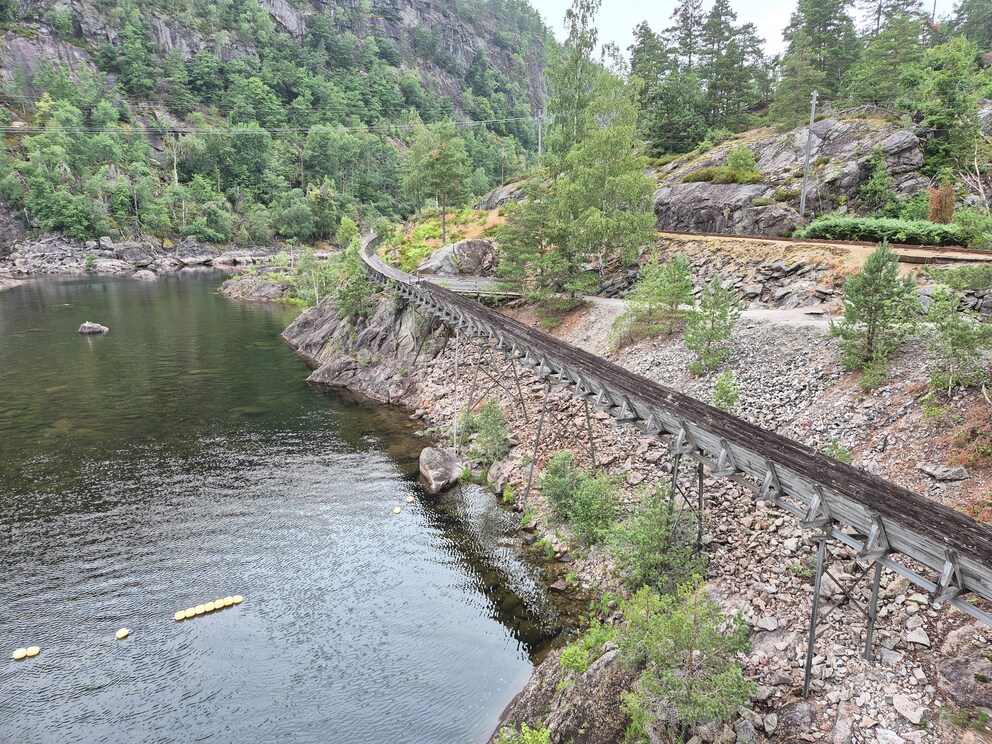
From a distance, it becomes clear: This is not a typical hiking trail! You don’t walk on forest ground, rocks, or anything else, but in a wooden flume–sometimes at dizzying heights. The Tømmerrenna in Norway is a four-kilometer-long flume, the only and longest of its kind in the country. In the past, logs were transported along the flume with water.
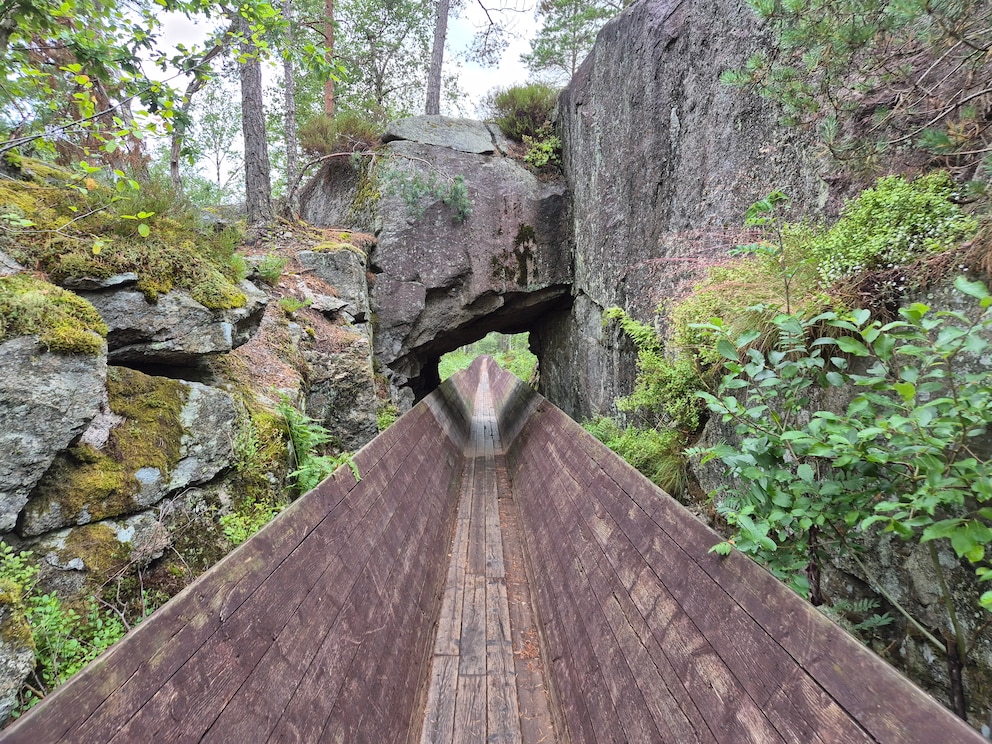
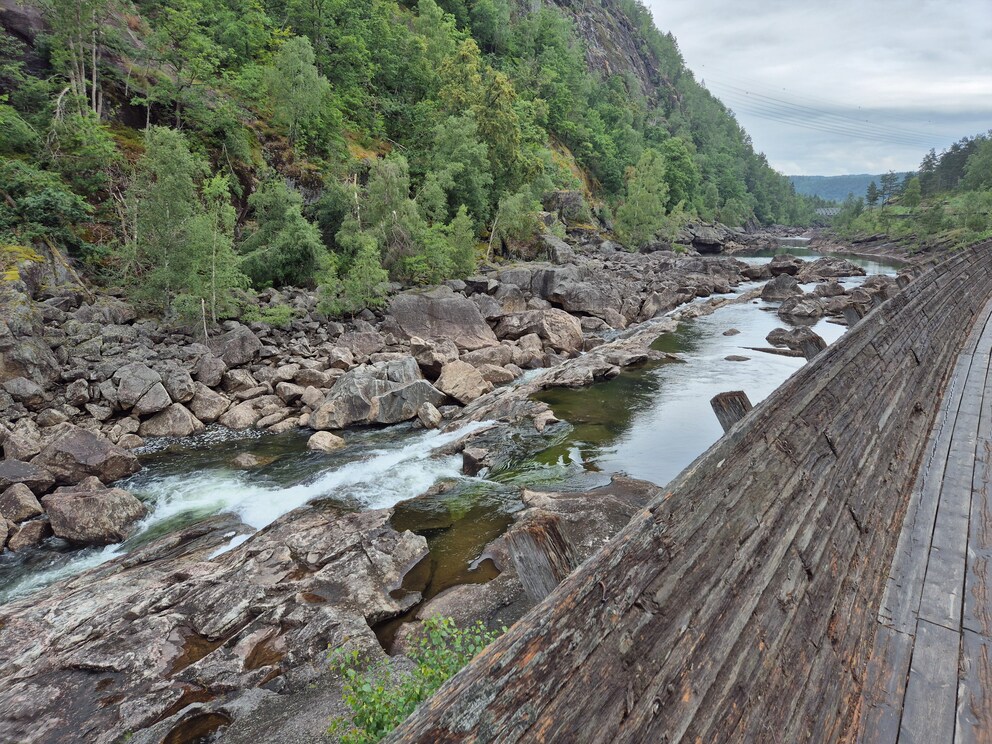
Over the years, the structure has been restored. To the delight of many locals, you can now walk through the flume. We arrived relatively early in the morning, around nine o’clock, and initially encountered only a few people. This allows you to fully enjoy this unique hiking trail. There’s much to see along the path: forests, rocks, small waterfalls. Occasionally, you can leave the wooden flume to visit small rest areas.
Also interesting: 4 of the most beautiful new hiking routes in Europe
Nearby, there are tracks where a small museum train runs. We were lucky enough to have it pass right by us–and I imagine the engineer honked just for us.

11 Tips for an Active Vacation in the Salzburg Region

11 Spectacular Gorges and Ravines in Germany
Old Wooden Boards, Unsteady Ground
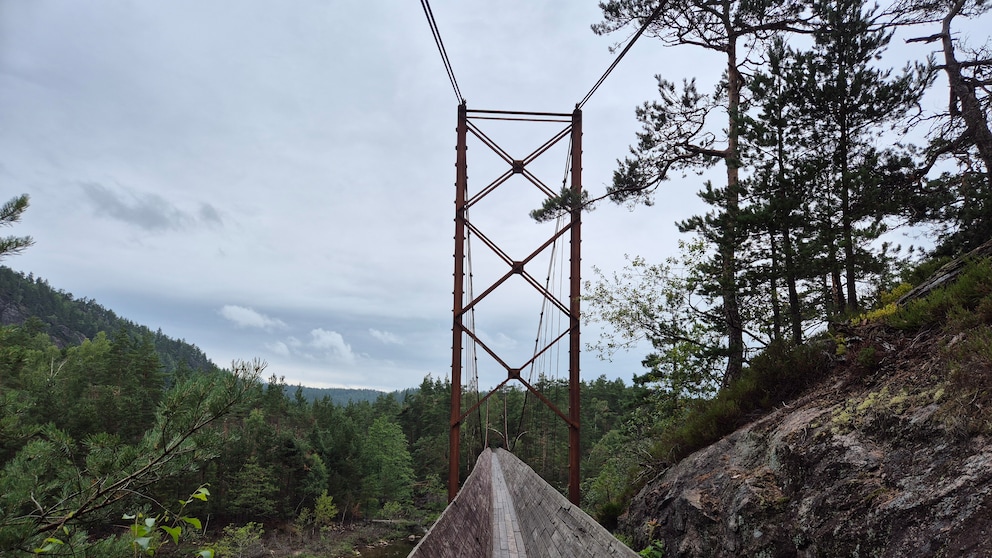
The path itself over the old wooden boards is quite a challenge–at least for me. Although the flume has been restored over the years, some parts are a bit holey and seem somewhat rotten. In other places, you seem to float over the adjacent river, as the wooden flume stands on stilts. This fact makes it quite a wobbly affair.
And at the latest, on a large suspension bridge, I realized that I have a bit more fear of heights than I thought. The combination of old wooden boards, unsteady ground, and a long bridge was a bit too thrilling for me.
My Conclusion on the Tømmerrenna
The Tømmerrenna in Norway is definitely recommended if you want to experience a unique hiking trail. However, fear of heights is not a good companion, at least in some places. Also, you must be aware that it is not a circular route, so you have to walk the entire path back. Generally, this is not a problem, but we noticed that it got busier over time–and then the path is only half as fun. You constantly have to wait, dodge, and squeeze to the side because you can’t pass each other otherwise.
The advantage, however, is that this path is not particularly demanding. It doesn’t go significantly uphill or downhill. This means the hiking trail is also great for children–you just need to be aware that you can’t walk side by side.