

November 9, 2025, 6:28 am | Read time: 4 minutes
The winter months are a quiet time for many hiking enthusiasts–but right now, between fall and the onset of winter, conditions in the mountains are particularly tricky. What may seem like a harmless hike at first glance can quickly turn dangerous. According to an expert from the Alpine Club, this is a “critical time.” What to watch out for when hiking in the early winter in the mountains and which warning signs should never be ignored.
Transition Time with Pitfalls
The tragic avalanche accident at the South Tyrolean Vertainspitze, in which five German mountaineers lost their lives, has starkly highlighted how unpredictable the situation in the mountains can be–especially at this time of year.
Stefan Winter from the German Alpine Club (DAV) describes early winter as particularly risky: Weather conditions change quickly, there are significant differences between the valley and the summit, and in some areas, there are no current avalanche reports available.
Also interesting: Mountain Hiking for Beginners–5 Important Tips
Proper Preparation is Crucial
Anyone who still decides to set out should thoroughly inform themselves. An initial assessment can be provided by webcams and information on the platform “alpenvereinaktiv.com,” where current conditions and possible closures are listed. Additionally, the Alpine Club recommends calling local tourism offices or open huts to check if a planned tour is currently feasible. When in doubt, it’s best to wait.
Since it gets dark earlier and many huts are closed, Winter advises careful planning. South-facing tours that do not go beyond the tree line and remain technically simple are advisable. Additionally, the forest floor can be wet, slippery, and covered with leaves, requiring extra caution. In the morning, small ice patches may also be present.
Appropriate Gear for Early Winter
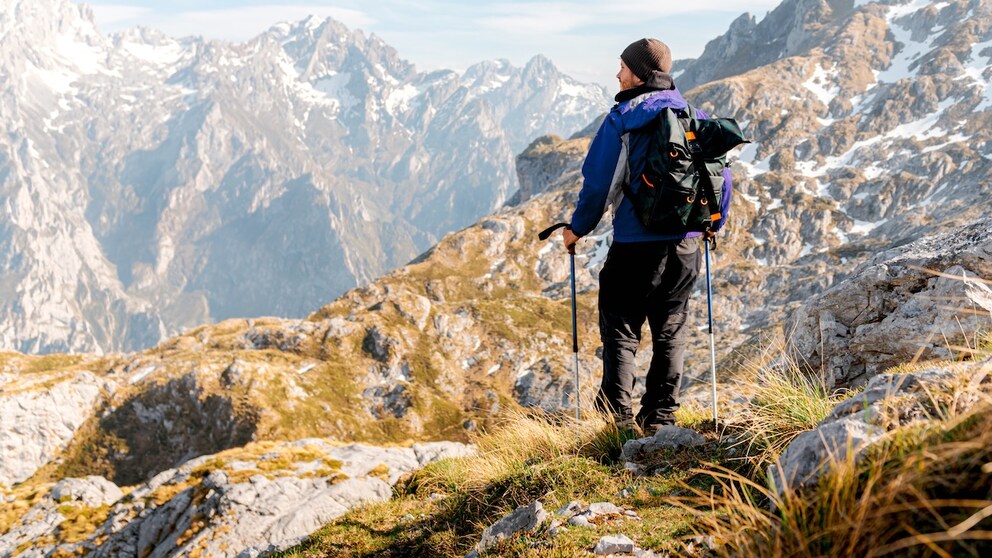
Those venturing out now should, according to Winter, opt for sturdy hiking boots with high shafts and deep treads. It’s best to have gaiters on hand in case of encountering snow. For tours in higher areas, the expert recommends so-called crampons–small spikes that are put over shoes like snow chains–and hiking poles.
Some items should also be part of the standard equipment: Warm clothing, a hat, gloves, an emergency blanket or bivouac sack, and a headlamp in case it gets dark while descending are essential. A charged mobile phone and a power bank for emergencies should not be missing either.
As soon as tours exceed 2,500 meters, the requirements increase significantly: Then, according to Winter, “alpine competence” is required. A post from the Alpine Club states: “How do I move on a rope? How do I use an ice axe, crampons, ice screws to secure a lead climber or retrieve a follower?” Those who do not have these skills–and the corresponding equipment–should stay in lower altitudes.

How Mountain Tours Are Planned Differently Today

7 spectacular high-altitude tours in the Alps
Avalanche Danger Even at Warning Level 2
The avalanche risk is a central issue–and difficult to assess. The avalanche that claimed the lives of five German mountaineers in South Tyrol occurred at warning level 2 out of 5. Olaf Reinstadler from the Sulden Mountain Rescue said, according to “BILD” (also part of Axel Springer): “Only pronounced experts could have recognized the danger. The weather was good, and the deceased mountaineers all had good equipment with them.”
This example shows how limited the significance of such warning levels can be in individual cases. According to the Alpine Club, there are currently no up-to-date avalanche reports for all regions. And even at a moderate warning level, dangerous avalanches can occur.
Pay Attention to Warning Signs
Especially in the terrain, it is crucial to take your own observations seriously. In an interview with “Spiegel,” Winter mentions typical warning signs indicating an unstable snowpack:
- A dull “whump” sound when stepping on the snowpack is a classic warning sign.
- Cracks in the snow and small sliding slabs should also prompt a turnaround.
And: “If you poke a stick into the snowpack and suddenly break through, you know there’s a packed snow layer on top and loose snow underneath. This also indicates that the layers are not properly bonded.”
Such signs must be taken seriously–regardless of the official avalanche report. According to Winter, these always apply to entire regions, “but never to a single mountain.”
With material from dpa