

August 3, 2026, 3:17 pm | Read time: 6 minutes
Julia, 55, a globetrotter, spends several months each year traveling the world. One of her adventures took her and her friend to Nepal, where in February she embarked on her first multi-day trek in the high mountains. The couple chose the Annapurna Circuit—a popular route through a strikingly rugged mountain range in the heart of the Himalayas. A magnificent setting for unique natural enjoyment, but also a significant risk for unprepared trekking enthusiasts.
With a total height of 8,091 meters, Annapurna is among the highest mountains on Earth, encompassing several peaks surrounded by deep valleys. Since the couple was not trained for such altitudes, they planned not to exceed 5,416 meters at the Thorong La Pass. They knew they had to acclimatize slowly to avoid altitude sickness. In hindsight, Julia realized that not only better preparation but also greater knowledge would have been helpful. It’s no wonder that people die every year on one of the world’s most dangerous mountains. Along the way, Julia reached her limits but met others who fared worse. Here she tells her story.
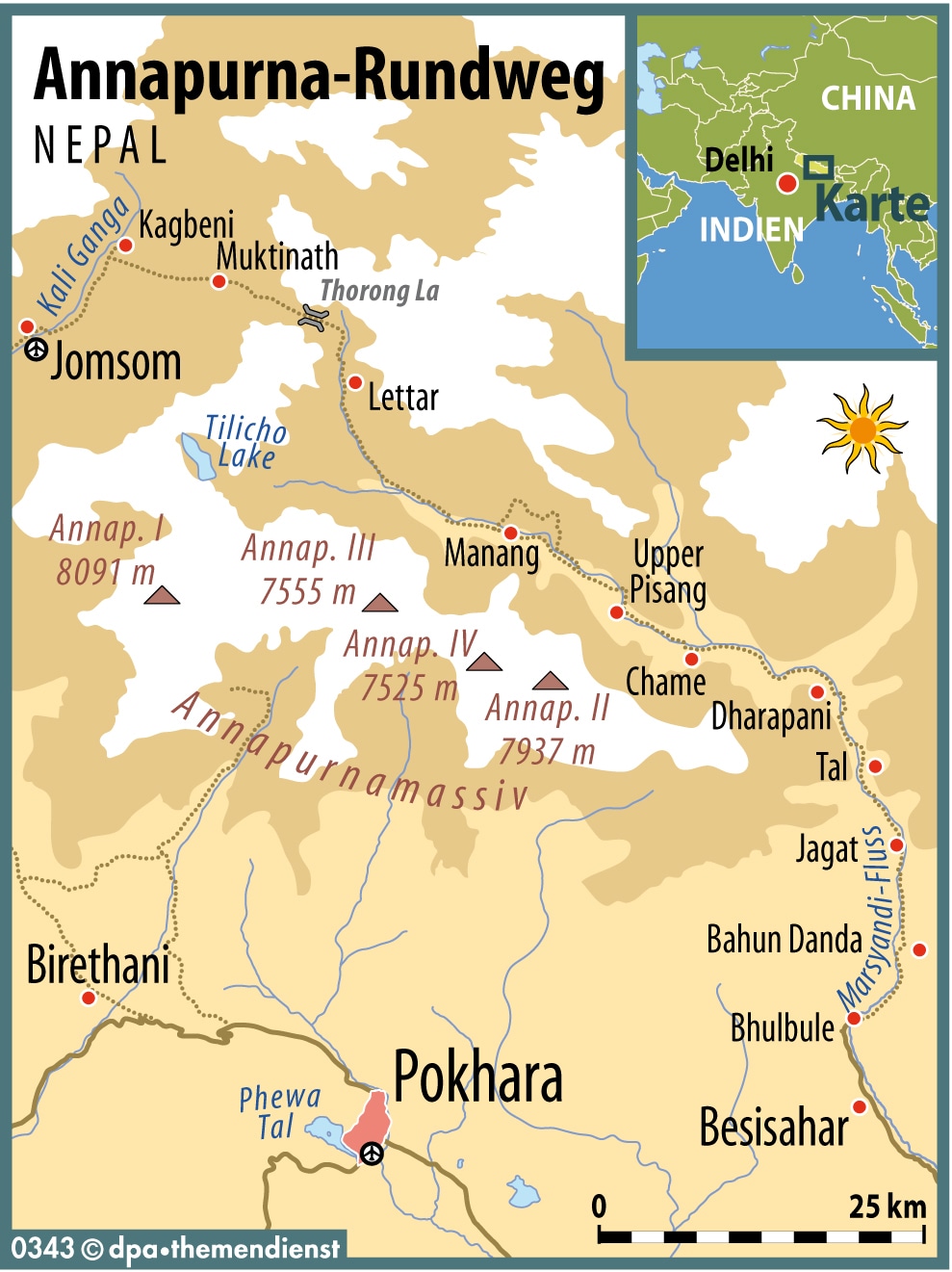
From Kathmandu, we started in one of the rickety buses to our starting point, Bhulbhule, a village in the Lamjung District at an altitude of 840 meters. After about ten hours of travel, we arrived there. We knew we had to move slowly over the next few days to manage our stages, from lodge to lodge, at these altitudes. We planned for about six hours of hiking time each day. In hindsight, we started quite naively.
Thousands of Meters Up in a Few Days
Our goal was to ascend several thousand meters to the summit in seven stages. Outside of the season, in February, there were only a few people on the move. We were expecting marches through deserted and spectacular landscapes. Rugged mountains. Snow. Again and again, small villages in between that we aimed for. From 2,000 meters, I first felt physical weakness and exertion. From 3,000 meters, the thin air made me increasingly sluggish and short of breath. Extensive breaks were necessary. On the fifth day, at 3,500 meters, we took an “acclimatization” day at our accommodation in Manang, slept a lot, drank hot tea with honey, and ate well.
With each breath at increasing altitude, the body takes in less oxygen in the thin air. To compensate for the deficiency, breathing and heart rate automatically increase. However, good adaptation is only achieved by those who take enough time. Therefore, it is also important not to plan more than 300 to 500 meters of altitude gain per day. So far, I had held up relatively well. “You must drink a lot in the dry air and keep a close eye on each other,” locals advised us. One should never ignore symptoms like dull headaches or severe shortness of breath to prevent life-threatening edema in the brain or lungs. For mild complaints, breaks help, but for worsening conditions, only descending helps.
“Why Am I Doing This to Myself?”
Fortunately, we were neither nauseous nor dizzy, which are often the first warning signs of this mountain sickness. And we didn’t suffer from loss of appetite either. On the contrary. Our stomachs growled. And the greatest joy after hiking was the warm stove in the main room and the good food in the simple accommodations. At night it was so icy that we slept in down jackets, double pants, and hats on our heads.
Ultimately, at such altitudes, everything depended on how fit you were and what condition you started in, as it only improved gradually. The more effort each step cost me, the more my mood sank like the dropping outside temperatures. “Why am I doing this to myself?” I lamented. My friend motivated me to persevere.
At nearly 4,700 meters, I could hardly sleep at night, got too little air, sat up, and nodded off in this position to catch my breath again. It was high time to descend about 300 meters the next day to get used to the decreasing air pressure, as professionals recommended.
Europe’s Most Beautiful Natural Paradise You’ve Likely Never Heard Of
This Might Be the Most Relaxing Family Travel Destination
Tales of Missing Hikers
In the lodges, one often heard tales of missing hikers who had gotten lost. We also had insurance for emergencies with helicopter rescue, but pilots often searched in vain. Not only does the weakened body fail at high altitudes, but thinking also eventually stops working. Extreme confusion, personality changes, and balance disorders can be the consequences, as well as a dry cough or extreme shortness of breath, even at rest. Fortunately, we didn’t experience anything that severe.
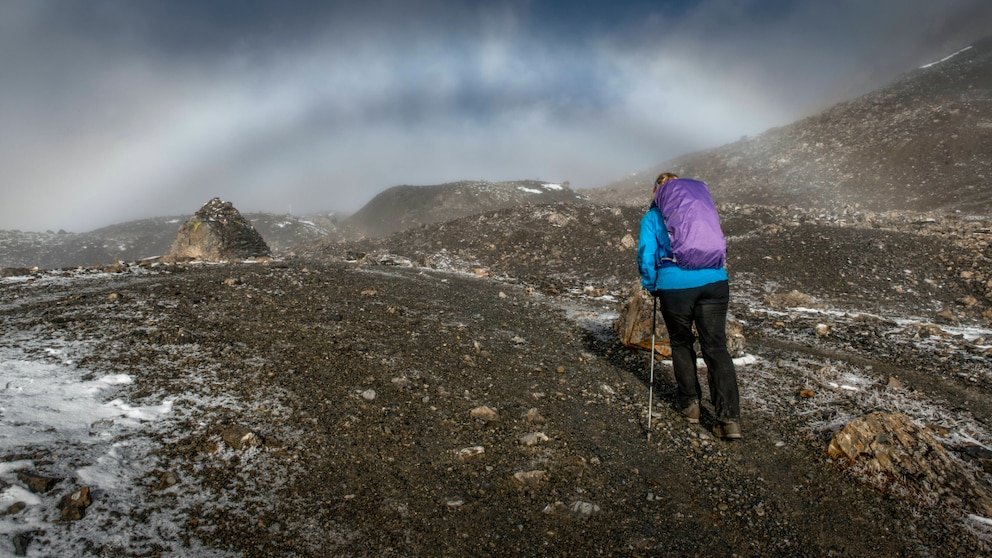
The last stage was ahead of us. In the morning, we ascended to the pass in the dark at 4,900 meters. Slowly, as if weights were glued to our feet. Breathing heavily. I felt like an old woman. At about 5,000 meters, we first recognized, only vaguely, a crouched figure on a rock. Completely exhausted. It was a young Korean from our last accommodation. “I’m fine,” he muttered apathetically and refused our help. We knew that shortly after us, a group with a local guide would follow, who would immediately descend with him. Otherwise, we couldn’t have left him to his fate there. We later learned his oxygen saturation was extremely low.
Every Step a Struggle
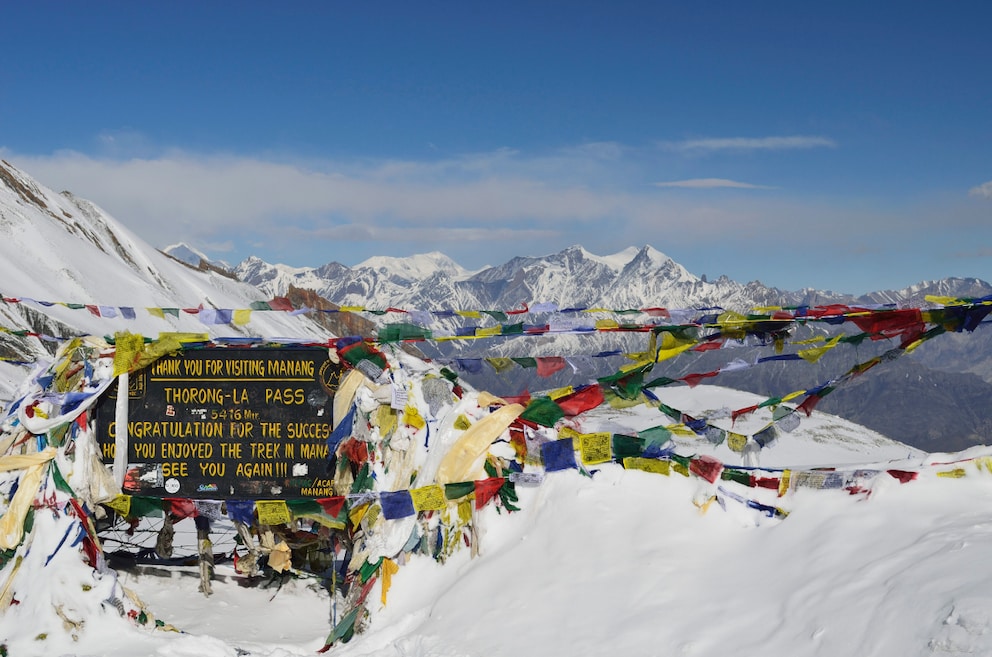
We had to continue to conserve our strength. How arduous it was! Every step a struggle. Every kilo in the backpack one too many. But then we finally made it to the summit on the zigzag path! Prayer flags fluttered here in the icy wind. The wide view over the mountain range was reward enough for this incredible ordeal. A feeling of happiness and relief flooded us.
During the descent, my friend felt nauseous every time we stopped, so we descended over the scree as quickly as possible. Once back down, we were initially exhausted. But after we had slept, we felt light as a feather. And powerful, energetic, and young like never before.
Next time, however, I knew I would better prepare and train for such a high-altitude tour. Since 2023, trekking is officially only allowed with a licensed guide—which is certainly sensible.