

September 30, 2026, 3:02 pm | Read time: 10 minutes
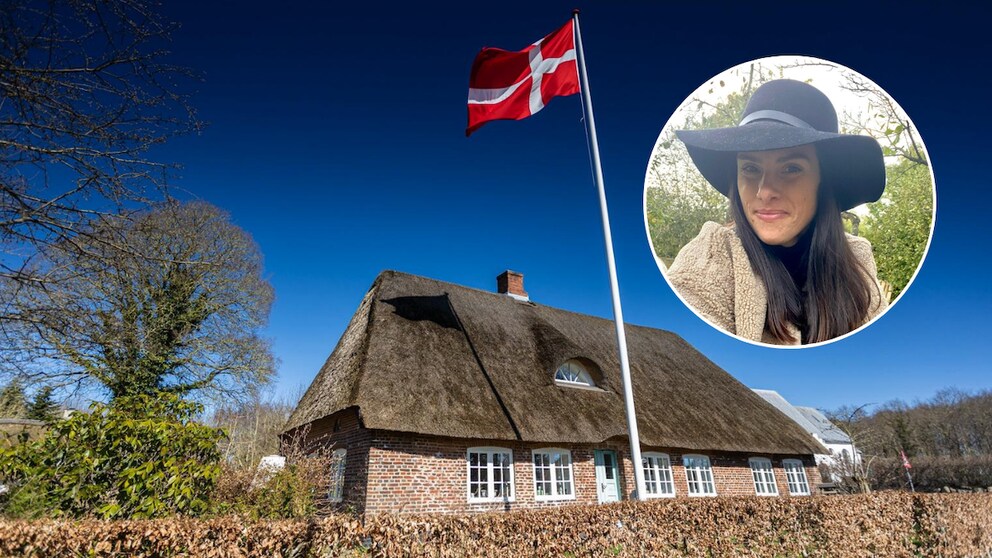
Three years ago, Nina Hamer, a native of the Rhineland, made a decision that completely turned her life upside down: She emigrated to Denmark with her husband and daughter and now lives in a thatched-roof house in the south of the country. Nina Hamer and TRAVELBOOK editor Angelika Pickardt have known each other for many years and are close friends–in the TRAVELBOOK interview, she shares how her emigration came about, the hurdles she faced, and what Germany could learn from Denmark.
TRAVELBOOK: Let’s get straight to it: What works better in Denmark than in Germany?
Nina Hamer: “Actually, everything just works better here than in Germany. The work-life balance, the integration and migration policies, the fact that real estate is still affordable, that family and friends are much more valued, the social interaction. There’s no cutthroat society. And generally, the nature as well. You just have much more room to breathe. We are now in a country between the seas. That, of course, makes it beautiful. And yes, so many things work better than in Germany.”
What were your reasons for emigrating to Denmark, and why there specifically?
“Honestly, it wasn’t my goal to emigrate to Denmark. It happened for several reasons. For one, my husband Eike is a native of Flensburg, and his parents moved from Flensburg to Denmark back then. We visited them there and just really liked it. And above all, we realized that we could still afford a detached house here, and we quickly decided to buy the house and emigrate because you can only buy a house if you also immigrate to Denmark. The whole emigration process, from decisions to moving, took six months. However, the job situation was a bit difficult for me. I was supposed to continue working remotely for my then-employer in Germany, but I was laid off, and we lacked a second income for a long time. I now work part-time in North Frisia and am building an online business in network marketing, which is going increasingly well.”

Is it easy for a German to emigrate to Denmark?
“Yes, it’s super easy. We actually bought the house, went to the immigration office, registered there, and had to show both employment contracts. If you don’t have an employment contract, you need to have 12,000 euros per adult in your account, and the children need 6,000 euros so you can support yourself in the first year. Otherwise, if you have no criminal record or don’t get into trouble here, you can move to Denmark relatively quickly.”
“Learning the language is essential”
How were you received in Denmark?
“I have to say that we were received very warmly here. But I also have to say that we made a great effort to integrate. That means we immediately booked a language course, which the country pays for five years. Otherwise, we integrated very well through our animals. For example, while walking the dog, we immediately got in touch with the Danish neighbors. We also have a horse, and ring riding is a national sport here. We participated in that as well. We also participated in the town festival and helped with the teardown. So it went pretty quickly.”
Do you also have Danish friends, and was it difficult to build these relationships?
“Yes, we now have Danish friends because we made a great effort to integrate. But there are also Germans who move here and don’t integrate at all and don’t find local friends. The Danes themselves have the mentality of being very much to themselves, very much within their own family and close circle of friends. And rarely does anyone new come in. It takes a lot of sensitivity. And it sometimes takes years to really find true friendships up here.”
How well do you speak Danish now?
“I have to admit that I find Danish very difficult. I’m now in my third year at language school and can read and understand it relatively well. However, we still have the challenge that Sønderjysk is spoken here in southern Denmark, a special dialect that is very demanding. We also live in the border area, so many still speak German with us. I actually have to force people to speak Danish with me so I can learn it properly. It’s important to me to be able to do that. It annoys me that I still don’t speak it fluently. But as I said, it’s not an easy language for me. Just because of the pronunciation, but also because of the sentence structure. Sometimes a word has up to six or seven meanings, depending on the tone. And you can really mess up the pronunciation and sometimes step into a faux pas.”
Also interesting: Denmark – the most beautiful travel destinations and best tips
Do you sometimes still feel foreign, and if so, in what situations?
“I don’t really feel foreign here. I felt very comfortable and at home relatively quickly. I think you feel foreign when you get into a conversation where you’re not very proficient in the language, and the Danes make jokes and laugh and speak very quickly. Of course, you sometimes feel excluded, but that’s simply due to the language barrier. And that’s something where I realistically have to say: I’ll probably never learn it to a native level.”

Is Copenhagen the Las Vegas of Europe?

Why Learning Languages Changes the Way We Travel
“Integration works much better here”
You’ve been living in Denmark for three years now. What could/should Germany learn from it?
“Several things come to mind. What works much better here is the integration of immigrants. For all foreigners–including us Germans who move here–a lot of emphasis is placed on learning the language quickly. The Danes manage to offer language courses for everyone, and integration only works through language, as access to work, community, and truly arriving. The support for political refugees is also very close-knit. The goal is for them to find a job quickly. And if someone misbehaves and becomes criminal, deportation happens very quickly.
Denmark is also completely digital, which makes many things much easier. If you want to start a business, you can do it all online. You don’t have to go anywhere, to any authority, or print and fill out certificates and send them by mail. Everything comes to my digital mailbox, from weather warnings to reminders for cancer screenings to tax returns.
Another point is the work ethic. A four-day workweek is totally normal here, 40-hour jobs are rare, maybe in Copenhagen, in international companies. But otherwise, no one works 40 hours here. The work-life balance in Denmark is much, much better. A lot of emphasis is also placed on hygge, this coziness, and really coming to rest at home, spending time with family and friends. The Danes just don’t let themselves get stressed.”
And conversely: What could be improved in Denmark?
“What I don’t like: In Denmark, you have to pay for your dentist completely yourself, except for children up to the age of 18. They also get braces from the state. But after that, you have to take care of it yourself. Many Danes have gaps in their teeth because they can’t afford dental replacements. Otherwise, the healthcare system is well-organized in my eyes. You are automatically insured by the state here. There are no private health insurance companies.”
What might Danes find odd about Germans?
“Great question. I think they find it odd that we’re such workaholics, that we stress about everything and are so orderly. The Danes are also orderly and value having nice gardens. You rarely see unkempt houses or gardens in Denmark. But I think we Germans are actually the absolute perfectionists in the eyes of the Danes, and they sometimes find that quite amusing. Another point: We Germans are sometimes very direct and get straight to the point. The Danes don’t like that at all, and you should never show up unannounced anywhere. You don’t just go over for coffee; you are really consciously invited.”
What do you sometimes find strange about the behavior of the Danes? Or certain regulations?
“What I notice: In Denmark, people don’t compare themselves to others. They also don’t talk much about money. Criticism is not expressed publicly, and people don’t speak badly about things or others. Interestingly, cars are insanely expensive in Denmark and an absolute luxury item. Many cars here are on the verge of falling apart. We also bought two old cars here and left our newer ones in Germany–also because the import tax is so extremely high.
Waste separation is also a huge topic here. If you think a lot of waste is separated in Germany, it’s even more absurd here. It feels like there are seven bins for everything and then a small bin for deodorant cans and batteries. Everything is completely dismantled. That’s quite strange.”
“I miss the scenic variety”
What do you miss about Germany?
“Actually, not much. I think what I miss most as a Rhinelander is the Rhineland mentality, this humor, the carnival. And often the weather, because it rains significantly more here in Denmark, and the winters are darker. And I miss the scenic variety, that there are also hills or mountains or river valleys. Denmark is a very flat country, and on the left and right, we have the dunes and beaches and a few fjords–it’s a country by the sea.”
Can you imagine staying in Denmark forever, or do you have new plans?
“We dream of growing old here. But it also depends on how everything develops globally. I think if I were to emigrate again, it would be to warmer climes because the rainy weather and long winters take some getting used to.”
What is your most important tip for anyone considering emigrating to Denmark?
“What I recommend most is not just spending two weeks in a vacation home here in the summer, but maybe also taking a three-week vacation here in the winter to test the darkness and the weather. To test whether you can endure it in the long run, to live the downsides of emigration as a trial. From today’s perspective, I would always learn Danish from home, either at the adult education center or in an online course, and engage with the language. I would also always try not to have the thought of leaving Germany, but rather that you want to move towards something new. You should never flee from something, because then you are often disappointed. And I would also especially deal with the topic of work, like what will I work here, is it secure, does at least one of us have a good enough income to afford all this.
Otherwise, I would say: Go for it, because it’s a great country. If someone really wants to find peace, then this is the right place.”