

November 28, 2026, 7:02 am | Read time: 11 minutes
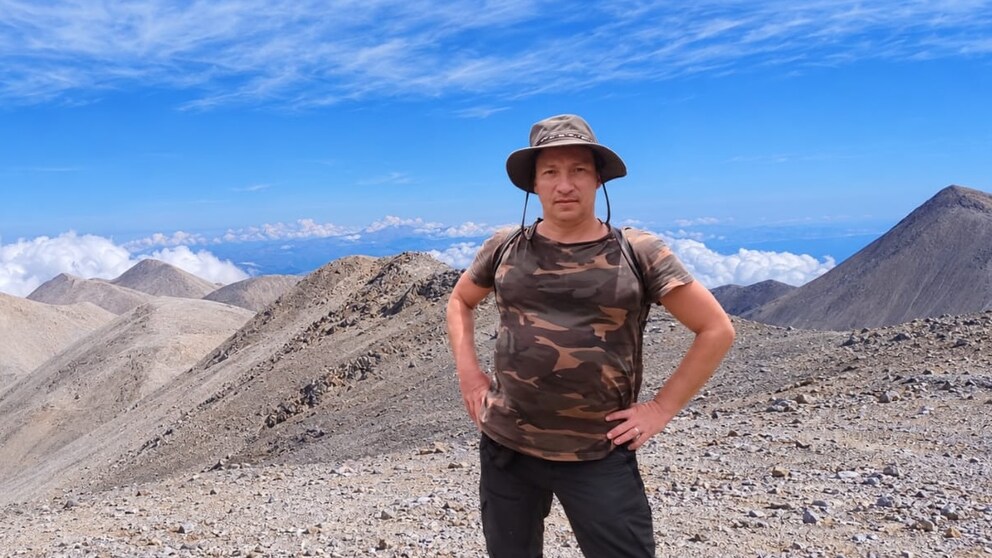
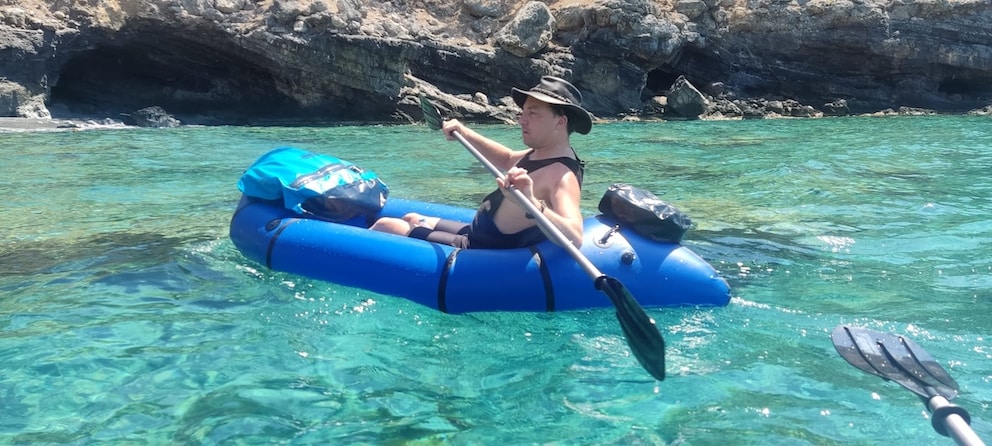
Since 2011, Berlin native Florian Knaack has lived on Crete. He chuckles, saying his love for this Greek island was practically instilled in him from birth. As a child, he spent family vacations here. Now, as an independent hiking guide, “Kreta-Flo” leads adventurous tourists on tours through gorges, caves, and mountain paths not found in any travel guide—and even explores parts of the coast with them on ultralight inflatable boats. In a TRAVELBOOK interview, the trained physical therapist shares why he never feels like a stranger on this island, which pitfalls Germans should avoid, and why spring is the best time for a fresh start here.
TRAVELBOOK: What brought you to Crete, of all places?
Florian Knaack: “It was almost inevitable. During his studies, my father had Greek friends, which led to a close connection to Greece. We often went on family vacations to various islands—and eventually to Crete. That’s when I got hooked. I moved here in 2011. Since then, Crete has been my home base, even though I often travel to Asia for almost four months in the winter. As a globetrotter, I feel comfortable everywhere. But Crete is a very special place for me.”
Make our readers a bit envious. Who else has a 360-degree view of the sea from a hill like you?
“Yes, I have a wide view of the sea from my balcony, even from the bedroom window. Depending on the season, the sun sets in different spots, painting the sky in the most magnificent colors, pink and purple. It’s simply beautiful. Of course, you get somewhat used to this beauty over time—but it remains unique nonetheless.”
Is it expensive to rent on Crete?
“Rent is relatively affordable, but it’s become much harder to find an apartment. Many owners now prefer to rent short-term to tourists because they earn much more during the peak season. This leaves fewer apartments for people who live and work here year-round, but you can still find something.”
Is life overall cheaper than in Germany?
“When it comes to groceries, it depends on what you buy. It’s not cheap, but the overall value for money is good. Especially meat—like local lamb—has a quality that can’t be compared to supermarket goods in Germany. Fresh fruits and vegetables are cheaper and fresher, especially at the weekly markets where I occasionally shop. Imported and processed products, on the other hand, are more expensive.”
Is it straightforward for a German to emigrate to Crete and work there?
“Since Greece is part of the EU, it’s not a big problem. Those who take a job here usually get help from their employer with registration or taxes. If you want to become self-employed directly on Crete, you can research a lot online, but for specific questions, you should consult a lawyer familiar with business startups.”
How have the Cretans received you?
“With the greatest friendliness. The people here are incredibly hospitable and warm-hearted—that was one of the reasons I came here. Of course, it also depends on how you behave yourself. I’ve understood the mentality and adapted, so I’m accepted. And when, like me as a guide, you bring guests to taverns and work with the locals, you’re especially welcome and even get small gifts sometimes.”
What is the Cretan mentality like, in your view?
“Cretans love to give and welcome guests. It’s very important to accept such a gift without immediately wanting to give something back. If someone buys you a beer, you shouldn’t immediately order the next round or offer money. That can be seen as an insult—or at least a disappointment for the other person, because they wanted to make you happy. Reacting that way would be un-Cretan. You should enjoy being gifted, just as Cretans enjoy giving. What we might do with gifts at Christmas, the locals here do every day.”
Tell us an example…
“Once, my girlfriend and I wanted to go to a tavern for dinner, but there was a private party going on—the 10-year-old daughter had a birthday. We were still considering whether to go in at all, because I knew: If we do, it’ll be a late night… (laughs). But the host had already spotted us. He knows me, and soon we were sitting at the table. A huge celebration, one raki after another—you don’t get away quickly. You’re then, so to speak, a prisoner of hospitality.”
“You live more freely here”
What sometimes bothers you about German tourists?
“Most of the time, I’m very satisfied. But sometimes I wonder, for example, when Germans expect Greeks to speak German with them as a matter of course. Many, especially older Greeks who have worked in Germany or learned it through tourism, do speak German and don’t mind it at all. But I prefer to first find the common language, which is usually English. Greek itself is somewhat complicated to learn, but I speak a little. Or, what I find odd, is when visitors expect everything they know from home to be available locally, especially with drinks and food.”
What annoys you about what other expats do?
“Some want to impose their home rules here. In simple village taverns, people sometimes smoke indoors during bad weather, and in traffic, someone might park in the second row. I once stopped briefly in front of the supermarket, and a German expat lectured me that it would cost 100 euros here. Of course, there are traffic rules and fines in Greece too. But playing the policeman here is out of place. You live more freely here, with many unwritten laws, and act more intuitively. If you want everything to be like in your home country—why come here at all? This freedom is what makes it so special.”
Your adventurous spirit, your love for archaeology, and your distinctive hat have earned you the nickname “Cretan Indiana Jones.” You offer very unusual tours: canyon, mountain, and cave hikes, and now packrafting on the sea. How do tourists respond to that?
“Very well. Crete is not just a destination for sun and beach. The sea and high mountains are close together here, along with long, secluded beaches. It can be wonderfully combined, and many now bring their hiking boots straight to Crete. My guests mostly come from Germany, Switzerland, Austria, and the Netherlands. My most important partner is a Swiss tour operator I used to work for.”
What excites people about your tours?
“That we go to places where no one else easily gets to—places not found in any travel guide. I show the authentic, original Crete, where you feel a bit like you’ve traveled back in time. The simple tavern with wooden tables instead of hotel tableware and frills. Crete is not really a place for a glitzy vacation, but for people interested in the land and its people, culture, and history.”
What do you have to pay special attention to as a guide?
“Above all, that the guests are properly equipped. If we’re hiking through a river and someone shows up in heavy hiking boots or just with a beach bag, that’s obviously not suitable. But that rarely happens. I also check if people are fit enough for the respective tour. You can’t tell just by age; sometimes you underestimate people too. The biggest danger is circulatory problems, especially in the heat.”
Do you also make sure to protect nature during the tours?
“Yes, during river hikes, I ask guests not to apply too much sunscreen, as the water is partly used as drinking water. And most people naturally take their own trash with them. Many even pick up the litter left by others. I find that very nice.”
Do Greek guides see you as competition?
“I haven’t really experienced that. I don’t copy tours; I come up with my own—I’m more likely to be copied (laughs). It’s important that it remains a give-and-take among us. When I bring my guests to taverns and small businesses, the Greek partners benefit and notice that I think of them.”
“Best to come in spring”
Have you ever regretted living on Crete—despite earthquakes, floods, and wildfires?
“No, otherwise I wouldn’t still be here. I’ve hardly noticed earthquakes over the years. Many you sleep through, or you’re in the car or at the beach. Last year, my chair wobbled a bit once, that was it. I find wildfires more threatening. This year, a fire was already very close, which was eerie. I wasn’t scared, but it made me skeptical about buying my own house—it can be quickly destroyed by fire. But floods can also become dangerous: Friends of mine bought a property by a stream and built a small tavern there. It was washed away by flash floods after heavy rain in 2018 and 2020.”
You’ve considered buying a house or property yourself. How have prices developed in recent years?
“Since COVID, the real estate market has been booming. Buying old houses is hardly possible anymore; very high prices are now being asked for half-ruins. Maybe I’ve already missed the right time. But it could also be that more comes on the market again, because many foreigners have bought and might want to sell eventually.”
How is the bureaucracy at the offices?
“The bureaucracy is at least as extensive as in Germany, and it’s much more opaque. I would never buy anything without a good, independent lawyer—preferably one who isn’t from the town where you want to buy. There are many pitfalls: Sometimes the seller doesn’t even own the land, or someone has illegally acquired it. A new land registry is currently being created to clarify such things. With building land, there are also questions about whether it’s a nature reserve. Everything must be carefully checked.”
Do you feel that more and more German expats are coming to Crete?
“Yes, especially people with money, particularly retirees who want to spend their twilight years here. A house here is much cheaper than, say, on Mallorca. There used to be a larger community of Germans and English who didn’t have much money, with their own meeting places. That has shrunk in recent years—many have since died or returned. Today, people meet more in smaller circles, for example, among those who make music together. With the newcomers who have come since COVID, it’s more about money in my opinion. Property ownership, investment, or increasing wealth through renting.”
What do you miss about Germany?
“Sometimes the big stores, although there’s even an Ikea here now. Or as a Berliner, sometimes a Berlin currywurst (laughs). You can get some things at Lidl, but not on every corner and, of course, much more expensive.”
Can you imagine spending your twilight years on Crete?
“I haven’t really thought about that yet. As a globetrotter, I’m open to new things. But so far, Crete is simply one of the most beautiful places in the world for me.”
What’s your most important tip for anyone wanting to emigrate to Crete?
“Just try it—without pressure and without compulsion. It’s best to come in spring, when everything is still quieter, and see if you can really imagine living here. Those looking for a job and apartment should also come in spring. Then the hotel and business owners still have time for conversations; you can talk and introduce yourself. In the high season in summer, employers are often stressed, even though they are, of course, looking for workers then. And with apartments, you still have a free choice in spring.”
Do you sometimes feel like a stranger?
“Not at all. Although I’m a foreigner, I don’t feel like a stranger on Crete.”