

May 15, 2026, 2:59 pm | Read time: 7 minutes
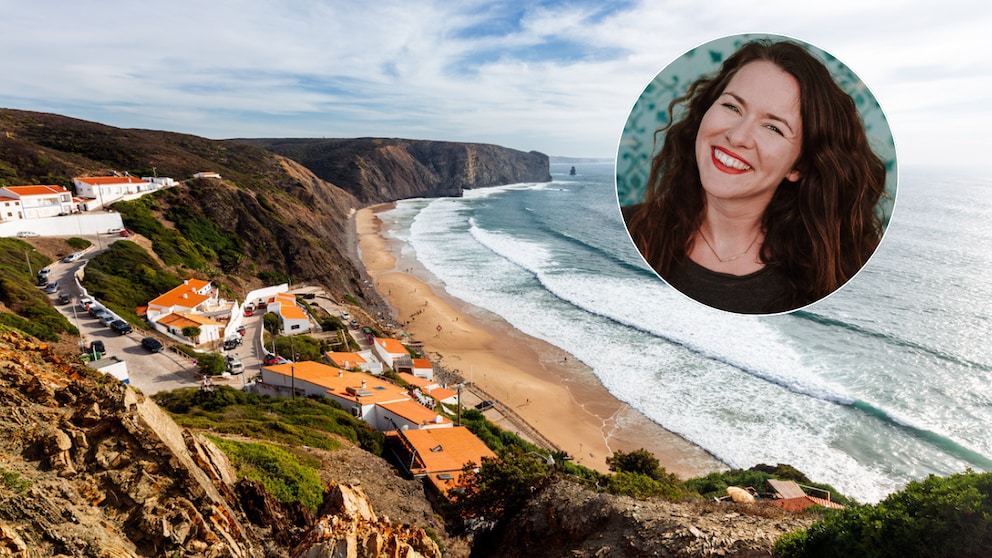
Author Anna Chiodo (formerly Wengel) lived for several years in Aljezur, a popular surfing spot on Portugal’s Algarve. For TRAVELBOOK, she wrote about what life in the vacation region felt like.
“Life in paradise,” “living the dream,” were the kinds of hashtags I used under almost every Instagram post about ten years ago. Because that’s what it was. A paradise, a dream life. Only when many tourists came did it become a bit less paradisiacal. When it got too crowded, I would leave for a while and vacation elsewhere, like back home in Berlin.
Everyday Life on Portugal’s Algarve
This paradise I’m starting to rave about is the Algarve in Portugal, specifically, Aljezur. The town on Portugal’s southwest coast was a long-time place of longing and eventually home for me. I lived on this enchanting piece of earth for two years and loved it. Almost every day. Because everything I had imagined—the sea, the peace by the sea, the sun, the many friendly people open to an alternative lifestyle, this relaxed lifestyle, the attractive surfers—all of it was there and more.
Almost every day, I got up early with or before the sun, drank coffee on my balcony with a stunning view over the town. The balcony was part of a nice three-room apartment for which I paid very little rent at the time. After my coffee, I drove my rickety old and beloved VW Polo to the first yoga class. Then it was off to breakfast at the café, a quick dip in the sea, a walk on the beach, or, if I had a lot of work, straight to the desk. The desk often consisted of my lap sideways in the car with a view of the sea.

Afternoons were usually as relaxed as the mornings. In my first year in Portugal, I had a good friend with whom I spent a lot of time. We saw each other almost every day, went swimming in the sea, pool, or lake, walked, did yoga, or tried surfing. I also spent a significant amount of time alone, sitting on cliffs. Reading or writing, thinking, and dreaming. Especially enjoying the colorful melancholy of Portuguese sunsets. Because not only did I have an abundance of time there, but also peace. A peace I didn’t know from my bustling Berlin life, marked by work, friends, and sometimes toxic relationships. In Aljezur, it was different. It was almost always quiet around me. So quiet that I could suddenly hear the chaos inside me much better. So quiet that I had time to deal with it.
To keep this chaos from getting boring, I often created new excitement, especially in the evenings. I was single and in my late twenties and went out a lot. There were plenty of opportunities for that. Especially once the season started and everyone gathered in the three or four bars, which were actually restaurants, in Vale da Telha or at the weekly recurring hippie festival in the Monchique Mountains. By everyone, I mean many other expats like me, people who had lived there all their lives, tourists who kept coming back, and those discovering the surfer town charm for the first time.
That was everyday life, my life in paradise. A life I look back on fondly today, ten years older, no longer single, and now a mom. I long for parts of it and try to recreate it. Yet much has changed. In me and in Aljezur. The life I led back then would no longer be possible today.
Why Wintering in Portugal Isn’t All Good News

Travel Author Explains: ‘This Is How I Earn Money on Vacation’
Finding Housing in a Vacation Spot
Putting aside my own changes, the vacation spot has also changed. I’ve known Aljezur and Vale da Telha since my childhood; back then, it was very quiet, not to say sleepy. That has changed. Even during the years I lived there, tourism noticeably increased. Today it’s even more extreme. Many have suddenly put Portugal on their radar and realized that the Algarve, with its stunning cliffs and dream beaches, is a wonderful place to vacation and live. And quite a few recognized the potential and bought the then-affordable houses, turning former shacks into dream vacation homes and residences.
When I tried to find an apartment or house to rent back then, it was difficult. Partly because there aren’t too many houses due to the nature park (fortunately!), and partly simply due to the lack of appropriate housing markets. But they were found, and they were usually not too expensive. When my family and I tried again a few years ago to find a house to rent locally, we encountered two extreme changes: Prices had more than doubled in some cases, and many accommodations are now only rented seasonally. As a family with a young child wanting to return permanently, it wasn’t a really good option.
There are, of course, houses for sale as well—with significant price increases. Ten years ago, I briefly considered buying a house. The property I had in mind cost around 65,000 euros back then. A comparable house today costs around 350,000 euros or more. Saying I wish I had bought the house back then is an understatement.
Rising Prices
Many Portuguese and newcomers working locally also report how much more difficult life has become. More difficult because it’s more expensive. Most work for very low wages and can’t afford the significantly increased rents. If they’re lucky, there are family-owned houses or friends with available rooms. Or they’ve found a way over the years to capitalize more on the increasing tourist streams.
Because increasingly, the small paradise attracts more people who can and want to afford a bit more on their travels. This is also reflected in the prices of some accommodations and restaurants. Not without reason, the region, especially the neighboring villages by the sea, is now mockingly referred to by locals as “Beverlyzur.” The hippie lifestyle, the simple, quiet life, still exists. But it’s different, more expensive, and a bit more organized. I notice this more with each visit.
Peak Season in the Tourist Spot
Besides the effects of tourism, such as on the housing issue in a tourist spot, the tourists themselves naturally influence life. In my case, there were often pleasant encounters, some of which turned into friendships that extended beyond our time in Portugal. I worked for a while as a yoga instructor in surf lodges and had almost only pleasant encounters there every morning. However, Aljezur is not a tourist mass hub but a vacation spot for families, surfers, and other, let’s say, alternative travelers and those seeking peace. So even the vacation times were rarely stressful and not too crowded compared to other places in Portugal and other countries.
I consciously say compared because the perception is different when traffic on an otherwise empty main street suddenly only moves at a crawl. Or when you can’t find a parking spot at your favorite beach, which you secretly consider your own, and, if you do manage, you have to share the beach with hundreds of others. I’m fully aware that this is complaining at a high level and borders on selfishness. But my reality outside the summer months was beaches where I was sometimes alone or shared with only a few surfers, walkers, and their dogs. That was a beautiful reality that I gladly indulged in.
Thinking back to my life in Aljezur and the tourists, it’s the summer months that left a slightly bad aftertaste. The small, quiet paradise practically burst at the seams, especially in August. It was sometimes so crowded and restless that I flew back to Berlin that month. Whether that was sensible given the fullness and unrest is debatable. This perhaps brings me to the conclusion of this text: Living in a vacation region is something I still personally find dreamy—especially outside the vacation season.