

July 30, 2025, 8:50 am | Read time: 5 minutes
When a new disease or virus is discovered, it is often named after the place where it first appeared. For cities and regions, this is a dubious honor, as it may increase the location’s notoriety but not necessarily its image. TRAVELBOOK explores “truly sick” places and reveals five diseases named after places.
Did you know that the city of Marburg is often associated abroad primarily with nasty viruses rather than the charming university town it actually is? Or that there is a disease named Philadelphia? And most people have never heard of the Ebola River. There are several diseases named after places.
Schmallenberg
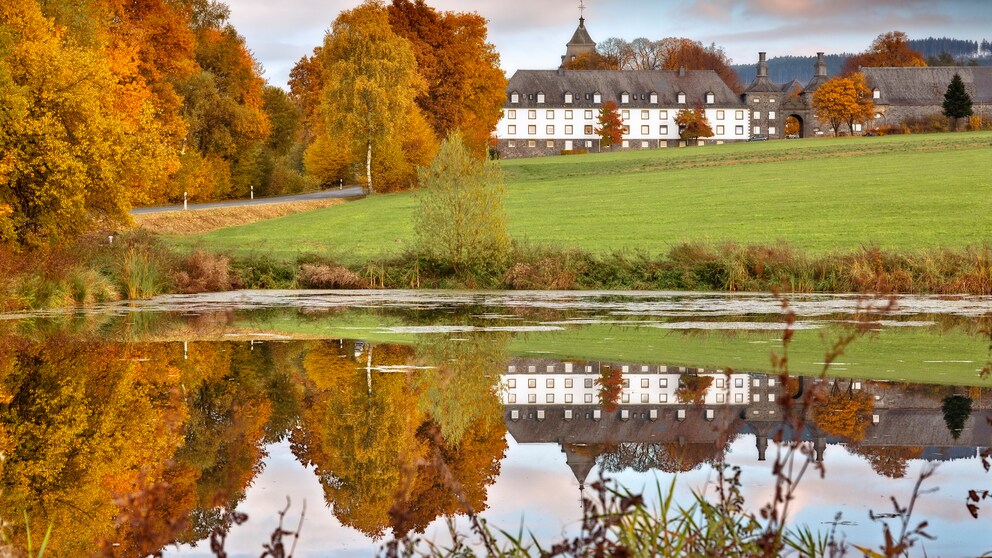
Schmallenberg once had a good reputation. Families spent their vacations here in the Hochsauerland, hikers found exciting trails in the area, and allergy sufferers found hotels and guesthouses with the best allergy-friendly conditions. But then a few cattle suddenly fell ill, and researchers at the German Friedrich Loeffler Institute (FLI) discovered a previously unknown pathogen as the cause. Since it had no name yet, they simply named it after the place where it was found: Schmallenberg virus.
Since then, Schmallenberg is no longer synonymous with vacation and family happiness but rather the terror of all farmers—a livestock disease transmitted by midges and other mosquitoes. The 25,000-resident community tried to prevent the naming at the Friedrich Loeffler Institute (FLI). Without success. But perhaps Schmallenberg benefits from the hype around the place. After all, the virus cannot be transmitted to humans, so vacationers are safe.
Marburg
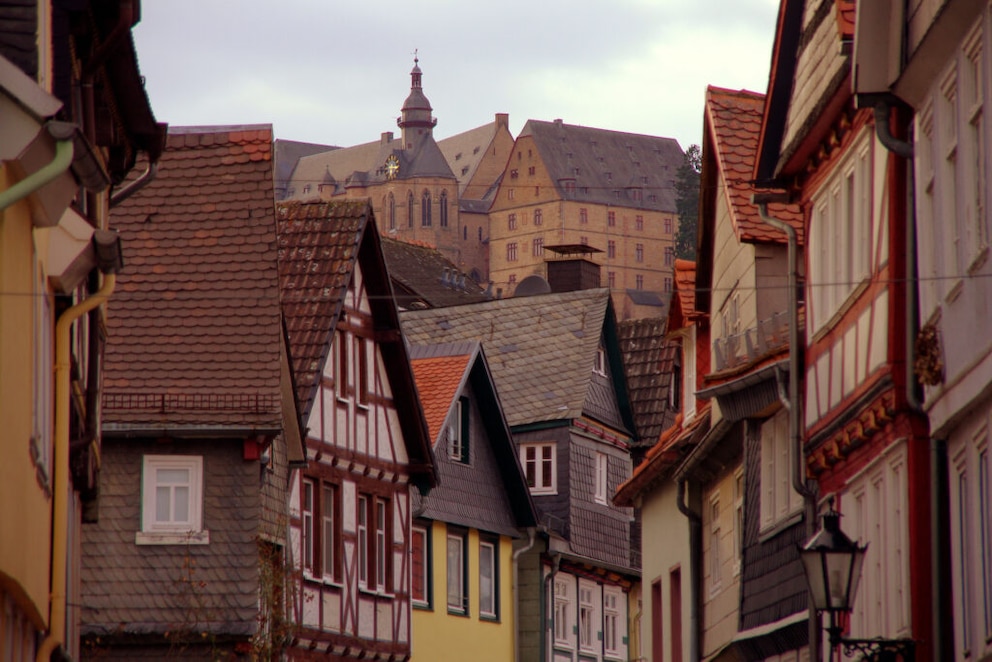
The town of Marburg truly doesn’t deserve this: No matter how pretty the old town is or how idyllic life there may be, abroad, Marburg is primarily associated with death and horror. The culprit is a life-threatening disease named after the place. The killer virus causes internal bleeding and first broke out in the city in the summer of 1967.
Initially, it seemed like the flu: The infected had high fever, headaches, and body aches. But soon their blood vessels became permeable, leading to internal bleeding—and within a few days, five of the 24 infected died. The patients were laboratory employees at the Marburg Behring Works and had all come into contact with African green monkeys. The pharmaceutical company used these monkeys at the time to produce a polio vaccine.
The deadly condition was first called the “Marburg monkey disease.” Shortly thereafter, the previously unknown virus was identified, hence the “Marburg virus.” It was only about 40 years later that the suspected host animal was identified: The Egyptian fruit bat apparently acts as the virus carrier, a bat species that lives in Europe and Africa. The virus is transmitted from person to person, similarly to the AIDS virus HIV, through smear infections of bodily fluids.
The disease has not reappeared in Germany since the outbreak in Marburg. However, epidemics are regularly reported from Africa—Angola, Uganda, Congo—where several hundred people die. Yet Marburg still has the virus: Research is conducted here under the highest security level four. And apparently, Marburg has no major issues with the killer virus being named after the city: Enlarged Marburg viruses are depicted on the facade of the new laboratory building inaugurated in 2007. Unmistakable.
Tuscany

The Tuscany virus is not the tingling sensation that regularly afflicts some Italy fans and can only be cured by booking the next Tuscany vacation. No, the Tuscany virus is actually a disease, specifically: meningitis (symptoms: general weakness, severe headaches, nausea, vomiting, and a stiff neck), which subsides after a few days and rarely results in permanent nerve damage.
It is presumably transmitted by sandflies, which appreciate the warm climate in Tuscany and are especially common there. They bite exclusively at night, with the bites initially not felt; only in the following days do intensely itchy welts develop. Protection can be achieved with effective mosquito repellents and mosquito nets.
In 2010, the virus was first detected in Germany. In the statistically warmest corner of Germany, in the southwest near the Upper Rhine, the Tuscany virus has settled. To add to the confusion: Besides the Tuscany virus, there is also the Sicily virus and the Naples virus, which are also referred to as sandfly fever.
More and more Mpox cases – how travelers can protect themselves

Which Vaccinations and Preventive Measures Are Important Before Vacation
Philadelphia

For film buffs, it’s clear which disease is associated with the fifth-largest city in the United States. In the Oscar-winning film “Philadelphia” from 1993, Tom Hanks plays an AIDS patient. Bruce Springsteen’s title song became an anthem for all people suffering from an immune deficiency. But it was another serious disease that was actually named after the place on the East Coast of the USA.
In 1960, Peter Nowell and David Hungerford discovered a shortened chromosome 22 in the leukemia cells of a patient. They identified a chromosomal change for the first time. It can be associated with the development of cancer. And what did they name the chromosome? Since they were in Philadelphia, quite simply: the Philadelphia chromosome.
Ebola River
Similar to Marburg fever is Ebola fever, whose most recent and largest epidemic has been raging in West Africa for over a year. More than 20,000 people have contracted Ebola fever here so far, and 8,000 have died from it. The media often reported on the disease. But did you know what place the disease is actually named after? After the Ebola River, a tributary of the Congo, where the fever first appeared.
Major outbreaks have been recorded since 1976 in the Democratic Republic of the Congo (formerly Zaire), the Republic of the Congo, present-day South Sudan, Uganda, and Gabon—and since early 2014 in the West African countries of Liberia, Guinea, and Sierra Leone. The disease is fatal in 50 to 90 percent of all cases. To this day, there is—like with the Marburg disease—no vaccine or treatment. Ebola has not yet occurred in Germany.