

April 3, 2026, 12:48 pm | Read time: 5 minutes
In the student city of Göttingen, Lower Saxony, an old prison has become one of the largest tourist attractions. The so-called student prison of the University of Göttingen was in use for almost 200 years and housed some now-prominent inmates. Today, the premises can be visited during a city tour.
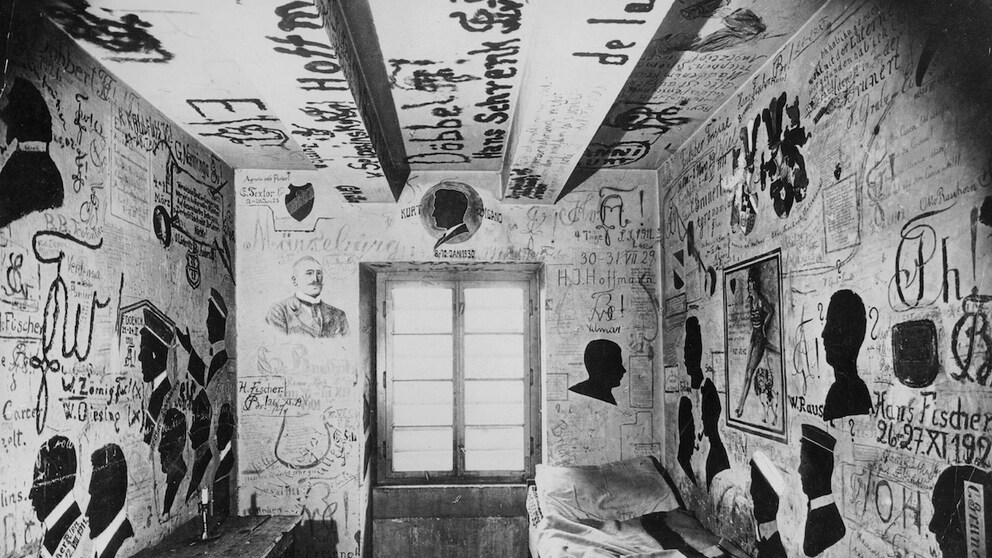
A wooden cot, a bench, a table, a toilet, and a small window–anyone entering this room at the University of Göttingen finds themselves in one of the most unusual places in the city. And one of the most historic, as this was a special prison for nearly 200 years. No serious criminals were locked up here, but rather some of the university’s enrolled students. The so-called student prison was a place where one paid for offenses against university regulations. Initially feared, the punishment eventually became a sort of badge of honor. Even one of the most influential figures in German history “enjoyed” it.
But let’s start from the beginning: In 1735, the University of Göttingen decided to take a drastic step, according to its official website. To prevent extracurricular student activities from getting out of hand, they established an in-house prison. From then on, anyone violating general moral standards had to serve time there. Offenses punishable in the student prison included drunkenness, participation in (already forbidden) duels, and public urination. Depending on the severity of the offense, the university administration could set a penalty, ranging from small fines to two weeks of imprisonment.
First a Prison, Then a Cult Site
Particularly severe violations could also lead to a semester not being credited or even expulsion from studies. This was possible through the so-called university courts, a privilege of many German universities at the time. During the almost 200-year existence of the quirky prison, university judges imposed a total of about 34,500 days of imprisonment in the student prison. It can be assumed that the conditions were initially anything but pleasant. Only later did they become more liberal, allowing inmates to have food delivered from the city to their “room.” They left their mark with sayings and satirical poems on the walls of the mini-jail. According to the newspaper “Hessisch/Niedersächsische Allgemeine,” one inmate even dubbed the place “House of Academic Freedom” in the style of a hotel.
According to the university’s website, it eventually became almost a badge of honor to have spent a few days in the student prison during one’s studies. The prison sentence slip became a popular keepsake. When the former punishment finally lost its deterrent effect, the unusual prison was closed for good in 1933 after nearly 200 years. However, it had seen quite a bit of “prominence” in terms of its inmates. The most famous was one of the most influential German figures ever, perhaps still the most internationally known German politician. We’re talking about the later Chancellor Otto von Bismarck.
The Most Famous Inmate

He arrived in 1832 as a law student at the University of Göttingen and soon gained a reputation as a troublemaker. It is documented that during his only three semesters here, he spent a total of 18 days in the student prison. The first time he was punished was for throwing a bottle out of a window. He appeared before the university court a total of nine times, also for participating in duels and smoking in public. His move to Berlin was likely not entirely voluntary. He served his sentence in the now-demolished Concilium House. The prison rooms that can still be visited today were created only after 1835.
Also interesting: A woman was imprisoned for almost 50 years at Stolpen Castle
In 1914, the Göttingen student prison was repurposed in an unusual way. When World War I broke out, Canadian exchange student Winthrop P. Bell suddenly found himself in a difficult situation as an “enemy alien.” To avoid arrest by the official police, the university took the young man into protective custody in its prison rooms. After a few weeks, he traveled to an internment camp in Berlin, from where he eventually returned to his homeland. During the time the university prison was in operation, there were a total of 24,500 penal and disciplinary measures. In 2007, the rooms were restored thanks to generous donations. Today, they are among the largest tourist attractions in Göttingen.
Those interested can secure a spot on a city tour through the official city website. This tour also includes the once-notorious student prison. The old “wall paintings” by former inmates are remarkably well-preserved. A staff member from Göttingen’s city marketing says in response to a TRAVELBOOK inquiry: “The tour lasts 45 minutes, during which you see the old cells and the university’s auditorium. It is definitely in high demand. When a tour is booked with us, people usually ask about the prison first. For many, it’s the reason to book a tour with us at all. Thus, the place has naturally become a flagship of the city.”