

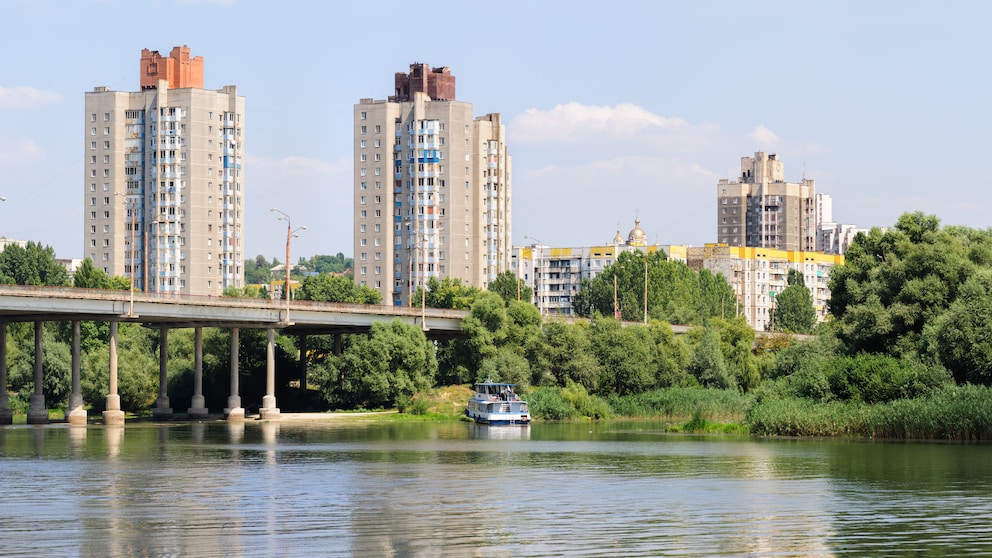
February 17, 2021, 10:12 am | Read time: 9 minutes
There is its own currency, passports, and a military: Transnistria seems like its own country. Yet, this de facto state is not recognized by any other country in the world. TRAVELBOOK editor Larissa Königs visited the country that technically doesn’t exist in 2019. Here’s what she experienced and what you should definitely not forget when traveling to Transnistria.
Sandwiched between Moldova and Ukraine, on just about 4,000 square kilometers, lies a country that technically doesn’t exist. A country that declared itself independent in the early ’90s when its “big brother,” the Soviet Union, was at its end–and yet, to this day, it is not politically recognized by the world. Despite this, it issues passports, has its own currency, and protects its borders. This is the Pridnestrovian Moldavian Republic, or Transnistria, which I am currently trying to enter.
The situation itself is already absurd because, de jure, Transnistria still belongs to the Republic of Moldova, where I am currently staying. There aren’t too many must-see attractions here, but Transnistria is definitely one of them, as I was assured from all sides beforehand. For instance, at the airport car rental, I was first asked if I planned to leave the country. Leave Moldova? No, of course not, I’m only here for a few days. But the car rental guy already smirks and says, “Oh, you’re not going to Transnistria?” Um, yes, of course. I just hadn’t considered that Transnistria is regarded as a real state here.
Overview
The History of Transnistria
The situation itself is already absurd, because de jure, Transnistria still belongs to the Republic of Moldova, where I am currently staying. There aren’t too many must-see attractions here, but Transnistria is definitely one of them, as I was assured from all sides beforehand. For example, at the airport car rental, I was first asked if I planned to leave the country. Leave Moldova? No, of course not, I’m only here for a few days. But the car rental guy already smirks and says, “Oh, you don’t want to go to Transnistria?” Um, yes, of course. I just hadn’t considered that Transnistria counts as a real state here.
Overview
The History of Transnistria
The situation itself is already absurd, because de jure, Transnistria still belongs to the Republic of Moldova, where I am currently staying. There aren’t too many must-see attractions here, but Transnistria is definitely one of them, as I was assured from all sides beforehand. For instance, at the airport car rental, I was first asked if I planned to leave the country. Leave Moldova? No, of course not, I’m only here for a few days. But the car rental guy already smirks and says: “Oh, you don’t want to go to Transnistria?” Um, yes, of course. I just didn’t consider that Transnistria counts as a real state here.
In fact, the history of Transnistria is as follows: In the summer of 1992, the region split from Moldova after a bloody conflict. The background was the Transnistrians’ loyalty to Russia. Even today, the Russian government secures Transnistria’s “independence” with a “peacekeeping force” of about 1,000 troops. The Transnistrian army itself is estimated to have around 15,000 fighters under arms, according to “Spiegel.” I get my first glimpse of how serious the de facto state is at the border.
Everyone who wants to enter must get out of their car and show their passport, then discussions take place in Russian. Luckily, we have a guide with us because English doesn’t get you far here. When I pull out my phone, I’m quickly and roughly told: “No phone, no photos!” With this help, we get through the control without any problems and can cross the border. Now we are in Transnistria–and the proximity to Russia is now unmistakable.
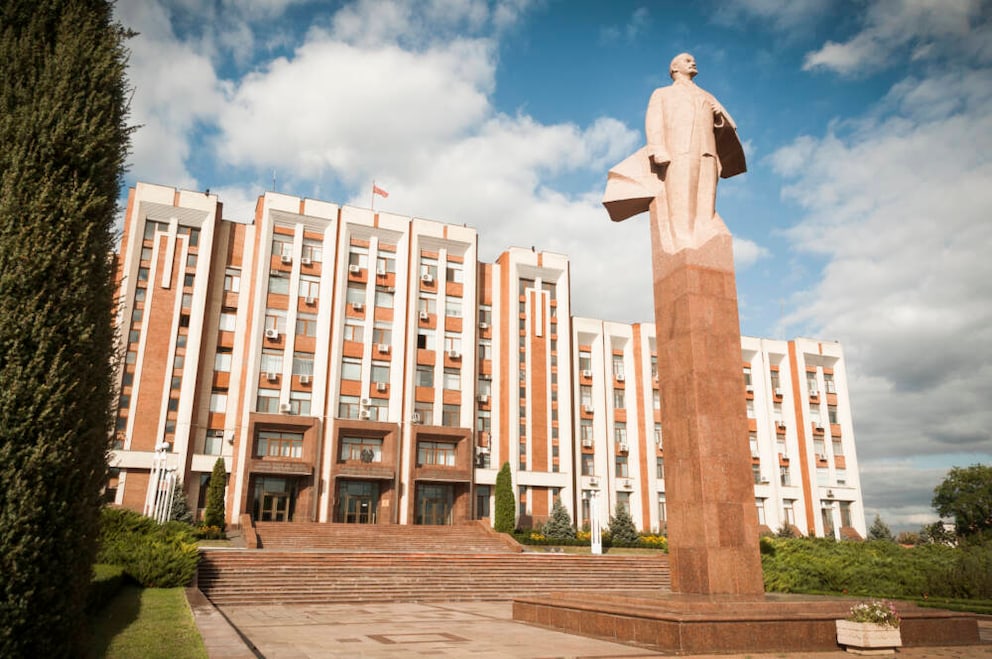
Russian and “Sheriff” Are Ubiquitous in Transnistria
The country feels like the last remaining state of the Soviet Union. Everywhere there are huge monuments, sometimes reminiscent of the bloody conflict, like the fighter jet in the capital Tiraspol; sometimes of communist idols like Vladimir Ilyich Lenin. Posters are in Cyrillic, Ladas drive on the streets, Eastern Bloc architecture dominates the cityscape, and almost everyone speaks Russian. Naturally, since at least 160,000 of the country’s approximately 500,000 inhabitants hold a Russian passport. And another thing is ubiquitous in the country, which is only about 200 km long and up to 20 km wide: “Sheriff.”
The company bearing this name can truly be found on every corner in Transnistria. All gas stations: Sheriff. The only supermarket chain? Sheriff. Even a publishing house, a TV station, and a soccer club, FC Sheriff, belong to the empire. The corporation, founded by two former KGB agents, is also rumored to be involved in shady dealings and trades, including drugs, weapons, and even human trafficking. The company secures its power in the country by having many politicians who used to work for “Sheriff” or still do, such as the current president, who was once the head of security there. Perhaps corruption is also a reason why more and more young people are emigrating. It is estimated that the country’s population has roughly halved since its inception, likely due to political isolation and a lack of prospects for young people.
Little Freedom of Speech, Lots of Wine
On site, at least as a tourist, you don’t notice any of this. Most of the people I meet during my five-hour stay in the country are open and friendly–and extremely uncritical. As a result, while no one answers my question about why there is no independent journalism in the country, I am invited by a monk to taste the wine grown at the monastery. At least: It tastes delicious.
Also interesting: How to Start Your Own Country?
By the way: Transnistria is mentioned by the German Foreign Office, but only in the travel and safety advice for the Republic of Moldova. It states: “Travelers going to Transnistria are advised that consular assistance from the German Embassy in Chișinǎu cannot generally be provided.” This sounds intimidating at first, but after a visit, I can say that there is definitely nothing to fear on the ground if you follow the rules. In fact, the locals are very friendly and open to tourists.
Here’s a tip to keep in mind if you’re traveling alone: Learn at least a few words of Russian. For example, “Ya ne govoryu po russki,” which means “I don’t speak Russian.”
Must See in Transnistria
The Tourist Complex Around Bender Fortress
Bender, with over 93,000 residents, is the second-largest city in Transnistria. The fortress was expanded in the 16th century and served as a seat for Ottoman and later Persian conquerors, and much later, around 1709, as an exile for Swedish and Polish kings, and even later, until the late ’90s, as a Russian military base. Having fallen into disrepair, the fortress was only restored a few years ago. Now, there is also a hotel and restaurant and an impressive forecourt. Visitors should not miss the famous cannonball of Baron Munchausen, who was also stationed here, which you can climb on for a photo.
The Noul Neamț Monastery in Chițcani
The monastery was founded in 1861 and existed until May 1962. At that time, it was closed by the Soviet authorities and used as a hospital until the late ’80s. The monastery church was reopened in 1989, followed by the Romanian-language school for Orthodox priests in 1991. Today, visitors can tour the male-run monastery. Women should wear a headscarf. If you don’t have one, you can borrow one on-site.
The Capital Tiraspol
Tiraspol is the cultural and economic center of Transnistria. The university town has nearly 150,000 residents and was founded in 1792 by the Russian general Alexander Suvorov, who is honored with a large monument in the central Suvorov Square named after him. It’s also worth walking along the 25th of October Street, visiting the Monument to the Fallen, and checking out the Town Hall, the House of Soviets.

Travel Tips for a Vacation in Moldova, Europe’s Most Underrated Country

Which Countries Require a Passport?
Currency in Transnistria
Euros Are Only Accepted as Bills
Many Transnistrians accept euros instead of the local currency, the Transnistrian ruble–but only as banknotes, since coins cannot be exchanged at the bank. Alternatively, you can pay everywhere with the Moldovan leu.
Entry into Transnistria
Fly to Chișinǎu, the capital of Moldova, and from there travel by car or bus to Transnistria. There are also tour operators, such as Transnistria Tours, that organize the entire entry and exit process. If you plan to stay in Transnistria for more than 24 hours, you must register at a migration office–a day trip is therefore recommended.
Current Travel Warning
The Republic of Moldova is still considered a high-risk area and has been particularly hard hit by the COVID-19 pandemic. The German Foreign Office advises against non-essential tourist travel to the Republic of Moldova.