

October 2, 2026, 4:51 am | Read time: 5 minutes
The Grabowsee Sanatorium is a former tuberculosis sanatorium north of Berlin. TRAVELBOOK author Anna Chiodo (formerly Wengel) visited this lost place and reveals why it’s worth a visit and what to expect there.
The car drives into the forest. A narrow road, riddled with holes and bumps, leads past numerous trees. Not a person in sight. The GPS has already given up. It’s broad daylight, the sun shining through the dense green of the trees. Yet, I feel a bit uneasy. Eerie, though I can’t quite say why. Perhaps it’s because I’m on my way to an abandoned clinic complex, a so-called lost place.
Warnings, Debris on the Ground, and Dead Silence
I stand before a makeshift gate, bristling with all sorts of prohibition signs and warnings. A bike lock secures the construction fences wedged between the walls. Am I in the right place?
Bernhard Hanke, who manages the Grabowsee Sanatorium, opens the gate. A brief introduction and the note that my nearly five-year-old should now put on her bike helmet–“in case something falls from the ceiling”–and we’re off. We can wander alone through the square-arranged hospital buildings, explore, and get a little spooked. We should avoid the basements because of the child–asbestos.
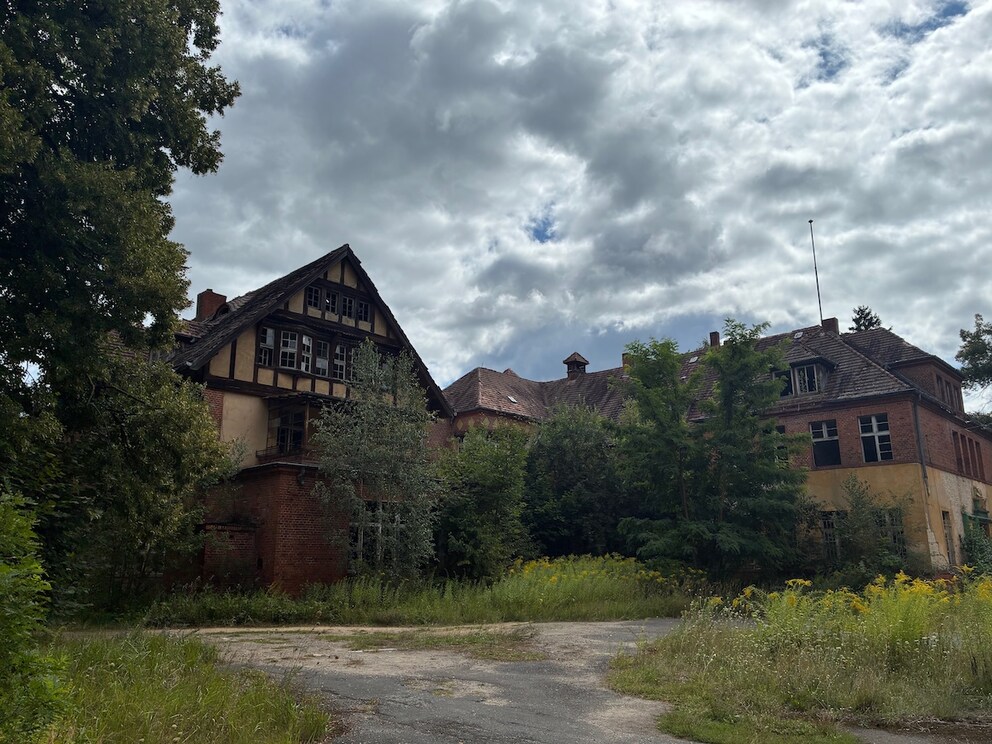
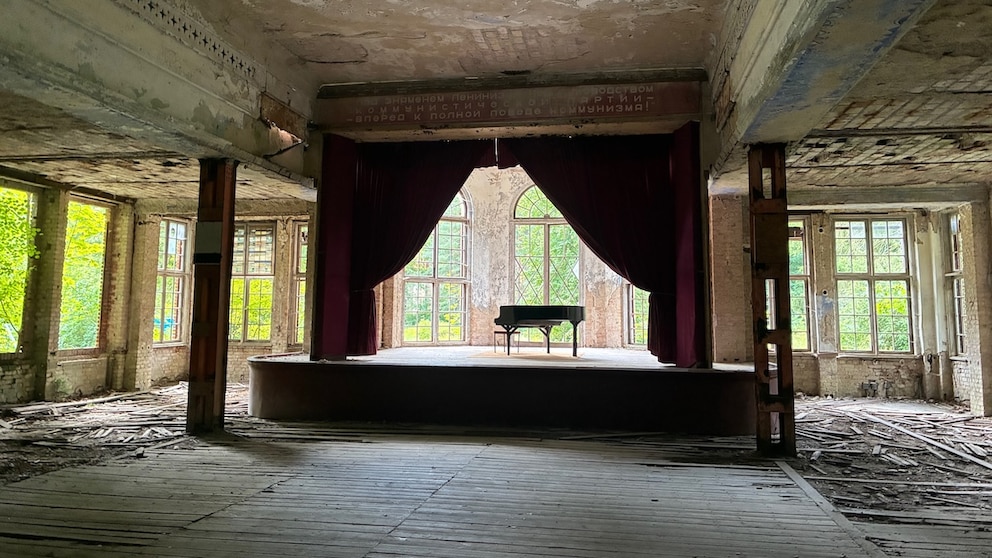
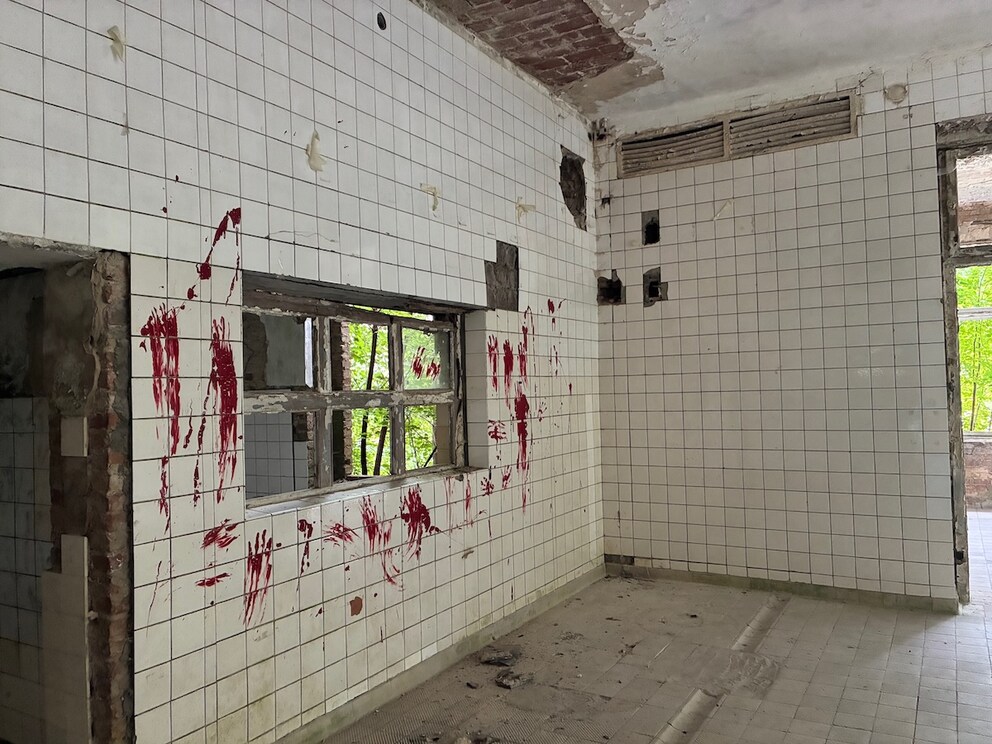
It doesn’t take long before we stand before the first complex of the roughly 30 buildings. Boldly, we step inside. It’s dead silent, and no one else seems to be here. Slowly, we move forward, over debris, through corridors where plaster falls from the walls, and doorless frames, until we reach a white-tiled room. On one wall, there are huge red smears made by hands. “Blood,” is my first thought. “Paint,” my mind immediately corrects. Creepy nonetheless. We continue through a narrow doorway–and suddenly we’re in the iconic image of the Grabowsee Sanatorium: An old, keyless grand piano stands on a stage adorned with a red velvet curtain at the end of a vast hall. Above the curtain, Cyrillic letters are emblazoned, a relic from the time when the sanatorium was in the hands of the Red Army.
The History of the Lung Sanatorium
Originally, the site north of Berlin was established in 1896 by the German Red Cross as a lung sanatorium for tuberculosis patients. A trial run in the then German Empire, it was meant to show that the disease could be cured not only in the healthy air of mountain and coastal regions but also in the Mark Brandenburg pine forest. After World War II, the sanatorium, like the entire German East, fell into Russian hands in 1945. They set up a military hospital here. According to the photo book “The Grabowsee Sanatorium” by Andreas Jüttemann and Karsten Rybka (published in 2024 by Vergangenheitsverlag), little is known about this period.
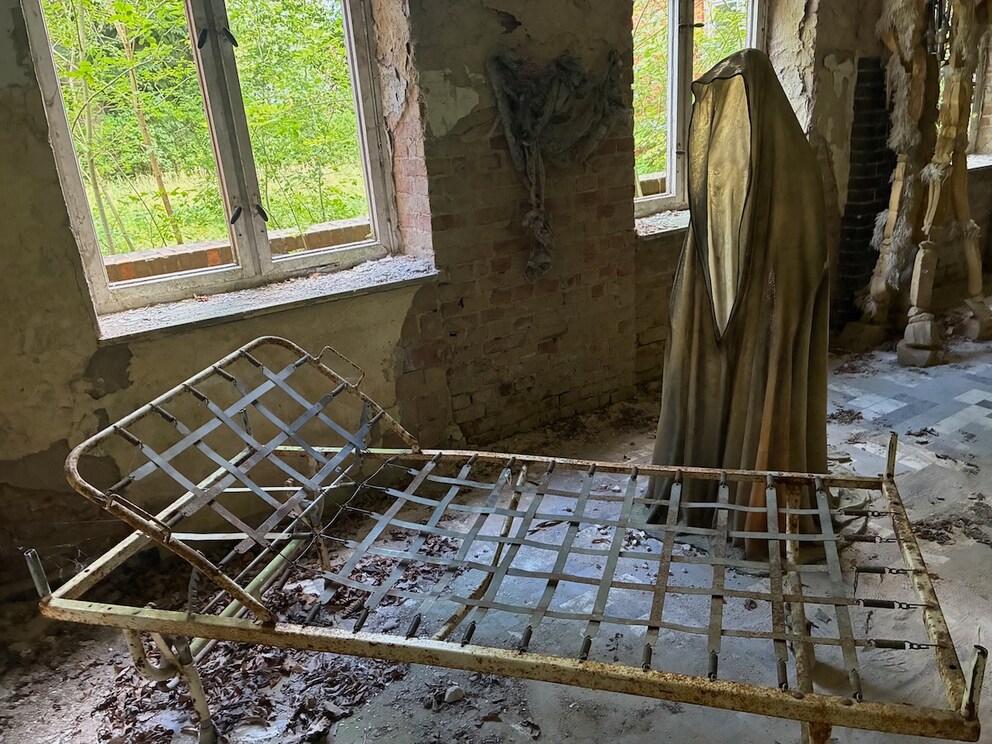
After the Red Army withdrew in 1991, the hospital was closed. The site initially returned to the Brandenburg State Insurance Institution. Eleven years after the clinic’s closure, the current owner, a private investor from Berlin, purchased the property. The buildings, already in poor condition during the Soviet era, have been deteriorating since the end of the war. The site has repeatedly been targeted by metal thieves and people who vandalized and set parts of the buildings on fire. The arson reached its peak in 2007 when the historic chapel burned down to its foundations.
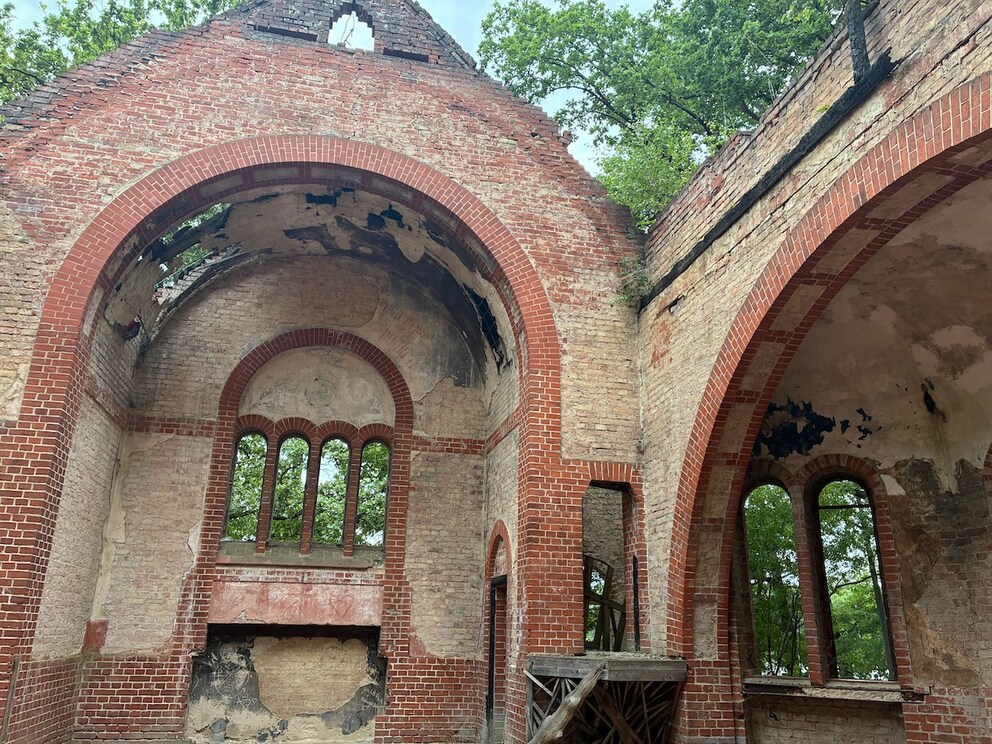
In 2011, the nonprofit association Kids Globe e.V., led by Bernhard Hanke, took over the site as a tenant. Subsequently, fences were erected, and many parts of the partially listed buildings were secured. The site is now constantly monitored. However, unauthorized individuals still try to enter the site, Hanke told me later. Just recently, a few people broke in at night, despite the fences and various prohibition signs. Every unauthorized entry is now reported.

Which of these places is the spookiest in Germany?
Former Franciscan Monastery in Berlin Is the Setting of a Dark Legend
Filming Location Grabowsee Sanatorium
The Grabowsee Sanatorium attracts horror fans, ghost hunters–and Hollywood. More than ten years ago, Hollywood star George Clooney came here with a film crew, tanks, military vehicles, and other equipment needed for his war film “The Monuments Men” (2014). German horror film fans might also recognize the images of the former sanatorium, as the site was used a few years later for the film “Heilstätten” (2018). Although the film is set in the famous Beelitz-Heilstätten southwest of Berlin, it was filmed here at Brandenburg’s Grabowsee.
Visiting the Grabowsee Sanatorium
The former sanatorium is currently open Thursdays and Fridays from 12 to 5 p.m. and on weekends from 10 a.m. to 5 p.m. You can’t just drop by; instead, you must schedule your visit by calling Bernhard Hanke (0175 24 25 27 5). Regular admission is 10 euros. The site is not wheelchair accessible, and entry is at your own risk.
What Will Become of the Grabowsee Sanatorium?
The future of the former sanatorium is uncertain. Association founder and tenant Bernhard Hanke plans to establish an international children’s and youth academy called Kids Globe at this location. He is currently seeking sponsors for his project. Among his desired investors is entrepreneur Bill Gates. How this project will proceed remains unclear.
For now, the Grabowsee Sanatorium remains open to visitors interested in the intriguing lost place near Oranienburg, who contribute to its preservation with their admission fees.