

May 4, 2026, 8:12 am | Read time: 4 minutes
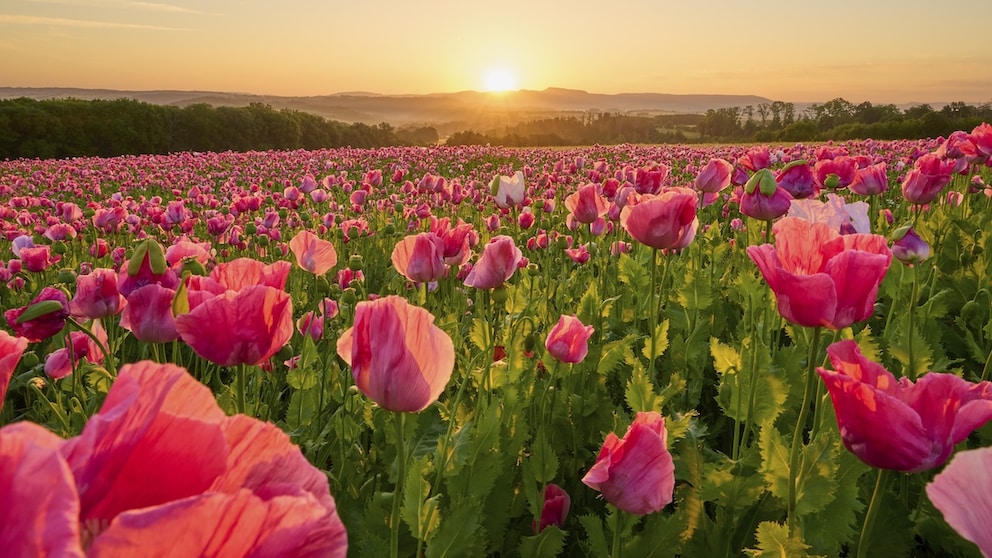
Delicately fragrant, vibrantly colored, and rarely seen in Germany: The pink opium poppy is a natural spectacle that can only be admired for a short time each year. TRAVELBOOK reveals why the cultivation of this special plant is strictly regulated, where visitors can still experience the flower fields, and when a visit is worthwhile.
Visitors particularly enjoy coming to the GEO Nature Park “Frau-Holle-Land” in the early summer months. The reason: the pastel-colored poppy blossoms, which are rare in Germany. In delicate shades of rose, pink, and violet, an impressive sea of cultivated poppies spreads out here.
Germany’s Most Famous Poppy Region
The nature park is located in Hesse, southeast of Kassel, and covers an area of about 1,156 square kilometers. In addition to numerous mountains, bodies of water, and towns, it is home to what are probably the most beautiful poppy fields in Germany, located in two villages.
Since 2010, opium poppies have been cultivated annually in Germerode. The large, vibrantly colored fields quickly became well-known among visitors and have been expanded year after year. They now cover about four hectares, equivalent to roughly six soccer fields. This includes the fields in Grandenborn, an area that has been considered the second poppy village in “Frau-Holle-Land” since 2017.
What makes these poppy fields special is not only their rarity but also their accessibility. While poppy fields used for agriculture are generally off-limits, lovingly designed hiking trails lead right through the blossoms here. The experience is complemented by wagon rides, and in the “Poppy Cinema,” visitors gain fascinating insights into the plant and its cultivation.
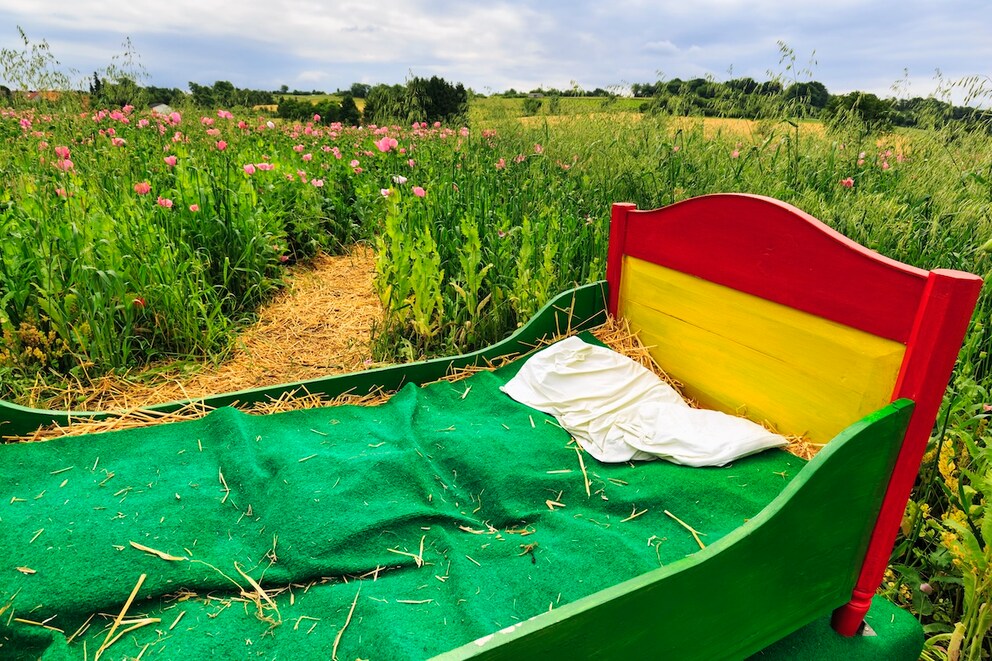
The locations also have a lot to offer culinary-wise: In Germerode, the “Mohntenne” invites visitors to a large beer garden and numerous poppy specialties right in the fields. Even homemade poppy ice cream is on the menu. In Grandenborn, the “Teichhof” serves its own poppy menu. Guests can also try the traditional Hessian “Ahle Wurscht” here. A farm shop with various poppy products rounds out the offerings.
Atacama Desert Blooms Again – TRAVELBOOK Showcases Stunning Photos

Tulip Paradises Close to Home – These Are the Best Day Trip Destinations
Blooming Season Around the Summer Solstice
Unlike the well-known red corn poppy, which self-seeds every fall, the operators in “Frau-Holle-Land” sow the opium poppy in the spring. Depending on the weather, the plants develop at different rates. As a rule of thumb: Around the summer solstice, around June 20, the fields are in full bloom.
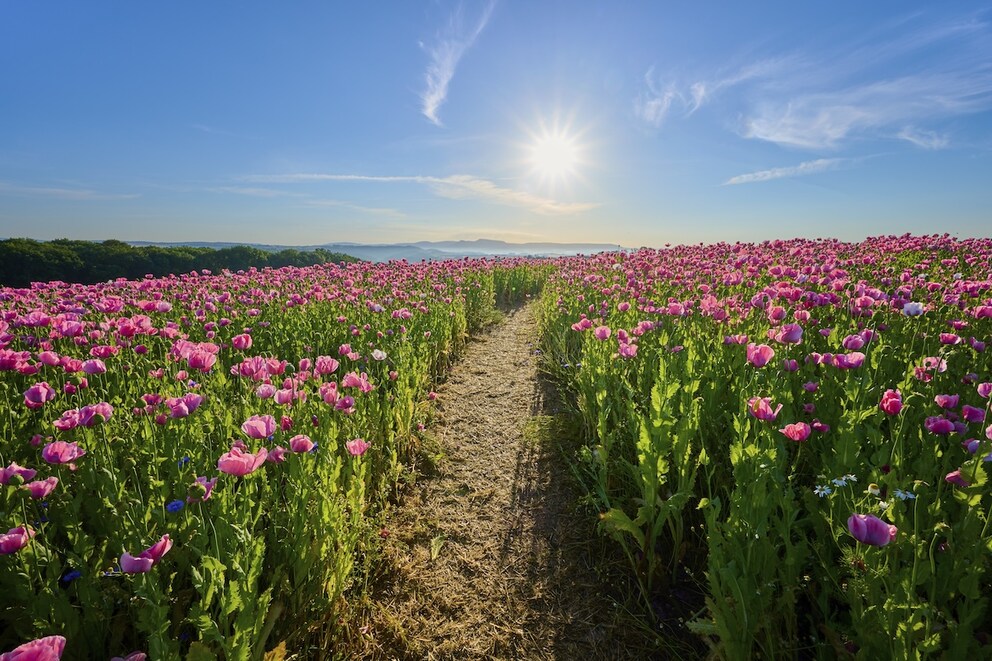
An equally impressive and fleeting natural spectacle: Each individual poppy blossom opens for only one day! However, since each plant carries several buds that bloom at different times, and the sowing takes place over several days, the vibrantly colored seas of blossoms can be admired for a few weeks.
Good timing for a visit is crucial—and getting up early is worth it. In the morning, when the buds are just opening and the petals are still crumpled, their transformation throughout the day can be observed particularly impressively.
Before visiting, it’s definitely worth checking the current bloom ticker.
Idyll with Strict Regulations
What appears here as a delicate sea of blossoms is also one of the oldest and most sensitive cultivated plants in the world: For millennia, people have extracted opiates from the milky sap of the opium poppy—including morphine and codeine, but also heroin. Accordingly, German authorities strictly regulate its cultivation. The Narcotics Act stipulates that farmers may only cultivate opium poppy with official permission. Only a few specially bred varieties with a very low morphine content of less than 0.02 percent are approved.
Despite these strict regulations, visitors need not worry: The poppy seeds used in cakes or other specialties are completely harmless.