

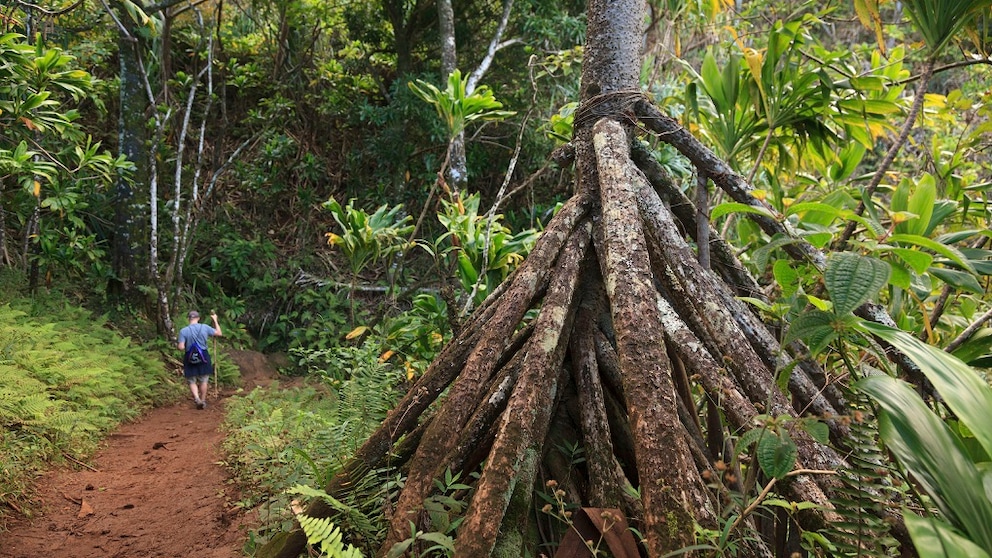
April 27, 2026, 2:52 pm | Read time: 4 minutes
Due to its spectacular views, the Kalalau Trail coastal hiking path in Hawaii is very popular. However, it is also extremely dangerous. The paths here are very narrow and rocky, dropping hundreds of meters vertically into the depths. Hikers are sometimes caught off guard by flash floods or rockfalls. Additionally, there’s a section on the trail that has already claimed the lives of nearly 100 people.
On the Hawaiian island of Kauai lies one of the most beautiful yet dangerous hiking trails in the U.S., if not the world. The roughly 22-mile-long Kalalau Trail runs along the steep cliffs of the Na Pali Coast, offering unique views of the landscape and ocean. Yet countless people have died on this trail, with one section considered particularly perilous. Unpredictable weather conditions can turn the trail into a death trap even for experienced hikers. Despite this, it’s so popular that you must apply for a permit to access it, and only a few are available each day.
According to the Hawaiian Department of Land and Natural Resources, which manages the Kalalau Trail, it was established around 1800. Originally, it was not intended for the enjoyment of hikers but connected remote villages via a coastal path. To this day, the hike is the only way to reach this section of Kauai’s coast by land. While the 22-mile total distance may not deter experienced hikers, there are even camping opportunities along the way for those with the necessary permit. Yet, warnings abound online, with “Backpacker Magazine” calling it one of the most dangerous trails in the U.S.
Flash Floods, Rockfalls, Deadly Undercurrents
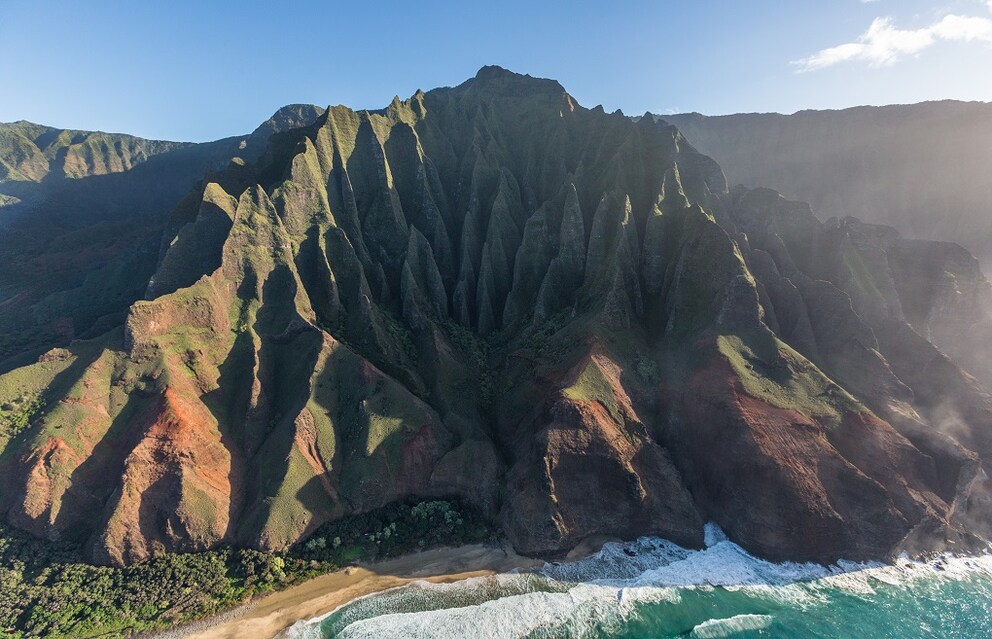
This is partly because the paths along the Kalalau Trail are extremely narrow. More or less throughout the entire trail, there are deep chasms right next to the hiker. A fall here would mean an unimpeded plunge into the sea or onto the rocky coastline—certain death. Rainfall, which is frequent on the island, can turn the already dangerous paths into a deadly slide of mud and debris. Rockfalls are also common along the entire trail. The rain causes erosion of the already porous volcanic rock. Rain-induced flash floods can cut off hikers for hours or, worse, sweep them over the edge of the cliffs into the depths.
The deadliest section of the trail, however, is a place that appears paradisiacal at first glance: the beach at Hanakapi’ai, located just over two miles from the start of the Kalalau Trail. According to “Backpacker Magazine,” nearly 100 people have drowned here over the years due to dangerous undercurrents. This is partly because the trail to the beach can be accessed without the permit required for the entire trail. A simple reservation suffices, attracting many outdoor enthusiasts. Given the circumstances, all authorities advise against swimming at Hanakapi’ai Beach.
Permits Are Limited

Another two miles from the beach, hikers encounter the next natural highlight with the Hanakapi’ai waterfall. According to the official Kalalau Trail website, this section of the trail is already more challenging and should only be attempted in good weather due to the dangers of flash floods or rockfalls. Those wishing to continue beyond the waterfall need the official permit. The next section after Hanakoa passes by artificially created terraces where locals once grew taro. Taro is a tuber and one of the world’s oldest staple foods. Today, coffee grows there.
On the total 22-mile trail, the Kalalau Trail traverses five valleys and overcomes an elevation change of about 790 feet. It ends at Kalalau Beach, which gives the trail its name. Since it is not a loop trail, you must retrace the same path on the return journey as on the way in, totaling 11 miles each way. Those who wish to undertake the hike despite all its dangers can apply for the necessary permit up to 90 days in advance on the Hawaiian Department of Land and Natural Resources website. This costs $35 (about 30 euros) per day and is limited to 60 permits daily. If weather conditions on the planned hike day do not allow for the hike, the costs are not refunded.