

August 10, 2025, 6:37 am | Read time: 4 minutes
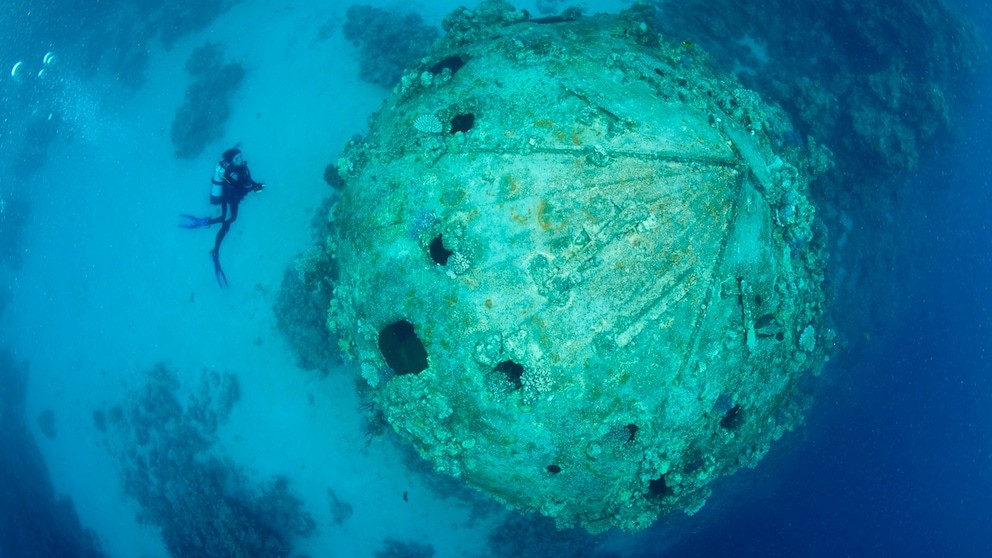
A spaceship-like capsule is decaying under algae and coral, and weathered shark cages have dug deep into the seabed. In the middle of the Red Sea lie the ruins of an underwater village whose history has been completely forgotten.
In 1962, according to the website of the Cousteau Society, the human settlement Précontinent I was built 35 kilometers off the Sudanese coast on the floor of the Red Sea. The marine researcher Jacques-Yves Cousteau wanted to prove with its construction that humans could live underwater for extended periods—not in submarines, but in stable buildings on the seabed. To finance this experiment, the Frenchman persuaded the national petroleum authority of France to sponsor his research. Cousteau developed three different underwater habitats, which were installed in various parts of the world’s oceans. Only the second of these projects is still visible today: the Précontinent II, installed a year later.
Space for Several People
According to the Cousteau Society’s report, the settlement consisted of several building complexes. The capsule was once the so-called Starfish House. It included sleeping accommodations, a living and dining room, sanitary facilities, and a room for dive preparation. The structure rested on two-meter-long telescopic legs that could be adjusted to the seabed. Several oceanographers, Cousteau, and his wife lived here.
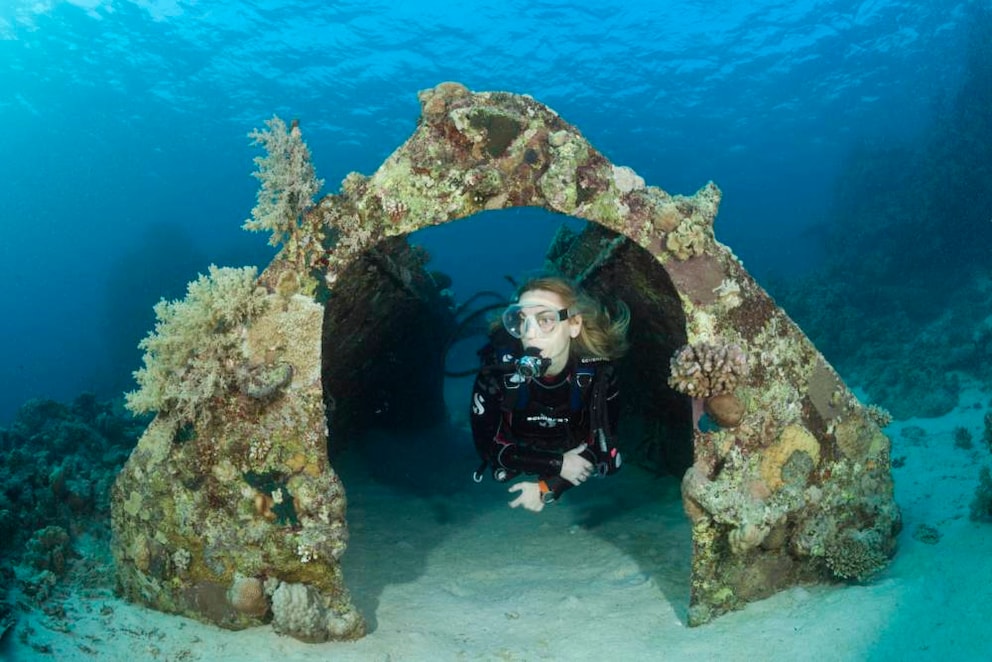
Several rooms branched off from the Starfish, where up to eight more divers could live. The adjacent “Sea Urchin” was used as a garage for a submarine, which could be deployed to a diving depth of 300 meters. To the north was a tool shed where scooters and tanks were stored. Shark cages were set up at various depths across the entire area.
The Magical Diving Gondolas on Germany’s Baltic Coast
Researchers Discover More Than 30 Shipwrecks in Lake Constance!
The Researchers Called Themselves Aquanauts
Cousteau described the setup and daily life in the habitat in his 1964 film Le monde sans soleil (French for World Without Sun). The goal of the research was to station the crew at a depth of ten meters for four weeks, where they used a mixture of air and helium to breathe. They wanted to demonstrate how well humans could live underwater and test the function of various underwater tools. Additionally, the researchers collected fish and other marine animals to study and later exhibit. The Précontinent residents called themselves “aquanauts.”
Also interesting: This post office is underwater
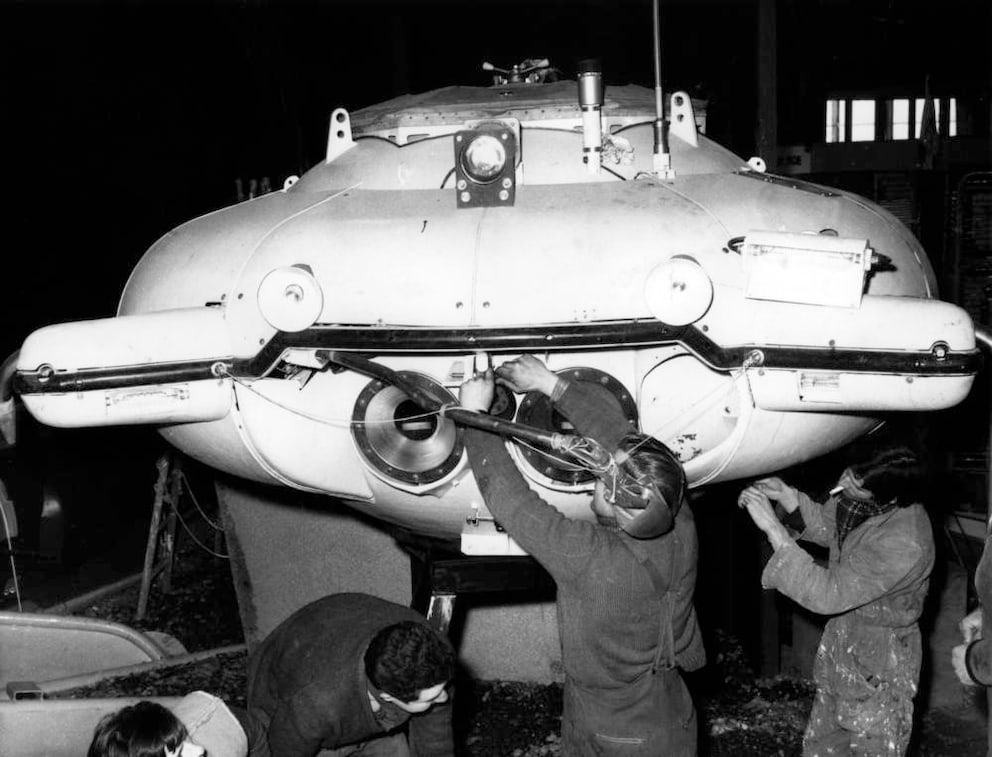
Sixty staff members monitored the mission on land. Supplies were brought to the habitat by couriers. Additionally, a doctor regularly visited for medical examinations of the crew. Part of the crew stayed underwater for an entire month.
Construction of Another Settlement–but Without Cousteau
After the successful completion of the Précontinent II mission, the team built another settlement near the French port city of Nice in 1965. This time, however, the petroleum authority demanded that the project focus more on exploring oil extraction possibilities than on scientific research. At that point, Cousteau, who had become an environmentalist, decided to withdraw from the deal and dedicated the rest of his life to protecting the world’s oceans. Since Cousteau’s departure, the habitats have fallen into obscurity.

Note: In an earlier version of this article, we stated that the remains of Précontinent II could be visited as part of dive tours offered by various providers. This is no longer the case, and the U.S. State Department explicitly warns against travel to Sudan due to military conflicts in the country. We apologize for this error.