

April 1, 2026, 8:37 am | Read time: 4 minutes
The Werdenfels Castle in the Bavarian district of Garmisch-Partenkirchen has a dark past. Now a ruin, it was the site where 51 people were imprisoned and tortured during witch trials in the late 16th century. After sham trials, they met a gruesome death. These events, which spanned two years, have not been fully addressed to this day.
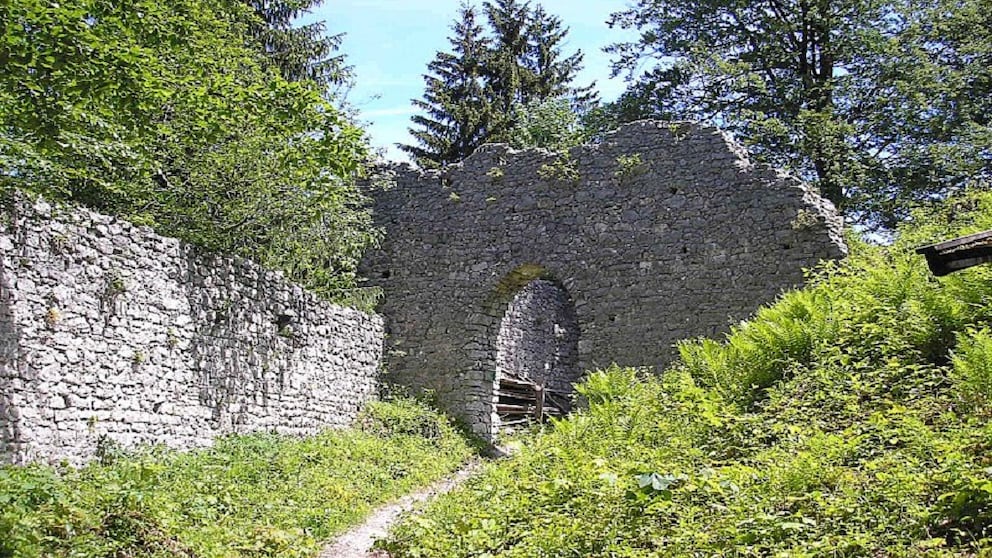
Rising above the Loisach Valley in the Bavarian district of Garmisch-Partenkirchen is a fortress with a dark history. Today, the site is a ruin and a popular tourist destination, but once, Werdenfels Castle was a place ruled by madness—specifically, the witch craze. During the persecution of supposed dark forces in the late 16th century, 51 people were held, tortured, convicted, and brutally murdered here. A dark chapter in a region now popular with tourists, its echoes are still felt today.
On September 28, 1589, horror descended upon the district of Garmisch-Partenkirchen. According to the Protestant “Sonntagsblatt,” unrest had been brewing among the population for several years. A plague epidemic and crop failures caused turmoil, leading people to readily believe these were the works of supernatural evil forces. Since 1583, Caspar Poißl von Atzenzell had held the office of caretaker, or regional administrator, and he was willing to entertain even the most absurd accusations. These began on that fateful day with the arrest of 55-year-old Ursula Klöck.
All Because of a Clay Pot
What happened? A fisherman suspected her of bewitching his livestock. He received a tip from another man to boil a clay pot filled with water until it shattered. The next person to visit his house would be guilty of his misfortune. Klöck knew the man suspected her of witchcraft and came to speak with him—shortly after his clay pot broke from the boiling water. The eerie story spread, and Klöck was eventually taken away and became the first person imprisoned at Werdenfels Castle.
Also of interest: Salem: The Witch Capital of the USA
By October 8, 1589, three women were already in custody, including an 80-year-old. The notorious executioner Jörg Abriel, who had made a “name” for himself by burning 20 women in Schongau, was summoned. When interrogations with the women did not yield the desired confessions, torture was first used at Werdenfels Castle on October 20, 1589. Unsurprisingly, this led to “confessions” and accusations against more women. Ursula Klöck denounced her own sister. From then on, events spiraled, with the first “guilty” person committing suicide just before Christmas.

Which of these places is the spookiest in Germany?

The Dreadful Story of This Tree in Cambodia
Burned Alive
What followed were seven so-called Malefiztage. “The term refers to a court hearing and is a translation of the Latin for ‘evil deed,’” explained an employee of the city archive in Garmisch-Partenkirchen upon inquiry by TRAVELBOOK. “Of course, these trials were a farce.” During these “trials,” the women were found guilty based on confessions obtained under torture and sentenced to death by burning at the stake. The first were burned alive, shocking even the hardened administrator Poißl. He then requested that future convicts be strangled before burning.
The “mercy” lasted only until the 5th Malefiztag. Then, women were once again burned fully conscious. This day was also particularly gruesome as it marked the death of the only man convicted during the witch trials at Werdenfels Castle. Before burning, he was broken on the wheel, a particularly horrific act. A total of 51 people died during the persecutions. Records in the city archive of Garmisch-Partenkirchen list the names of 650 “suspects.” An additional 127 people were also accused of witchcraft during the trials, some of whom were imprisoned.
“Morbid Attraction”

By the time the craze began affecting women from wealthy families, public sentiment shifted. According to the newspaper “Merkur,” suspects were subsequently hidden, and executioners were severely threatened. In January 1592, administrator Poißl himself petitioned the Hochstift Freising, which managed the lands, for the release of the remaining imprisoned women. This marked the slow decline of the witch craze in Garmisch-Partenkirchen. In 1730, Werdenfels Castle was dismantled, and its stones were used to build the St. Martin Church, which still stands in Garmisch-Partenkirchen today.
“This chapter has not been properly addressed in terms of cultural memory,” says the city archive. “There are a few information boards at the castle ruins, but no memorial like in other places.” At the same time, the castle remains a popular tourist destination due to the witch trials. “It seems to have a kind of morbid attraction. It is certainly inquired about more regularly than other topics.” Werdenfels Castle is privately owned but open to the public. Regular historical tours are also held, focusing on the witch trials in the region.