

August 6, 2025, 3:14 pm | Read time: 5 minutes
In India, several tens of thousands of people adhere to the ancient faith of Zoroastrianism. Its members are laid to rest in a very unique way: Their remains are offered to birds of prey. In the mega-metropolis of Mumbai, there is a so-called Tower of Silence where this ritual is still practiced today. However, the practice has been in jeopardy for years—not due to issues with authorities or moralists, but because of a dramatic decline in the vulture population.
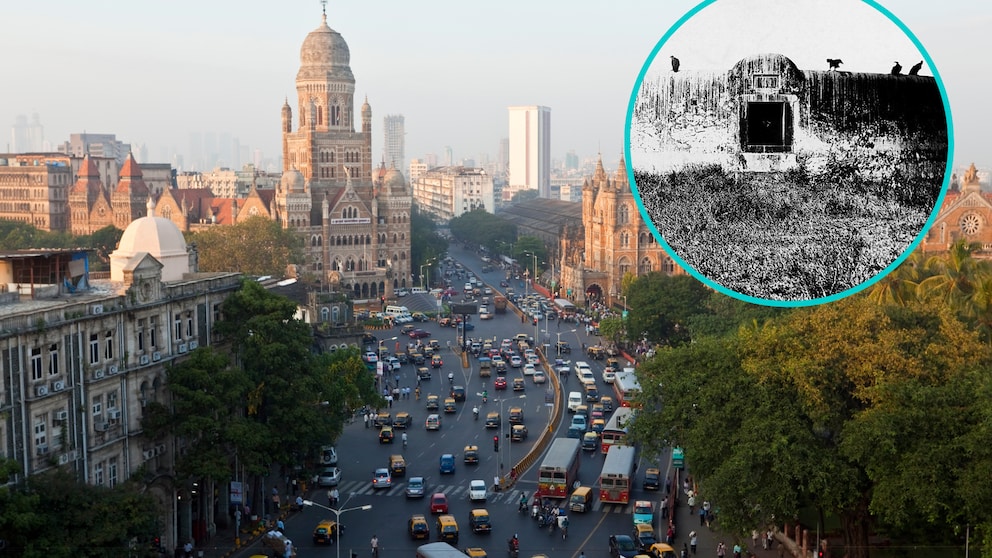
The upscale neighborhood of Malabar Hill in India’s mega-metropolis Mumbai could be mentioned in the same breath as Bel Air in Los Angeles or Chelsea in London. Yet amid all the splendor and wealth lies a place that would likely send a chill down most people’s spines. In a 300-year-old, sprawling park, there is a so-called Tower of Silence. Here, followers of the ancient religion of Zoroastrianism still practice an unusual burial ritual. Instead of burying the deceased in a “traditional” manner, “sky burials” are regularly conducted. In this process, the remains of the faithful are offered to vultures.
As reported by the “Guardian,” this practice, which may seem unorthodox to Western sensibilities, has existed since the 9th century. It traces back to the Iranian philosopher and religious founder Zarathushtra, also known as Zoroaster. According to his teachings, every human body is inhabited by evil spirits during its lifetime, making cremation, burial, or water burial unacceptable to Zoroastrians. Only the element of air was given this significance, as it was believed that the soul ascended through it and the “mystical eye” of the birds of prey to heaven. The act of self-sacrifice to the birds on a Tower of Silence was considered the ultimate sign of goodness.
Half an Hour to Devour a Body
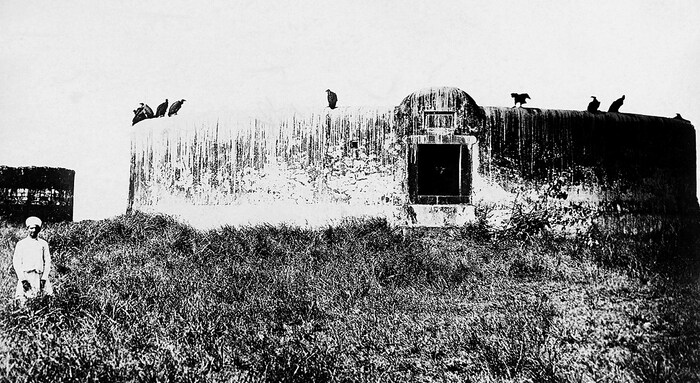
This practice, known as Dokhmenashini, is still carried out by the community members today. The body of a deceased person is brought to a Tower of Silence (Dakhma) and placed on its open platform within three concentric circles. The outermost ring is for men, the middle for women, and the innermost for children. In Iran, where the religion originally developed, it has been officially banned since the 1970s. However, as early as the 9th century, followers spread it worldwide as they fled the expanding Islam. It reached India, where it is estimated to still have up to 60,000 members today. The tradition of Zoroastrianism itself is about 3,000 years old.
Also of interest: This Indian temple guards a billion-dollar treasure
Once brought to a Tower of Silence, the birds of prey take about half an hour to strip all the flesh from the bones. The Parsis, as the followers of Zoroastrianism are called, consider this form of “burial” particularly pure. Relatives of the deceased spend three days secluded on the inaccessible grounds in Malabar Hill. Only if the ancient rituals and prayers can be performed during this time is the soul guaranteed a smooth transition to a better afterlife. However, the centuries-old tradition has been in danger for several years.
Dramatic Vulture Decline

The cause, however, is not overzealous authorities or residents of the upscale neighborhood who find the practice objectionable. Instead, since the early 1990s, a dramatic mass die-off of Mumbai’s vultures has been observed. The culprit is a medication called Diclofenac, originally developed for human consumption. Approved as a pain and anti-inflammatory drug, a version of it was soon administered to cattle. This proved deadly for vultures that fed on deceased livestock. By the time the drug was banned in India in 2006, it had already decimated 95 percent of the country’s vulture population.
An attempt to breed the birds locally ultimately failed. Rumors quickly spread that bodies were piling up at the Tower of Silence in Mumbai. The Zoroastrians then tried another, equally unusual method. They installed solar concentrators, which focus sunlight, and the heat produced accelerates the decomposition of the bodies. Some members also considered cremation as an alternative. However, this practice is still condemned as impure by the traditionalists of the faith community. People who wanted to perform this rite for their deceased relatives were sometimes even denied access to the sacred grounds where the Tower of Silence is located.
Also of interest: The unique death cult of the Toraja in Indonesia
Ultimately, the unusual tradition is also threatened by the modern world. In earlier times, a Tower of Silence was usually located somewhat outside a settlement. Due to urban growth, they are now often in central locations. Naturally, there are also officials who would prefer to ban the ritual, which seems archaic to them, altogether. However, it would be truly barbaric to forbid an entire faith community of tens of thousands of members their beliefs about transitioning to the afterlife. While the Zoroastrian burial ritual may seem outdated to some, it is undoubtedly unique worldwide and therefore worth preserving.