

January 3, 2026, 6:35 am | Read time: 5 minutes
The so-called “UFO City” is an abandoned holiday village from the 1970s in Sanzhi on Taiwan’s northeast coast. For TRAVELBOOK author Doris Tromballa, this place was at the top of her Taiwan travel itinerary. The photos she found promised a futuristic, ghostly atmosphere: What was once hailed as a statement of modern tourism has decayed into a spectacular “lost place.”
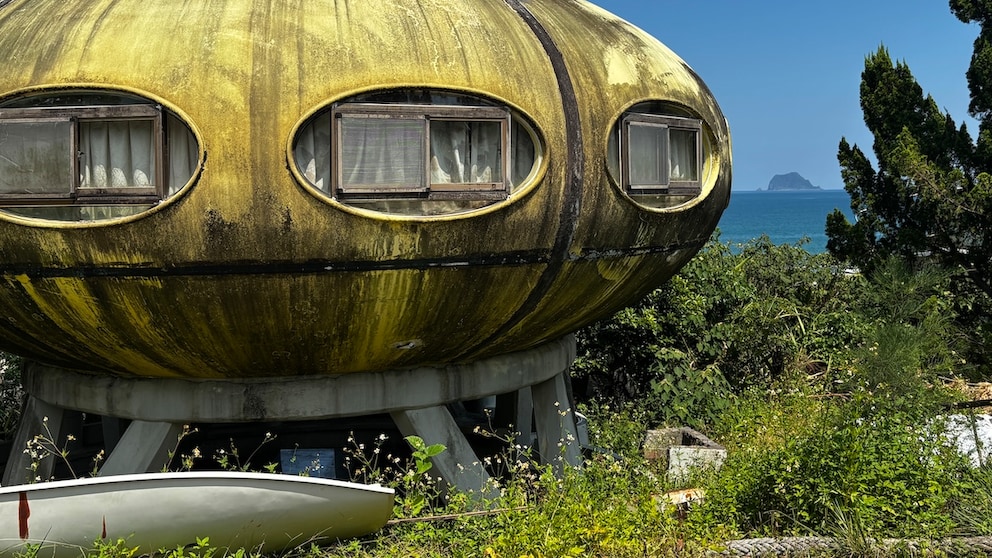
I slowly drive my car over a pothole-ridden gravel path in the blazing midday heat. Am I in the right place? The GPS says yes. But it feels like there’s nothing here. Two shipping containers rust away by the roadside, and a few stray dogs nap under the withered hedges. But this is supposed to be it—UFO City, the holiday village that was meant to become the dream of Taiwanese vacationers. Then, around the next bend, a yellow-brown, tilted egg suddenly rises from the hedges: On concrete stilts, it stretches wearily into the midday sun, the first “UFO.”
The UFO Houses Decay on the Beach
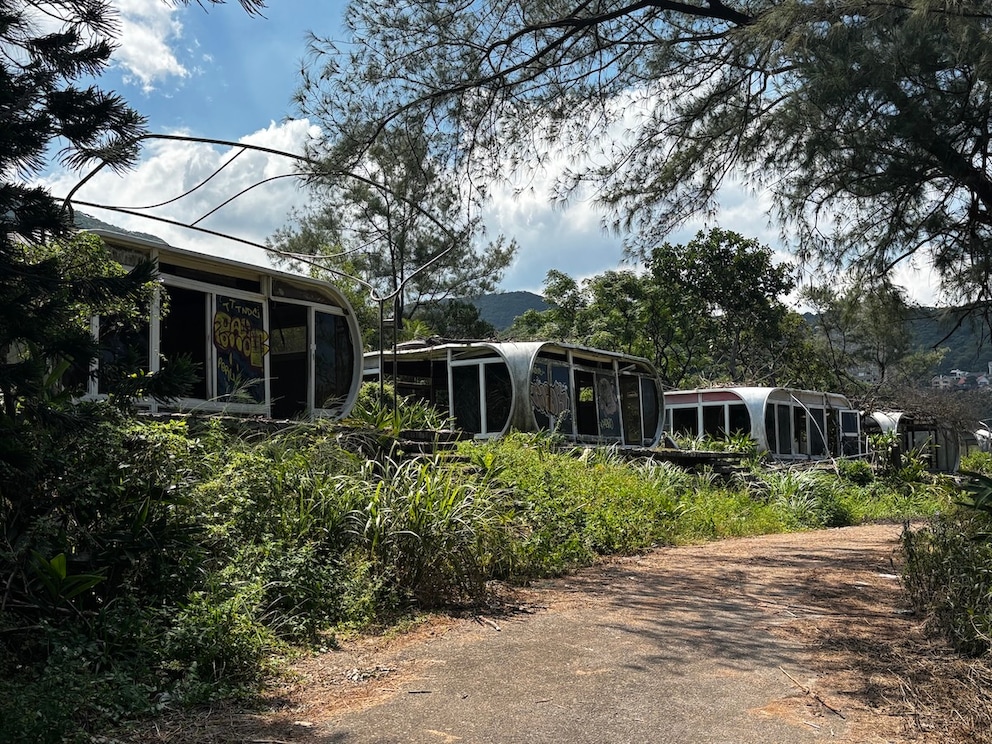
I park the car by the roadside—will anyone else come through here? Well, not much traffic is expected anyway, I remind myself. No one has lived in the UFO houses for a long time. I walk along the gravel path toward the beach. To the right, more of the yellow-brown eggs rise: The concrete steps to the front doors are long overgrown with dense vines, the windows smashed, the exterior covered in graffiti. It feels as if a spaceship with aliens landed here long ago, and the extraterrestrials left their capsules shortly after landing and took off.
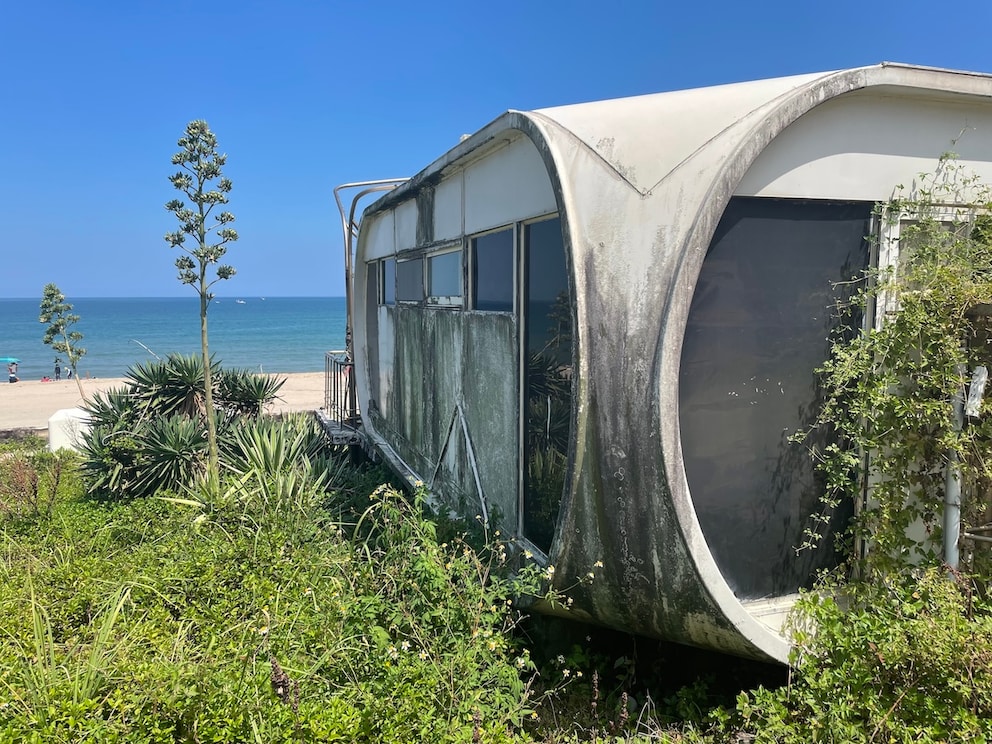
Further down the beach, the egg-UFOs are replaced by white box houses with rounded corners. Quite beautiful, actually: One should be able to enjoy an unobstructed view of the sea through the large glass panoramic windows. But hardly any of these windows remain intact. I cautiously try to peek inside one of the houses. However, everything here looks very unstable. The rotting facade parts creak in the wind, and tattered curtain remnants flutter from the windows.
The Interior Is Devastated
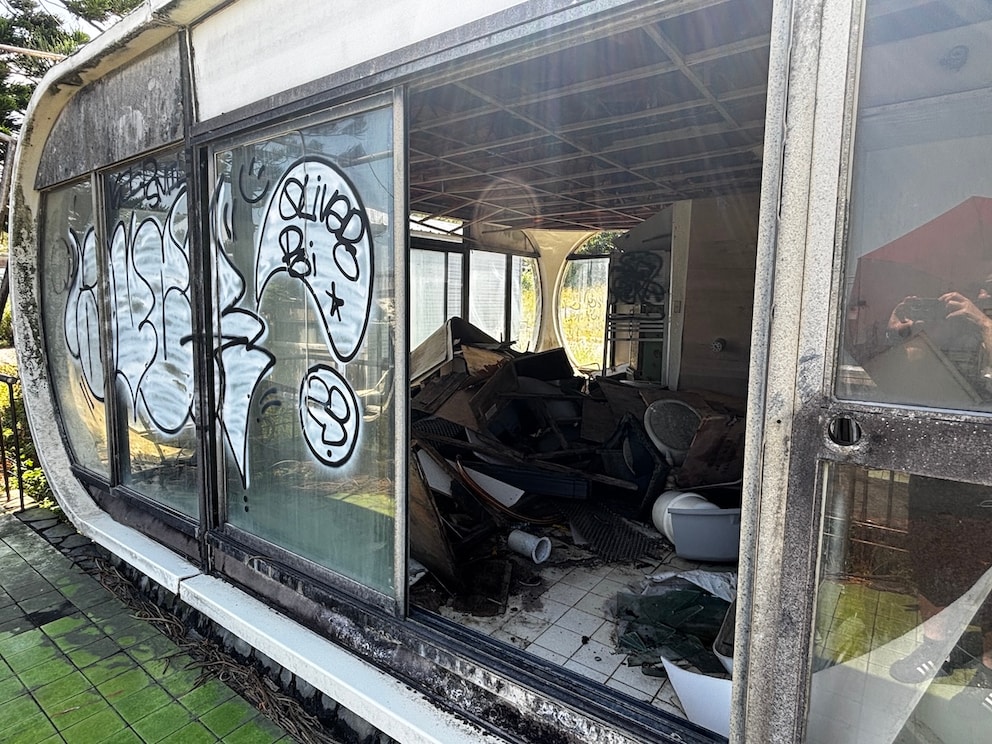
Whether it was the forces of nature or vandalism, I can’t say, but inside the beach houses, it looks like an earthquake hit. Chairs and tables are overturned or smashed, rust eats through the old air conditioners, sofas are slashed, and loose paper flutters through the rooms. A mysterious, fascinating, yet slightly oppressive atmosphere prevails here. It’s eerily quiet, only a few seagulls squawk above me. Otherwise, almost no sound. What puzzles me: What went wrong here? The idea of a modern holiday village right by the sea seems quite legitimate to me—places like Benidorm in Spain or various holiday clubs work too. What went wrong here?
The Optimistic Plan for “UFO City”
The plan initially sounded good: cool, modern architecture in the age of technological advancement, a deep blue ocean, and guaranteed good weather. With this, architects and investors started in Sanzhi at the end of the ’70s. The UFO houses were supposed to look as if they were made from a single piece, without seams or screws. Indeed, like something from another world. A futuristic vacation paradise inspired by the optimism of the space age. The target customers were primarily wealthy tourists and American officers stationed in East Asia. After all, the UFOs were to be equipped with every comfort (marble floors!) and embedded in an elaborately maintained landscape park.

This is perhaps the creepiest mansion in the USA

Young Couple Buys Haunted House – and Experiences Chilling Events
Why “UFO City” Didn’t Become a Vacation Spot
But just two years after construction began, it came to a halt. Disputed building permits and unclear land ownership issues troubled the planners. The construction costs for the luxurious interior of the UFOs skyrocketed, and the investors ran out of money. The project was abandoned. Even a restart 10 years later brought nothing: The new developers couldn’t agree on how to refurbish the already decaying houses. It was also questionable how earthquake-proof the structures actually were—earthquakes are not uncommon on the Taiwanese coast.
Moreover, a paralyzing unease slowly spread around the construction site: Rumor had it that an old grave for soldiers lay beneath the beach section—a bad omen to build a holiday village over a place of remembrance? Soon, whispers of mysterious deaths during construction and ghosts haunting the half-finished UFOs circulated. When a construction vehicle damaged the stone dragon at the entrance to the holiday village—a Chinese symbol of luck and prosperity—many had already made up their minds about “UFO City”: Tear it down!
“UFO City” Becomes a Ghost Town
But for almost 30 years, nothing happened. UFO City decayed and became a secret tip for “lost places” enthusiasts: The futuristic capsules offered a bizarre contrast to the gently sloping ocean beach in front of the houses, where few ventured to swim. In 2008, the decision to demolish was made. A new holiday village was to be built, that was the plan. Once again. To this day, nothing of the sort has been undertaken.
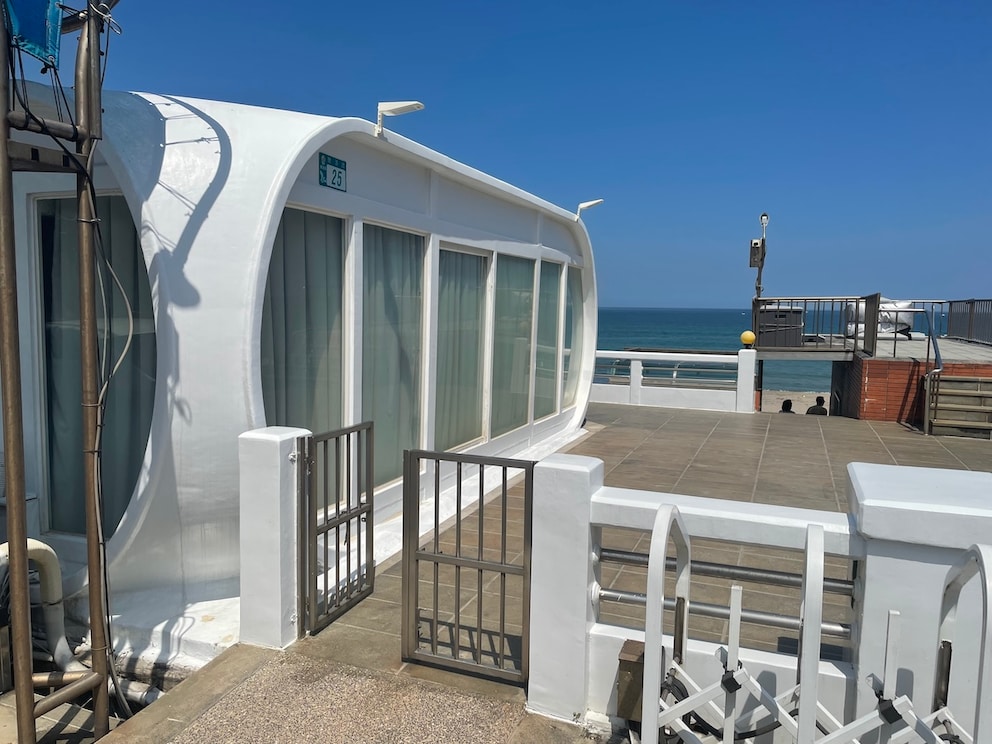
But then I see a dazzling white box house flashing in the middle of the decaying “pods” on the beach: Indeed! A single house seems to have been maintained. Or renovated? Does someone live here? It has a house number, a car is parked in front, and the terrace is well-kept. I try to catch a glimpse inside, but the curtains block the view for the curious. And so it remains a mystery what will become of UFO City in Sanzhi—a new vacation paradise or a fascinating spot for all who love “lost places.”