

June 16, 2026, 4:46 am | Read time: 4 minutes
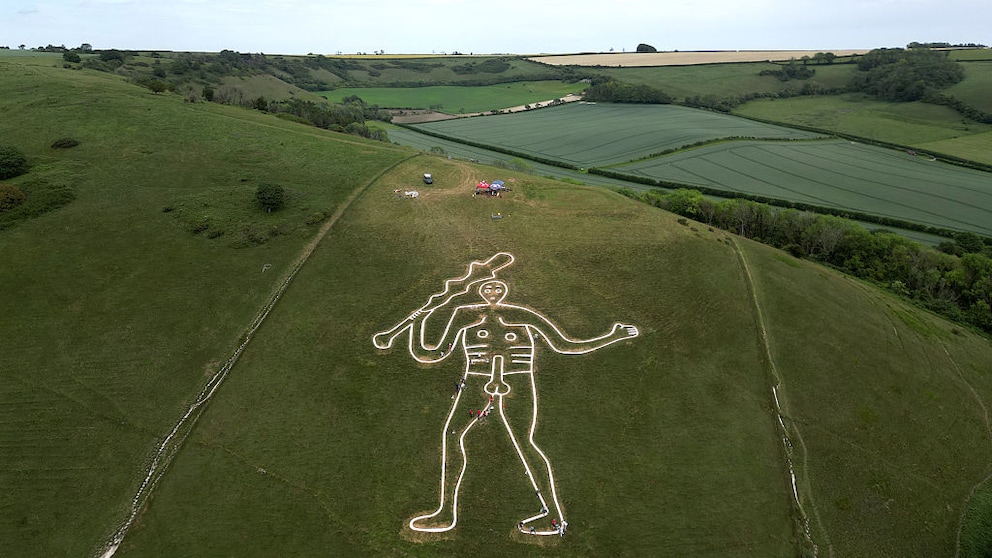
Near the small village in the English county of Dorset lies one of Britain’s most famous monuments. The 180-foot figure of a giant with a massive phallus, etched into the landscape with chalk. Its origins likely date back centuries, but otherwise remain shrouded in history. However, climate change now threatens this iconic image, prompting an unprecedented rescue operation for the Cerne Abbas Giant.
No one knows where it comes from, how old it is, or who created it—yet it is an absolute British icon. Near the English village of Cerne Abbas in Dorset, the hills feature a 180-foot chalk figure of a giant with a club and a truly gigantic phallus. The best part of the unknown man is 23 feet long, and like the entire figure, it may have been etched into the landscape with chalk in ancient times. But now the giant is in danger, which is why an unprecedented aid operation is underway to save it.
The Cerne Abbas Giant is not threatened by outraged moralists, but possibly by climate change, as reported by the BBC. According to the report, the National Trust, which has “cared for” the giant since 1920, attributes the faster fading of the figure to changing weather conditions. Heavy winter rains wash away the chalk more quickly, while milder, wetter climates promote algae growth. In hot summers, grass on the hills around the giant grows back more slowly, leaving the chalk more exposed to erosion.
Regular Facelifting
For this reason, National Trust volunteers are currently working to give the Cerne Abbas Giant a kind of facelift. They are bringing in a total of 17 tons of chalk to retrace the giant’s image and restore it to its former glory. What might sound like a dramatic rescue operation is actually routine for the National Trust. The gigantic image has been subjected to such a “beauty treatment” about every ten years. However, due to changing weather conditions, this may become necessary more frequently in the future, as the BBC quotes the organization.
The current beautification could not initially proceed as planned due to unpredictable weather. Weather changes with heavy rain, strong winds, and extreme heat initially halted work on the Cerne Abbas giant last week. The work had already begun at the end of May and was originally expected to last about two weeks. Whether the giant has now been fully restored is currently unknown. The National Trust uses volunteers for the job.

Copenhagen Rewards Tourists Who Arrive by Train
The Legendary Cave on the Scottish Hebrides
Unknown Origin
The figure is 180 feet tall and consists of lines etched into the ground. White limestone shows a standing figure with a relatively small head but a much larger phallus—an impressive 23 feet long. The giant club in its hand extends the entire figure to more than 200 feet. Ribs and nipples are also visible. The giant is known as the “Cerne Abbas Giant,” or the “Giant of Cerne Abbas.”
Who created the massive artwork and why remains unknown to this day. The naked man is said to have appeared in documents from the 17th century, as reported by the BBC. It is also speculated that the figure could be a relic from the Celtic era (from around 300 B.C.).
Visiting the Giant
Who exactly the male figure is supposed to represent is also unclear. Theories range from a depiction of the ancient Hercules to a caricature of Lord Protector Oliver Cromwell to a West Germanic fertility god. According to a legend, women wishing to conceive should spend a night with the well-endowed limestone gentleman, and their wish for offspring would be fulfilled. Another theory suggests that a real giant is buried beneath the etched lines in the ground.
Whether out of a desire for children or simple curiosity, the giant can be visited. The enormous figure is best seen from the air, but the “Giant’s View” vantage point also offers a good impression of its astonishing dimensions. Cerne Abbas is located in southern England, about a 15-minute drive from the town of Dorchester.