

December 30, 2025, 5:21 am | Read time: 8 minutes
Wiesbaden is a city of contrasts—and that’s exactly what makes it so lovable. It’s the spa town with hot springs, the beautiful city of classicism, the capital of Hesse, and the pearl of the cheerful Rheingau. TRAVELBOOK author Frank Lehmann has experienced Wiesbaden and its colorful contradictions up close.
Overview
These Places Show the True Wiesbaden
Art Meets Pop Culture
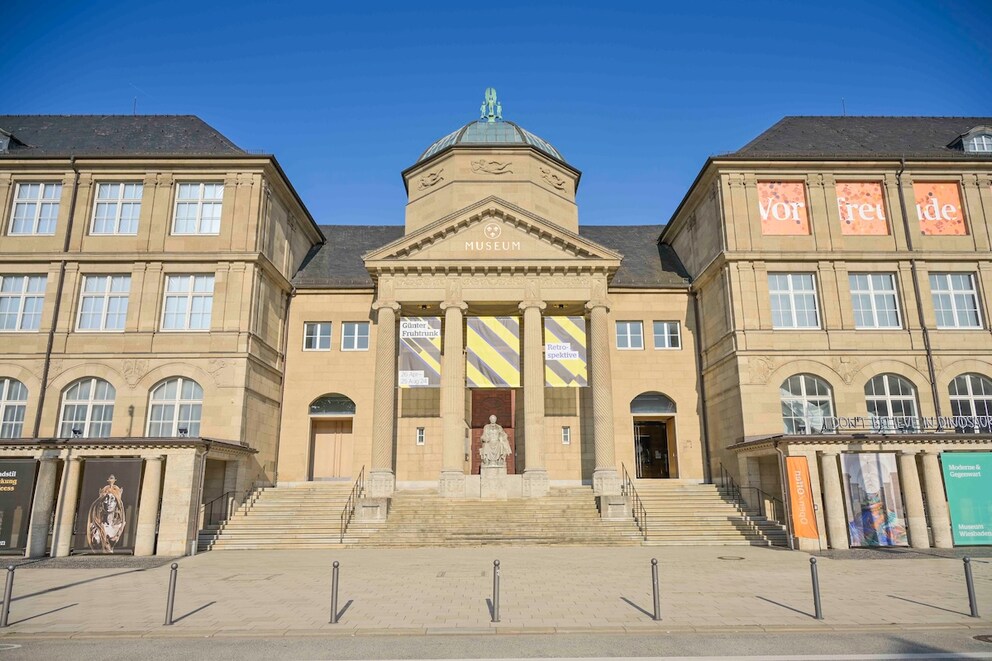
We start at the MuWi, the Hessian State Museum for Art and Nature. A mighty neoclassical building with surprisingly exciting temporary exhibitions. The Jugendstil and Art Nouveau section in the south wing is particularly impressive. It’s a wonderful journey through time, not just for the elegiac painting “Ophelia” by the artist Friedrich Heyser. The museum gained new attention for this oil painting because Taylor Swift’s single “The Fate of Ophelia” features the singer as Ophelia, and since then, Swifties have flocked to the MuWi to admire the painting of the drowning woman. Who would have thought that a 200-year-old painting would suddenly become a pop culture magnet?
Across from the MuWi on Friedrich-Ebert-Allee is a stark contrast: the Rhein-Main Congress Center, which opened in 2018. It accommodates up to 12,500 visitors and, as a modern event center directly opposite the MuWi, presents a bold architectural challenge. Yet the airy arcades give the RMCC a surprising lightness. It’s an architectural clash that works!
Strolling and Snacking
We continue up Wilhelmstraße. The old grand boulevard is a jewel of classicism, and the shops there are in the higher price range. Locals affectionately call the street “Rue,” and a visit to the long-established confectionery Fritz Kunder has been a must for every visitor since 1898. If you can’t afford this upscale confectionery and prefer something less sweet, you should head 1,000 meters further to Wellritzstraße. Here, you suddenly find yourself in Anatolia. Numerous Turkish restaurants compete for visitors. Visit Sultan or the restaurant Harput—both are almost always full and very tasty.
Refreshed, our walk of contrasts continues. We reach the Museum Reinhard Ernst (MRE), which opened in 2024 and is already considered a mecca of abstract art. You can feel it immediately when you see the white, angular exterior of the museum. If you don’t like the coolness of the MRE, you only need to walk a few hundred meters further. Behind the enchanting Warmer Damm city park rises the mighty Wiesbaden State Theater. Opened under Kaiser Wilhelm II, you immerse yourself in the splendor of Prussianism here. The theater’s radiance is great, and the productions are of high rank.
Pure Spa Town Glamour
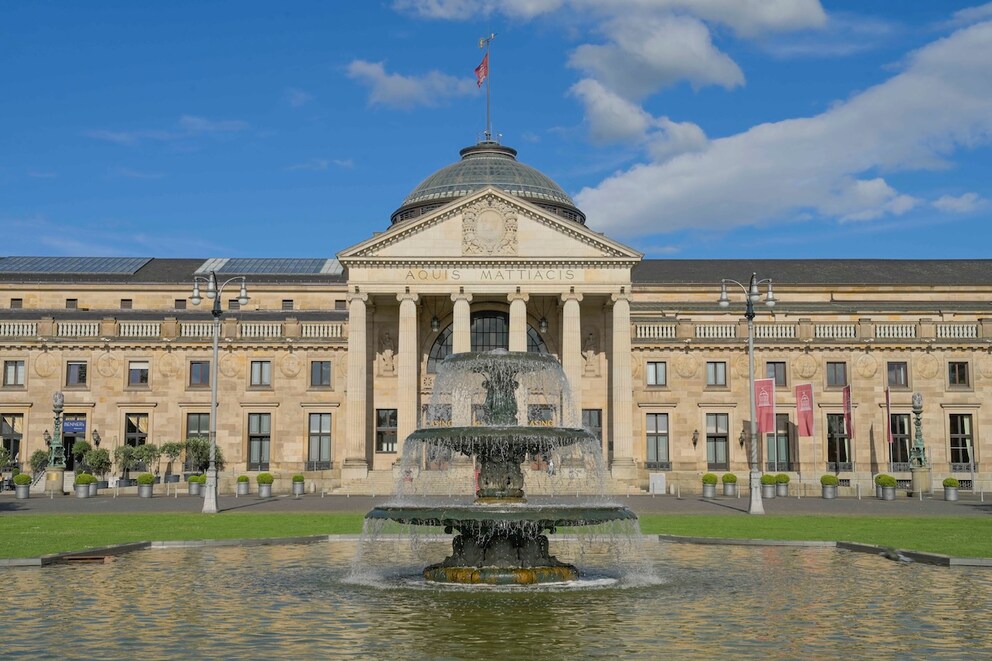
If you can’t get enough of classicism, you’ll discover the Old Kurhaus directly opposite, one of the most magnificent festival buildings in Germany. It is the social center of the spa town of Wiesbaden, and with the casino and fountains on the Bowling Green, it’s the meeting place for Wiesbaden residents.
Now it’s time to shop! In Wiesbaden, you head to Kirchgasse for that. You’ll find a large pedestrian zone with the usual shops. Unfortunately, this also shows that Wiesbaden was not spared by the Allied bomber fleets in World War II. This is a persistent rumor that is not true–large parts of the city center and the spa district were indeed destroyed in the war. The gray blocks of Galeria at Mauritiusplatz, the bulky-ugly Luisenforum, and the vacant Kaufhof building are some examples of post-war architectural sins that hurt. If you want to relax after the shopping hustle, sit on the benches at Luisenplatz. Under the proud horse of the Oranien monument, you quickly forget the concrete of the 1970s.
Hot Water and Green Tranquility
Or you can stroll to the Kochbrunnen. It is the city’s most famous and hottest thermal spring and was the center of Wiesbaden’s drinking culture in the 19th century. From a depth of 2,000 meters, 360 liters per minute gush out. The artesian spring has a temperature of 66 degrees. Here you rediscover the enchanting beauty of the old spa town, the wealth of the Wilhelminian era, and it’s recommended to now wander along the Nerotal. The park there is magnificent. Tall old trees, the babbling Schwarzbach, playgrounds, and the magnificent listed villas are unique places of tranquility.
High Above Wiesbaden
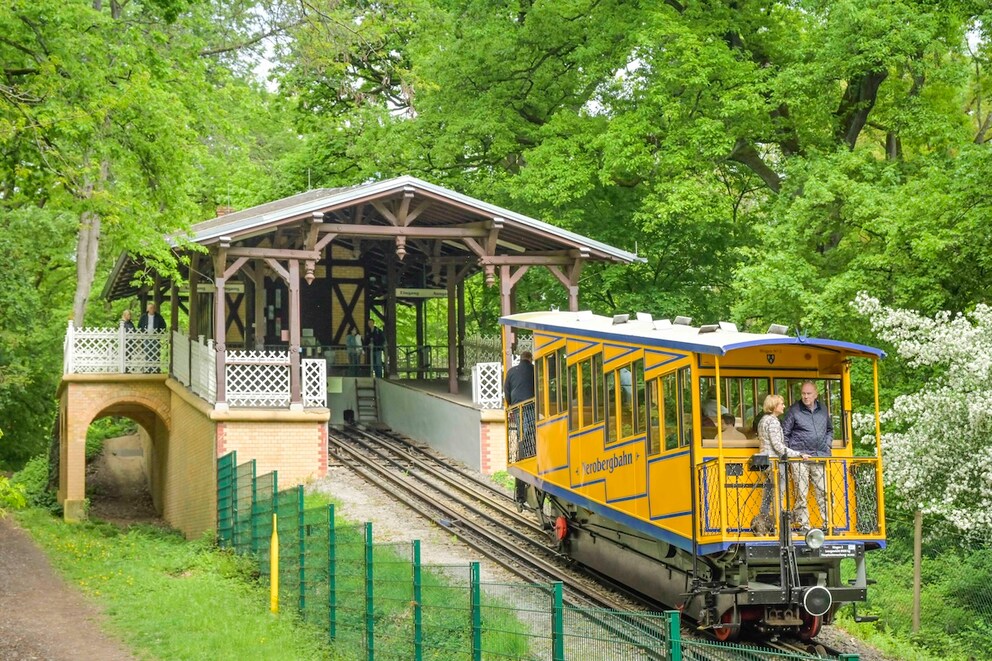
At the end of the park, we take the old funicular railway—it chugs up to the Neroberg. Since 1888, this cable car has taken visitors up to the best viewpoint in the city in four minutes. Of course, you could walk the 83-meter elevation difference. But this museum railway is simply wonderful. At the top of the mountain, the golden towers of the Russian Orthodox Church shine, you relax under the Neroberg Temple, and from the Lion Terrace, you let your gaze wander over the large urban vineyard—here is the best city panorama of Wiesbaden. In the beer garden of the restaurant Der Turm, you are well taken care of, and the nearby Taunus forest rustles in the background. The Neroberg is simply top-notch!
Insider tip: If you’re looking for even more tranquility, head to the Alter Friedhof recreational area. It served, among other things, as a resting place for the House of Nassau and is considered one of the most beautiful cemeteries in Germany with numerous monuments. The beauty of the park is well preserved because it is only open during the day. The park rangers watch over their little paradise and regularly close the gates in the evening. Here you will also find the best children’s playgrounds in the city! Is it still worth going to the Nordfriedhof? Yes! Because the Nordfriedhof is nestled in the forests of the Taunus and a walk is like a museum visit. The columbarium, honorary graves, and family vaults are worth a relaxed, long visit.
Deep in the Taunus
Now we also want to explore the outskirts of Wiesbaden. Wiesbaden is not only on the edge of the Taunus, no, large parts of the city extend deep into the beautiful forests of this ancient low mountain range. Those with strong calves hike up to the Jagdschloss Platte. Here you can enjoy delicious game dishes. Strengthened, we continue to the Kaiser-Wilhelm-Turm on the Schläferskopf. Downhill, we go through gentle meadows along the Wellritzbach. Be sure to stop at the Landhaus Diedert.
Wait, isn’t Wiesbaden also on the Father Rhine? True, although the center of the old town is about seven kilometers away. We set off and land in another great park: The freely accessible Schlosspark Biebrich is full of surprises. The ruin of the small Mosburg is worth a stop until you reach the Rhine and then Schloss Biebrich. Until 1841, the princes and dukes of Nassau lived in this spacious baroque residence. Today you can visit the pleasure palace, and the café there spoils you with delicious cake. Sit on the terrace and let the Rhine steamers pass by.
Brutally Beautiful
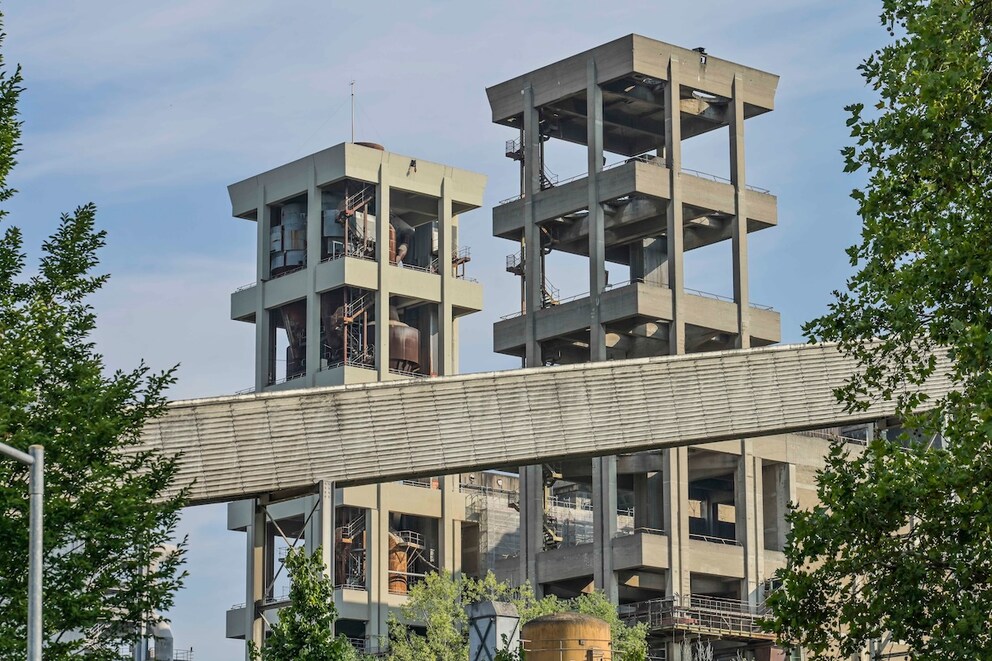
If you’re now looking for contrasts again, leave the baroque palace and head 1.5 kilometers further to Mainz-Amöneburg. The name is misleading: You’re not in Mainz here, but still in a district of Wiesbaden. This is where fans of brutalism meet, as this is the headquarters of the concrete manufacturer Dyckerhoff. Yes, the sight of this factory is truly brutal!
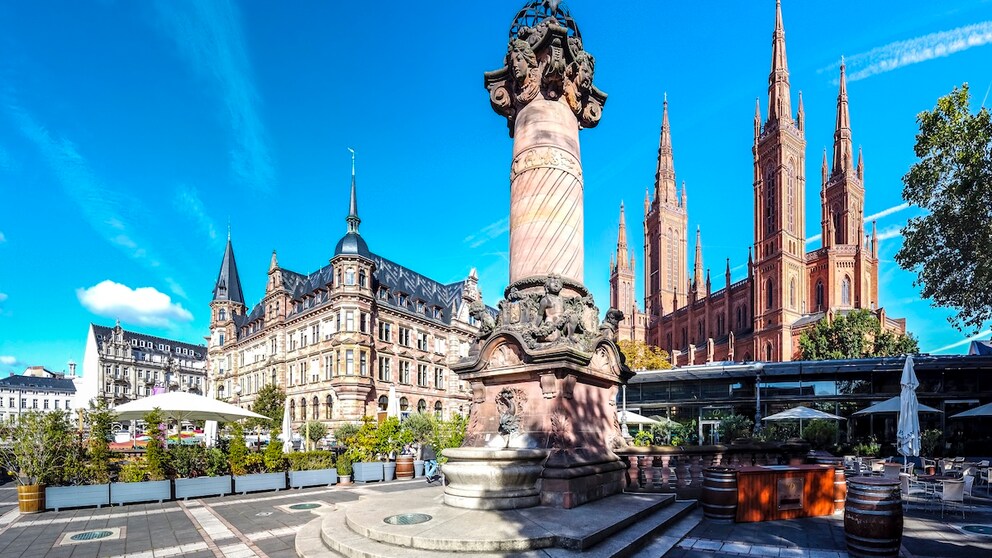
So we drive up Mainzer Straße to get back to the center. On this long street, you can see how ugly Wiesbaden can be: cheap functional buildings, office blocks. Even the Federal Statistical Office is just a gray cube. How refreshing Bahnhofstraße is with its magnificent old buildings and, of course, the neobaroque Landeshaus, built entirely in red Main sandstone. Here, you also understand why the entire old town of Wiesbaden was considered for inclusion in the UNESCO World Heritage List. Wiesbaden was said to be a city monument of historicism, was the reasoning. But in 2016, the city unfortunately dropped out of the process. That doesn’t bother us; we stroll over the large weekly market at Dern’schen Gelände. Here is the city’s living room. Whether in August during the Rheingau Wine Weeks or in December at the Christmas Sternschnuppenmarkt, here you meet in front of the beautiful backdrop of the Old Town Hall.
Classicism, Spa, and Contrasts
Don’t forget the Marktkirche at Schlossplatz, an architectural gem. The Nassau State Cathedral was built with 6.5 million bricks. Then we stroll along the “Rue” again and enjoy the grand boulevard and the many splendid sides of the once fashionable spa town, which still exudes much of its glamour. Here, the city shows once again what it can do: classicism, spa, and contrasts—all at once.