

September 5, 2022, 1:28 pm | Read time: 7 minutes
Airplanes hide several sources of danger and germs that can cause illnesses or even accidents. Here are twelve things you should avoid touching on a plane: TRAVELBOOK reveals them!
Do you suffer from a fear of flying? Don’t be ashamed! Although the risk of a plane crash is statistically very low, that doesn’t mean a seemingly harmless flight can’t still harbor some hidden dangers.
The risk is primarily in the microbiological area: When hundreds of people with different standards of cleanliness are crammed together for hours in tight spaces under challenging hygienic conditions, germs from around the world have optimal conditions to multiply happily. Some of these can even be life-threatening. This is especially true if cleaning on the plane is neglected or not done at all, which, according to insider reports, happens quite often due to increasingly tight schedules.
Also interesting: Watch out! Germs and pests lurk in these spots in hotel rooms
Where Nasty Germs Lurk on Planes
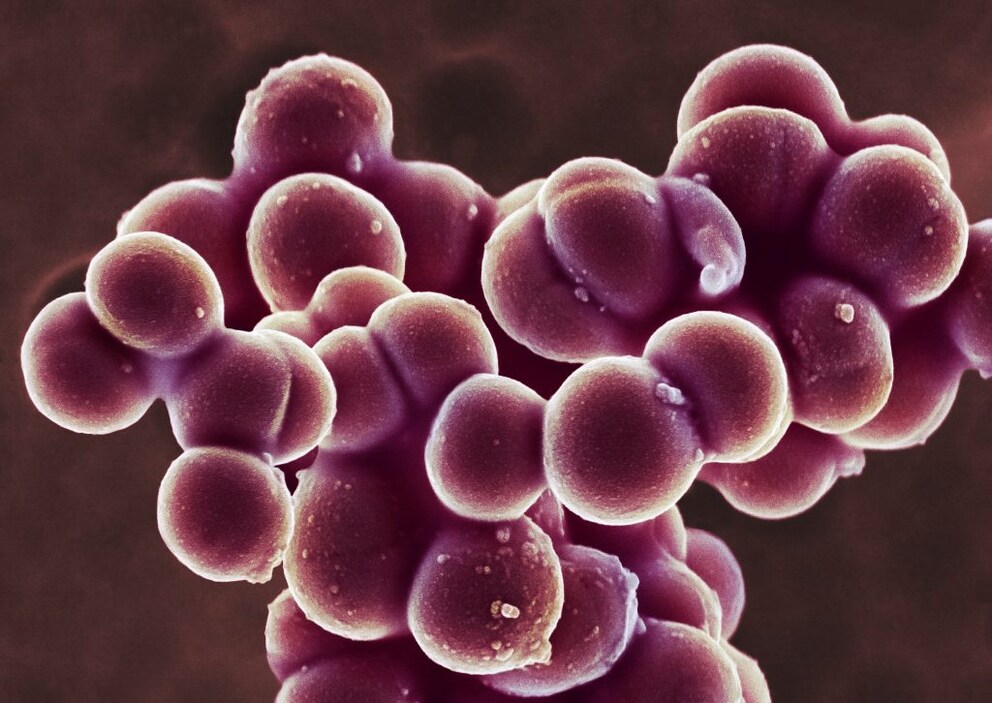
Scientific tests repeatedly show that airplanes are a playground for dangerous pathogens. These include the notorious, highly contagious norovirus, which causes severe diarrhea and vomiting, the E. coli bacteria, and the dreaded “superbug” MRSA (methicillin-resistant Staphylococcus aureus). The latter can survive on surfaces for up to a week, causing severe to fatal infections and is resistant to most common antibiotics.
The Huffington Post reports that flight attendants admit the tray tables, where your food is placed, are only cleaned once a week. A 2007 study by the University of Arizona found alarming results: Two-thirds of the tray tables tested were contaminated with germs like MRSA and noroviruses. A similar result was found in a 2014 test by another study: The highest concentration of germs was found on tray tables.
Tip: Avoid touching armrests as much as possible. However, you should also pay attention to your safety while moving through the aisle to avoid falling during turbulence. In the meantime, avoid touching your face to prevent infection.
Also interesting: Watch out! Germs and pests lurk in these spots in hotel rooms
1. The Tray Table Where Your Food Sits
It’s best to avoid touching the tray table where your food is placed. Scientists from the University of Arizona found alarming results in a 2007 test: Two-thirds of the tables examined were contaminated with germs like MRSA and noroviruses. Flight attendants admitted that the tables are cleaned only once a day, according to the Huffington Post. A similar result was found in a 2014 test by another study: The highest concentration of germs was found on the tray tables.
Tip: Avoid touching the armrests. This also protects you from conflicts with your seat neighbor.
2. The Armrests of Your Seat
Just quickly lift the armrests to slide into the window seat more easily or rest your hands on them during the flight – doing so risks your health. First, many other passengers have likely had the same idea before you, and not all of them may have washed their hands. Second, germs thrive on airplane seat armrests: According to a study, the E. coli bacteria can survive there for 96 hours – almost twice as long as on the smooth surfaces of tray tables or the flush button in the airplane toilet.
Tip: Avoid touching armrests. This also protects you from stress with your seat neighbor.
3. Germs on the Aisle Seat Backs
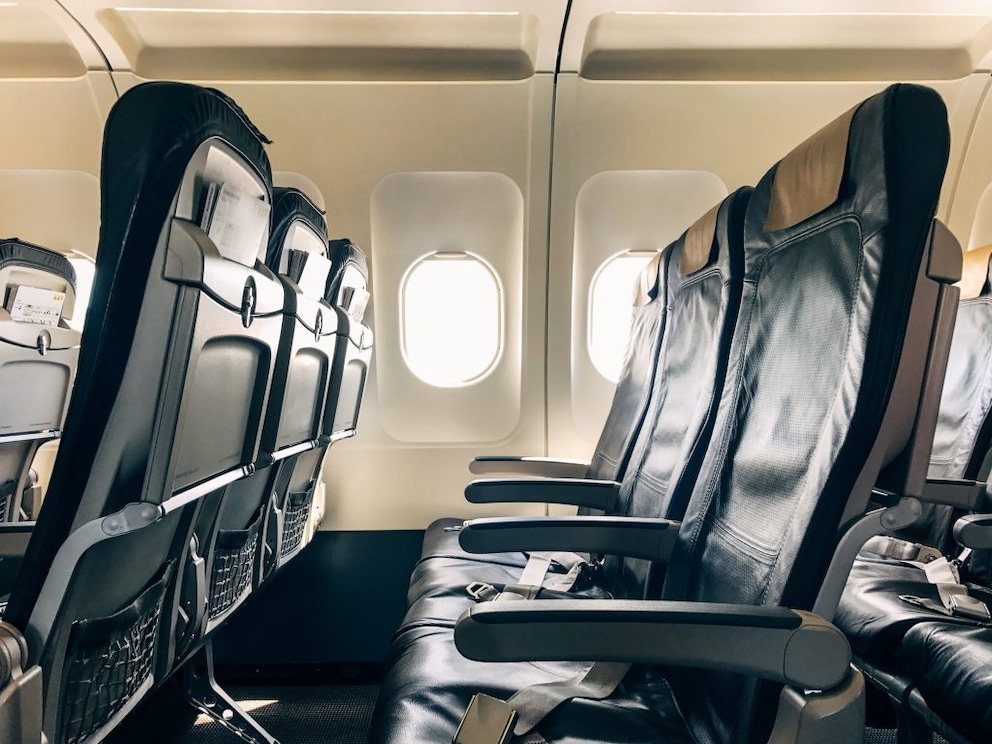
It’s the same scenario every time: As soon as the seatbelt sign goes off, the first passengers head to the restroom – holding onto the corners of the aisle seatbacks as they stumble through the aisle due to the plane’s movement. On the way back, they also seek support from the aisle seatbacks. The problem: Not everyone washes their hands after using the restroom, explains American microbiologist Charles Gerba in an interview with the science blog “io9.com”. The sinks in airplane restrooms are often so tiny that people with large hands might skip washing altogether.
Tip: Try to avoid unnecessary contact with seatbacks. However, you should also pay attention to your safety as you move through the aisle to avoid falling and injuring yourself during turbulence. Disinfect your hands when you return to your seat. Avoid touching your face in the meantime to prevent infection.
Also interesting: How to behave correctly during turbulence on a plane
4. The Flush Button in the Airplane Toilet
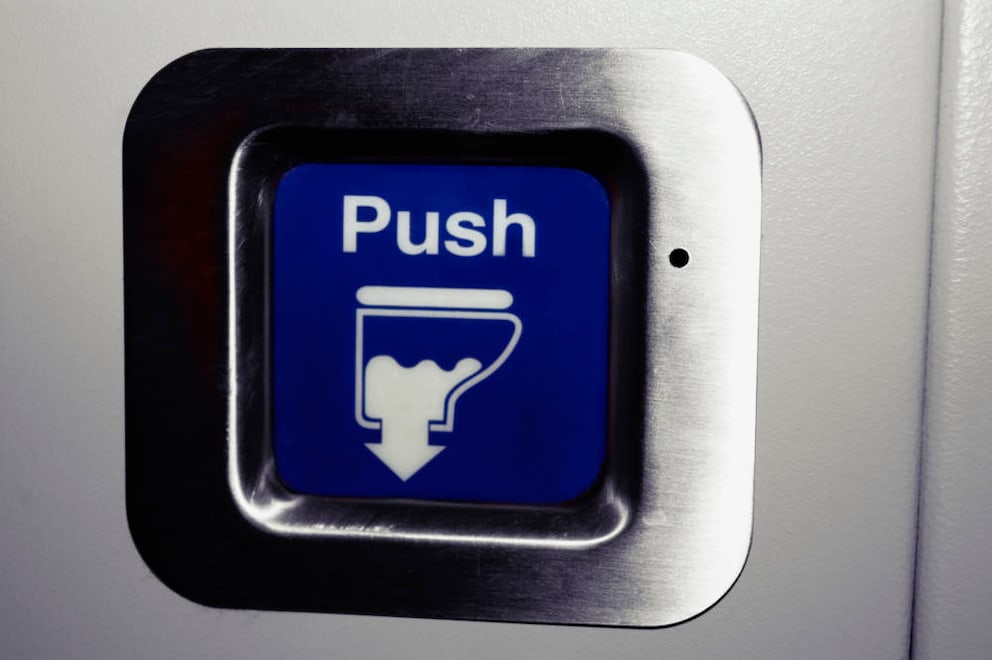
This is where you’ll find a lot of intestinal bacteria, as most people don’t wash their hands before flushing. E. coli germs can survive up to 48 hours on the flush button.
Tip: Use a paper towel to press the button.
Also interesting: Flight attendant: “Never use the toilet paper on a plane!”
5. The Toilet Seats
The 2007 U.S. germ study found E.coli bacteria on 20 percent of all toilet seats.
Tip: You shouldn’t touch them with your hands anyway. Place toilet paper underneath if you want to sit down, or use travel disinfectant spray.
6. The Faucets in the Airplane Toilet
Even more contaminated than the toilet seats are apparently the faucets in the airplane toilet: In the cited University of Arizona study, 30 percent of the faucets were contaminated with E.coli bacteria.
Tip: Use a paper towel to turn the water on and off.
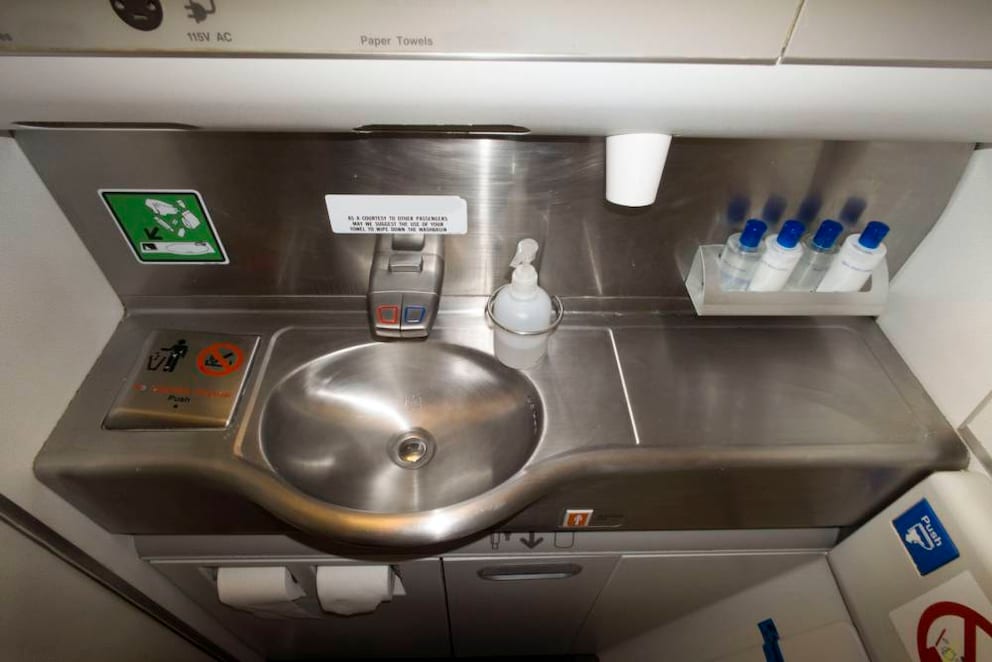
7. Door Handle and Latch Inside the Toilet Door
Since most people skip washing their hands before leaving the cramped airplane restroom, the door handle and latch inside the toilet door are particularly germ-ridden.
Tip: Use a paper towel to open the door and sanitize your hands when you return to your seat. Avoid touching your lips, eyes, or food beforehand.
8. The Seat Pocket
More germ-ridden and surprisingly the seat pocket in front of you, where the safety instruction leaflet is located. This handy pocket, which also holds the in-flight magazine, airsickness bags, and used tissues from passengers, is a paradise for microorganisms: According to the Healthline health blog, MRSA germs can survive in these pockets for up to 168 hours.
9. Pillows and Blankets on the Plane
Flight attendants often report that pillows and blankets aren’t necessarily freshly washed when handed out to passengers, especially if a plane flies multiple routes in a day. So, they might not be as clean as you’d hope.
Tip: Bring your own blanket and pillow, or dress warmly enough that you don’t get cold.
Also interesting: How often are airplane pillows actually washed?
Can you guess the location of the most germs on an airplane?
How to stay healthy on a plane
10. The Drinking Water from the Tanks
“NEVER drink the water on board an airplane that doesn’t come from a bottle,” the Huffington Post quotes from a Reddit comment. The reason is that the opening for flushing the toilets and the one for filling the plane with drinking water are right next to each other and “sometimes operated by the exact same guy.” However, the article rightly admits that the accuracy of such statements is not easy to verify.
Tip: If you want to be on the safe side: Buy enough drinking water at the gate after security or opt for juices on board.
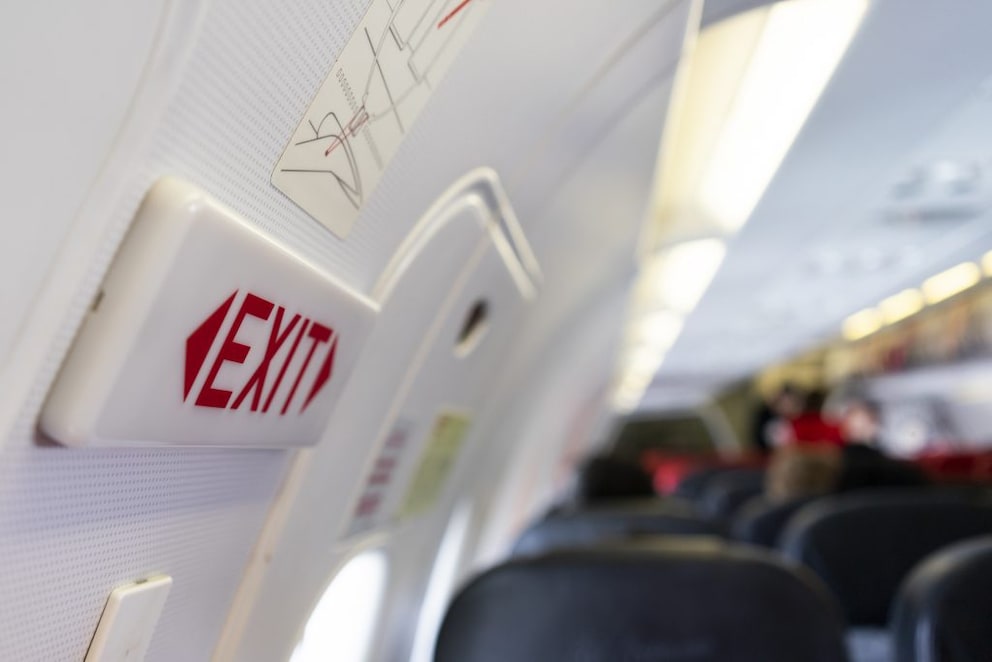
11. The Emergency Exit Handle
The emergency exit should only be opened in an emergency, as the name suggests, everyone knows that. Or maybe not. In December 2014, a passenger from China caused panic on a plane when he opened the emergency exit just before takeoff. He later explained to according to Focus that he just wanted to let in some fresh air. It was reportedly his first flight.
Tip: Keep your hands off, even if you feel like getting some fresh air. And feel free to pass this tip on to passengers who seem to be flying for the first time.
(mgr)
“`