

November 11, 2025, 8:48 am | Read time: 6 minutes
The budget dispute in the U.S. is having noticeable effects on air travel in the country. What happens if flights are significantly delayed or canceled? The answer also depends on where you’re flying from. An overview of your rights regarding the U.S. shutdown.
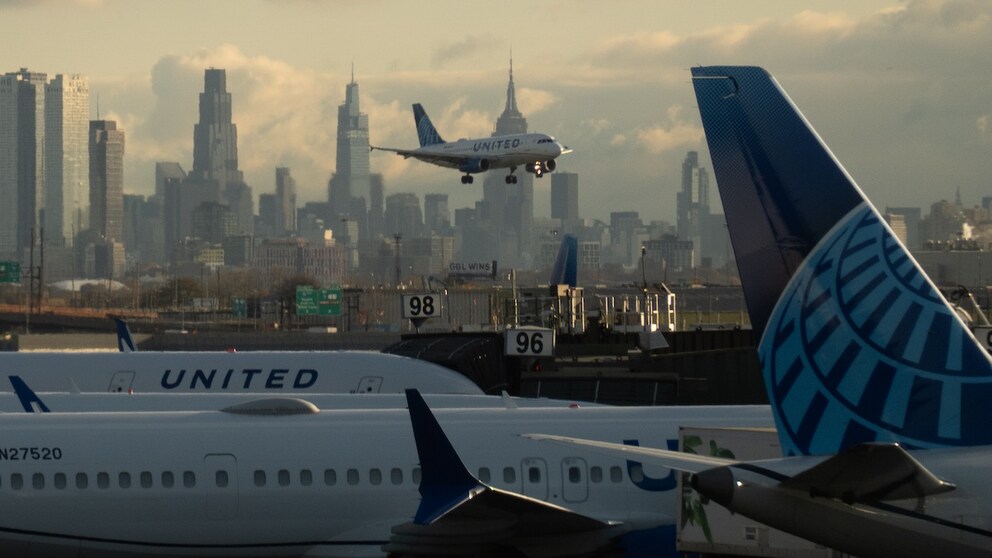
Even though a solution to the ongoing budget dispute seems to be on the horizon, the partial government shutdown in the U.S. has led to numerous flight cancellations and delays. One reason: Air traffic controllers are sometimes unable to work because they are not receiving pay due to the shutdown.
In recent days, there have been thousands of flight cancellations. Many travelers are therefore asking: What rights do I have if my flight to or from the U.S. is canceled or delayed due to the shutdown?
Overview
Airline or Tour Operator as First Point of Contact
Generally, the advice is: When in doubt, check with the airline or, in the case of package tours, with the tour operator before traveling to see if there will be any restrictions. This way, you can adjust your plans if necessary.
However, if you cancel a flight on your own due to the uncertain situation at U.S. airports, it will likely be costly. You would only be refunded taxes and fees, not the “net ticket price.” This is explained by travel law expert Paul Degott, citing current legal rulings.
If there are indeed problems with a booked flight, passengers’ rights depend on the country of departure and the airline with which the booking was made.
While the European Union has a comprehensive passenger rights regulation, in the U.S., protection is only available in certain cases through national laws. Otherwise, much depends on the individual terms and conditions of the airlines.
When the EU Regulation Applies – and What It Means
If a plane departs from an EU airport heading to the U.S., the EU regulation always applies. This holds true even with a continuous booking, such as starting in Berlin, transferring in New York, and continuing to Nashville, even if there’s an issue with the second flight. However, if traveling from the U.S. to the EU, the regulation only applies if the airline is based in the EU. So, it applies to Lufthansa, but not to United Airlines.
The EU rules state, among other things: In the event of a flight cancellation or a delay of more than three hours, the airline must offer travelers an alternative means of reaching their destination, such as rebooking on another flight. After a five-hour delay or a flight cancellation, you can request a refund of the ticket price. You must arrange for replacement flights yourself.
For long-haul flights, if there is a delay of four hours or more, the airline must provide waiting passengers with drinks and snacks. This can also be in the form of vouchers for airport shops. If stranded overnight, the airline must cover hotel costs.
Compensation Under EU Law? Unlikely in This Case
In addition, the EU rules provide for compensation payments for short-notice flight cancellations or significant arrival delays. For long-haul flights to or from the U.S., this would be 600 euros per passenger.
In the case of the shutdown, airlines are likely to reject compensation claims by citing extraordinary circumstances, as the issues lie with the airports and air traffic control and are therefore beyond the airline’s control. However, if the delay or cancellation occurs for other reasons, such as organizational errors by the airline, a claim may still exist, according to the passenger rights portal Flightright.
“Here, one will need to examine the exact reason for the cancellation and try to determine whether the airline perhaps canceled flights prophylactically and speculatively or whether the specific booked flight was actually affected by a shutdown measure,” explains attorney Degott. “Speculative flight cancellations,” he says, do not relieve the airline of responsibility, and the passenger would have a compensation claim.
Additionally, the airline must prove whether it took “reasonable measures” to minimize the impact on the passenger. This includes whether there were alternative flights from other airlines that the passenger could have been rebooked on.
What Applies to Passenger Rights in the U.S.
For purely domestic flights in the U.S. or flights with U.S. airlines to the EU, the European rules do not apply.
The good news is: Even in the U.S., passengers can accept a rebooking or request a refund of the ticket price in the event of flight cancellations or foreseeable, significant delays – at least three hours for domestic flights and at least six hours for international flights.
Compared to the EU, it becomes more challenging with services like meal vouchers or hotel accommodations: In the U.S., this often falls under the airline’s goodwill, as it is not mandatory for events outside their control–such as the air traffic issues resulting from the shutdown.
Compensation for cancellations and flight delays is often not legally required in the U.S., according to the passenger rights portal Airhelp. The exception: If you are denied boarding due to overbooking, you can receive up to $1,250 in compensation directly at the airport.

Lufthansa Strike! These 3 Passenger Rights You Should Know

Is the fear of forest fires a reason to cancel travel plans?
What Package Tour Travelers Need to Know
If you have booked a package tour with a tour operator, meaning a package of several travel services, the operator is obligated to address issues – such as arranging replacement flights or an additional night at a hotel.
If a trip has to be cut short or cannot be started, the operator must refund the travel price in full or in part. If you had already booked a rental car at your destination that you could not use, the operator would also have to reimburse you for those costs, according to attorney Degott. Additionally, affected individuals may be entitled to compensation for wasted vacation time.
Uncertainty Remains Even with an Agreement
Even if the longest shutdown in U.S. history is nearing an end and Republicans and Democrats can agree on a temporary budget, it is only set to last until the end of January. This means that in February, there could be another government shutdown if the actual budget is not passed by then. Travelers may again face the same uncertainties as they do now.
With material from dpa