

April 20, 2026, 8:43 am | Read time: 4 minutes
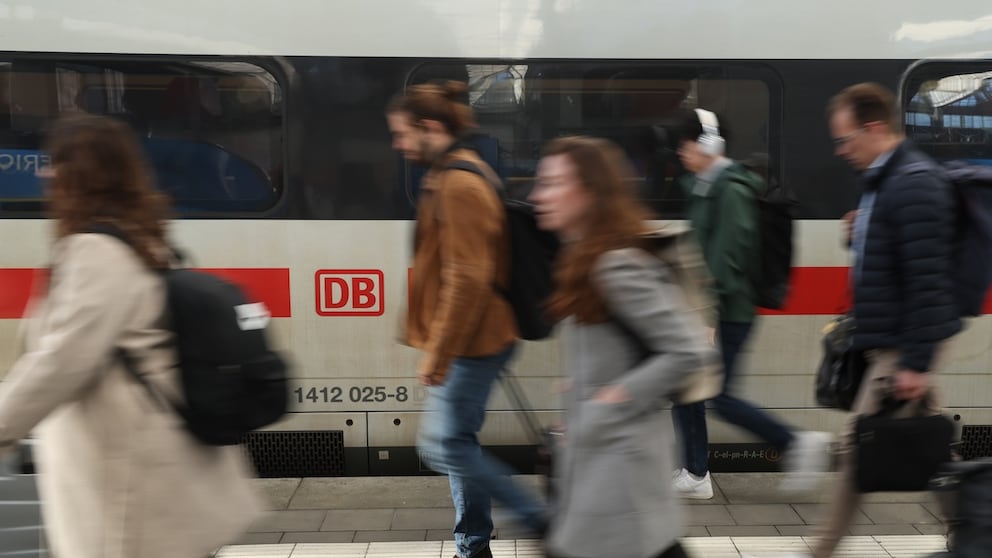
Deutsche Bahn customers should be able to “spontaneously board any train”—just not too many at once! Otherwise, some passengers will have to leave the train. This happened again just a few days ago on an ICE from Cologne to Berlin. There’s not much left of the so-called open system. Our author has a straightforward idea on how to improve it—and it doesn’t require much imagination.
I once found myself on a completely overcrowded Deutsche Bahn train, sitting in the last available seat in the dining car. However, the train didn’t depart immediately. Instead, announcements were made that numerous passengers would have to leave the ICE due to overcrowding. Naturally, no one wanted to. It was one of those particularly disruption-prone days, with several connections canceled.
I had to order something in the dining car to justify my presence there. But even that wouldn’t have provided lasting protection from being asked to leave at the next station, as a dining car employee explained. An uncomfortable situation. And even though Deutsche Bahn emphasized after a recent incident (reported by BILD) that train evacuations “only occur very rarely,” the fact that they happen at all is, in my view, unacceptable and unnecessary.
The Open System of the Railway Doesn’t Work
I am one of those passengers who regularly take advantage of the fact that you can spontaneously board a DB train—a possibility that passengers should continue to have, as the railway emphasized in a conversation with BILD. And yes, almost always without a seat reservation. I’m quite particular and rarely manage to settle for a predetermined seat. If, for example, the dining choices of fellow passengers don’t appeal to me, I look for a better spot, and usually, you get lucky and find something suitable.
Or: not. If, for whatever reason, too many people have “spontaneously” decided to travel on a particular train, it can become even more crowded than usual. And then it can happen that passengers have to disembark. Who? Those without a seat reservation—even with an otherwise valid ticket. It seems to make no difference whether the ticket was purchased at a discount, such as an early bird fare, or at a substantial price.
It becomes particularly contradictory with the Flexpreis. This ticket is known to cost a bit more and is supposed to offer the great advantage of being able to use any suitable train on the travel day. In practice, however, you might not be allowed to board despite having an expensive ticket. Instead, the 5.50 euros for the seat reservation becomes the deciding factor.
The Seat Reservation System at FlixTrain Is Much More Sensible
5.50 euros—on the one hand, not a lot of money. But on the other hand, for what it’s about here, it certainly is.
With competitor FlixTrain, every passenger automatically gets a seat, and the ticket itself often costs significantly less. If no seats are available on the FlixTrain, no more tickets are sold for that train. Adopting this approach would mean a loss of revenue for Deutsche Bahn and, of course, would compromise the much-touted “flexibility.” But what good is flexibility if trains regularly reach their limits?
Why I Will Never Ride Flixtrain Again!
Can Families No Longer Sit Together on Deutsche Bahn?
In overcrowded trains, nothing runs smoothly–and dangers loom
When trains are considered fully booked, but additional passengers without fixed seats can still board, it’s initially illogical. And in the next step, it costs comfort. Just think of the onboard Wi-Fi—a shared medium that inevitably collapses when too many users access it simultaneously.
And even the most basic needs can quickly face shortages in overcrowded trains. The onboard toilets have limited holding tanks. With high occupancy, they are more frequently out of service or only partially usable.
Passengers who can’t find a seat sometimes have to stand for hours or crouch on the floor. This slows down door closures, prolongs passenger exchanges, and causes delays. And it doesn’t stop there. Overcrowded cars, blocked aisles, and people crowding in entry areas complicate operations and pose safety risks. In emergencies, evacuations are further hindered because paths and exits are not clear.
The Problems Are Known, but Not Addressed
Passengers who have to settle for the platform (due to a lack of seat reservation) receive a 30-euro voucher. This hardly makes things better. On the contrary: It shows that there is already a standard process for the obviously well-known problem. Such cases apparently occur frequently enough to warrant a blanket compensation.
The fact is: Those who charge hundreds of euros for spontaneous travel cannot simultaneously pretend that 5.50 euros is the price for planning. The railway should take a cue from its budget competitor’s seat reservation system.