

October 27, 2025, 12:58 pm | Read time: 4 minutes
Where in Germany is overall life satisfaction the highest? In which state do people experience positive feelings more often–and where is sadness more prevalent? The University of Freiburg, in collaboration with the South German Class Lottery (SKL), investigates these questions annually and presents the results in the “Happiness Atlas.” In 2025, there has been no change at the top of the satisfaction rankings compared to the previous year. However, there are certain developments across the country. All the details can be found at TRAVELBOOK.
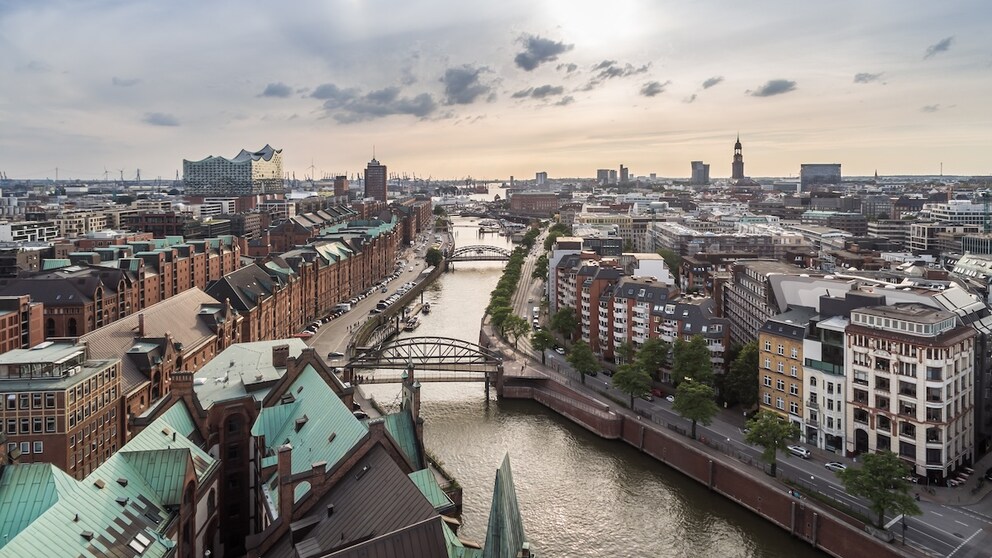
According to a statement from SKL on the Happiness Atlas 2025, the mood in Germany this year is on a “satisfaction plateau” and nearly at the stable level from before the pandemic. Remember: During the COVID-19 period between 2020 and 2022, various measures–such as contact restrictions or the closure of care facilities–took a heavy toll on many people. It is all the more gratifying that this challenging phase now seems to be definitively overcome. If you ask which states have particularly satisfied citizens, the text says “familiar faces” dominate. Hamburg topped the list again, as it did last year (see photo above).
People in Hamburg are the happiest according to the Happiness Atlas 2025
Since last year, well-being in Hamburg has even surpassed the value of 2019, the year before the pandemic. Hamburg–like Thuringia, North Rhine-Westphalia, and Schleswig-Holstein–is among the “overperformers” in this year’s Happiness Atlas. This means that the determined satisfaction values are higher than the objective factors would actually suggest. In Hamburg, these include high living costs and a housing shortage. In contrast, the “underperformers” are the states of Baden-Württemberg, Hesse, Saarland, and Berlin. There, the population describes itself as less satisfied than the objective living conditions would imply.
“Happiness gap” narrows, negative emotions increase overall
A fundamental increase in life satisfaction noted in the Happiness Atlas 2025 is mainly attributed to East Germany, according to the publication. While values there have risen by 0.12 points, they largely stagnate in the West. This reduces the historical “happiness gap” between East and West–attributed to factors like lower average income and a smaller share of homeownership in the East–to just 0.24 points. The study shows that young people, in particular, have caught up in terms of satisfaction, while older age groups have seen slight declines.
On a nationwide level, the “emotionality” of the population continues to increase, according to the SKL publication. More and more people experience anger, fear, or happiness “often” or “very often.” Thirty percent of respondents say they frequently feel angry–eight percentage points more than two years ago. Fear is also increasingly perceived. The proportion of sadness remains stagnant compared to the previous year, after having already increased from 2023. Overall, it shows that negative emotions are increasingly shaping everyday life.
Where the least satisfied Germans live
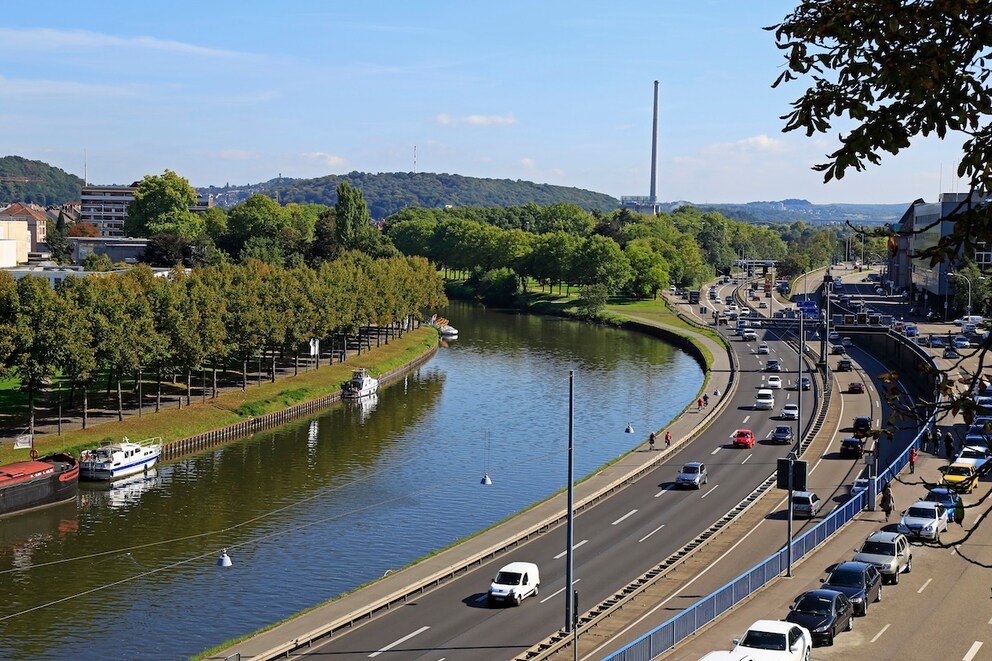
According to the Happiness Atlas 2025, the lowest life satisfaction is found in Bremen and Berlin, with Saarland and Mecklenburg-Western Pomerania at the very bottom of the scale. The study cites economic, social, and demographic challenges as reasons. Objective factors like income, the job market, and infrastructure limit quality of life, while subjective aspects like isolation or limited prospects exacerbate dissatisfaction.

The (un)Happiest Countries in the World — Germany Scores So Badly

These Destinations Will Make You Particularly Happy in 2025
Happiness Index of the States 2025 (compared to 2024)
- 1. Hamburg – 7.33 points (2024: 7.38, change: −0.05)
- 2. Bavaria – 7.21 points (2024: 7.23, −0.02)
- 3. Rhineland-Palatinate – 7.21 points (2024: 7.11, +0.10)
- 4. North Rhine-Westphalia – 7.19 points (2024: 7.17, +0.02)
- 5. Schleswig-Holstein – 7.12 points (2024: 7.23, −0.11)
- 6. Thuringia – 7.12 points (2024: 6.90, +0.22)
- 7. Brandenburg – 7.10 points (2024: 6.99, +0.11)
- 8. Lower Saxony – 7.10 points (2024: 7.02, +0.08)
- 9. Baden-Württemberg – 7.09 points (2024: 7.10, −0.01)
- 10. Hesse – 7.02 points (2024: 7.01, +0.01)
- 11. Saxony-Anhalt – 6.99 points (2024: 7.08, −0.09)
- 12. Saxony – 6.96 points (2024: 6.87, +0.09)
- 13. Bremen – 6.89 points (2024: 6.76, +0.13)
- 14. Berlin – 6.83 points (2024: 6.63, +0.20)
- 15. Saarland – 6.78 points (2024: 6.73, +0.05)
- 16. Mecklenburg-Western Pomerania – 6.06 points (2024: 6.17, −0.11)
Notable Details
Overall, there are improvements in the areas of work, family, and leisure. However, the income situation remains a noticeable hindrance to general well-being, especially in lower-income households. According to the Happiness Atlas 2025, the average satisfaction with income is 6.60 points. Particularly notable is the decline among the lower 40 percent of the income scale, who assess their financial situation much more critically. This highlights that rising living costs and income inequality particularly burden people with lower incomes.
Job satisfaction has significantly recovered, reaching 7.20 points, back to the pre-pandemic level. Positive factors cited in the Happiness Atlas 2025 include the ability to work from home, more flexible working hours, and greater control over work location and time–aspects that allow many employees a higher level of quality of life. There is also a slight improvement in the family sector. Satisfaction rises to 7.61 points, even though the number of marriages and births is declining, while the proportion of single parents is increasing.