


September 11, 2025, 4:42 am | Read time: 3 minutes
For many Germans, it’s still a quirky phenomenon: driving on the left side of the road in our English neighbors’ country. But it’s not just the United Kingdom; one-third of the world’s population drives on what is perceived as the wrong side of the road. TRAVELBOOK explains why.
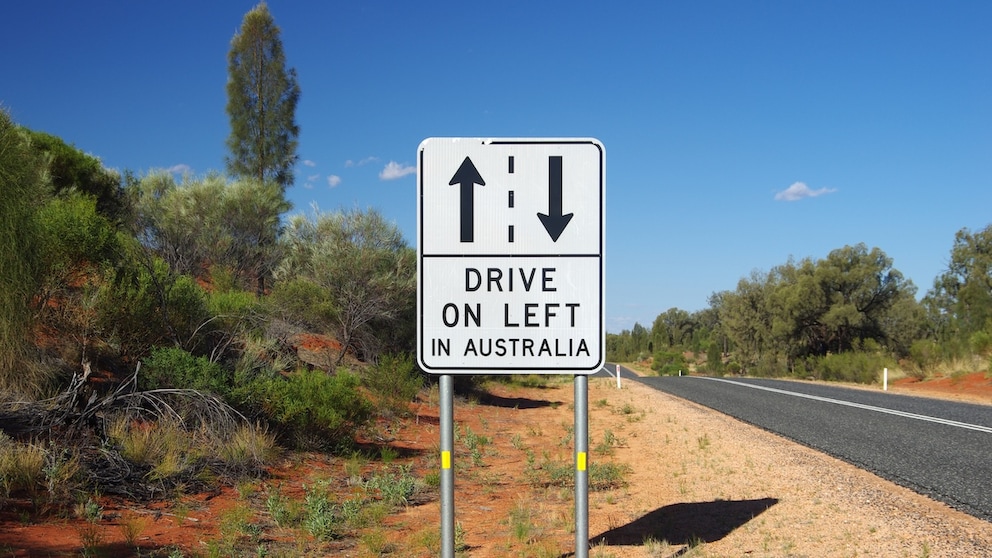
For those who learned to drive here, a road trip abroad can be challenging–especially in countries with left-hand traffic. And that’s not only the case in the United Kingdom but in a total of 58 countries worldwide, including Malta, Australia, India, and Japan. The fact that one-third of the world’s population still adheres to left-hand traffic in everyday life has historical reasons.
Overview
The History of Left-Hand Traffic
As reported by the “Süddeutsche Zeitung,” the development of left-hand traffic has a simple, historically practical reason: Most of the population was right-handed, carrying a sword on the left side to draw it more easily in battle. Dismounting from a horse was also preferred on the left side, providing protection from traffic when on the left side of the road. Coachmen sat on the right side of their carriage to avoid endangering passengers with their swinging whip, thus preferring to drive on the left for better visibility. Left-hand traffic was reserved for the wealthier population who could afford horses or carriages, while pedestrians were forced to walk on the right.

What to look out for when driving in Japan

The 3 Most Remote Airports in the World
Napoleon Enforced Right-Hand Traffic
This changed during the French Revolution after 1789 when politician Robespierre mandated right-hand traffic by law. Napoleon made it official by imposing right-hand traffic in all conquered countries. Some countries remained loyal to left-hand traffic and reintroduced it after Napoleon’s fall, such as in Vienna until 1938 and in Iceland until 1968.
There are several theories about why left-hand traffic exists. One suggests that right-handed people naturally held their weapon with their right hand while on horseback, facing potential attackers on the right side.
However, it’s clear that most are just theories, and the exact origin of left- or right-hand traffic cannot be precisely determined. This is confirmed by Bettina Gundler, head of the Land Transport Department at the Deutsches Museum in Munich, who told TRAVELBOOK: “It’s not entirely traceable, and it’s not possible to prove it conclusively.” It’s clear that in the 19th/20th century, as traffic gained importance, political agreements were made, and right-hand traffic mainly prevailed.
Which Countries Have Left-Hand Traffic?
(Source: ADAC and ACE)
Europe
- United Kingdom
- Ireland
- Cyprus (including Northern Cyprus)
- Malta
Oceania
- Australia
- Cook Islands
- Fiji
- Kiribati
- Nauru
- New Zealand
- Papua New Guinea
- Solomon Islands
- Samoa
- Tonga
- Tuvalu
Asia
- Bangladesh
- Bhutan
- Brunei
- Hong Kong
- India
- Indonesia
- Japan
- Macau
- Malaysia
- Maldives
- Nepal
- East Timor
- Pakistan
- Singapore
- Sri Lanka
- Thailand
North/Central America
- U.S. Virgin Islands
- Anguilla
- Antigua and Barbuda
- Bahamas
- Bermuda
- Barbados
- British Virgin Islands
- Dominica
- Grenada
- Jamaica
- Cayman Islands
- Montserrat
- St. Kitts and Nevis
- St. Lucia
- St. Vincent and the Grenadines
- Trinidad and Tobago
South America
- Guyana
- Falkland Islands
- Suriname
Africa
- Botswana
- Kenya
- Lesotho
- Malawi
- Mauritius
- Mozambique
- Namibia
- Zambia
- Seychelles
- Zimbabwe
- South Africa
- Eswatini
- Tanzania
- Uganda