

July 10, 2019, 6:56 am | Read time: 4 minutes
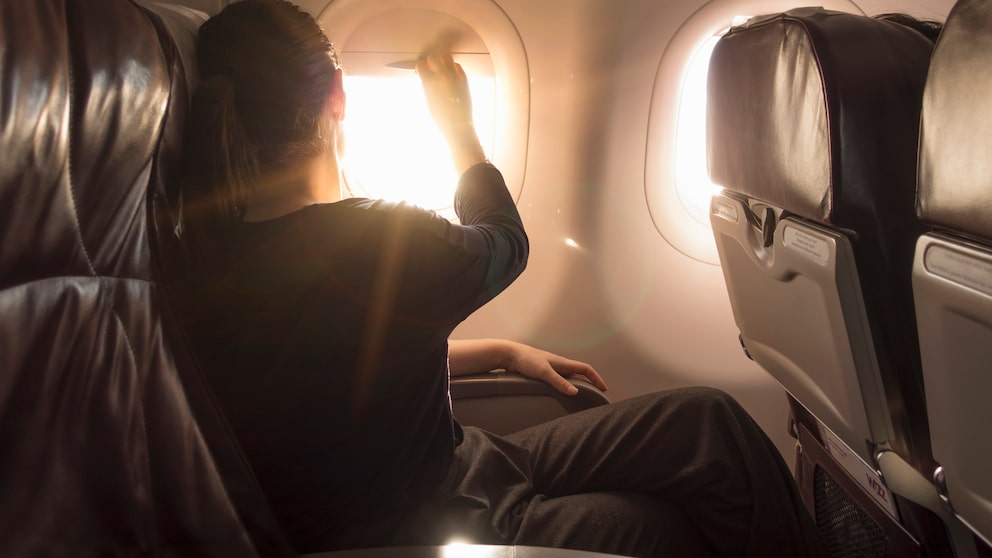
Protecting your skin from the sun is not only important during a beach vacation but also on city trips where you spend hours outdoors. What many travelers don’t consider: Sun protection becomes relevant not just upon arrival at your destination but can also be crucial during the journey–even on the plane.
Planes typically fly at an altitude of around 10,000 meters. The sun’s radiation at this level is significantly higher than on the ground. A 2014 study by the American Medical Association found that there is a health risk from radiation at high altitudes for pilots and frequent flyers.
Plastic windows, such as those made from polycarbonate, filter most radiation in airplanes, while glass windows allow so-called UV-A radiation to pass through. Ultraviolet radiation can be divided into three categories: long-wave UV-A rays, short-wave UV-B rays, and very short-wave UV-C rays, which are filtered out in the upper layers of the atmosphere and rarely reach the Earth’s surface.
Also interesting: UV Index–at what level does it become dangerous?
The study demonstrated that airplane windows made of glass or plastic can block UV-B radiation, but long-wave UV-A rays have a chance of penetrating glass into the plane at rates from 0.41 to 53 percent. A test showed that the radiation pilots and passengers at the window are exposed to at an altitude of 9,000 meters for one hour is equivalent to about 20 minutes on a tanning bed. The measurements were taken in spring in California and Las Vegas. Radiation can intensify on flights over snowy landscapes or white clouds, as it is reflected and thus amplified by bright surfaces.
Pilots Have an Increased Skin Cancer Risk
“Pilots who are frequently exposed to radiation have an increased risk of skin cancer,” confirms Munich dermatologist Dr. Timm Golüke when asked by TRAVELBOOK. “They are at risk of developing basal cell carcinoma, known as white skin cancer, which, despite its name, appears on the skin with dark pigmentation just like melanoma,” he explains. A 1990 study shows that UV-A rays can damage DNA and trigger skin cancer.
Golüke would therefore advise pilots and flight attendants to always apply sunscreen–this also applies to passengers sitting by the window on a plane. The view may be beautiful, but UV-A rays can penetrate a glass window and damage the skin.
Also interesting: Why the window shade must be open during takeoff and landing
“For me, sun protection in the cockpit was never a big issue,” says professional pilot Patrick Biedenkapp. He blogs and vlogs about his job, travels, and nutrition. “I wasn’t aware that cockpit windows don’t completely filter UV-A/B radiation,” he admits, “but there are apparently significant differences among various manufacturers.” So far, he has never applied sunscreen while flying. “Of course, I use pilot sunglasses to protect myself from the bright light, and I also wear long-sleeved shirts exclusively, as my hands and arms are intensely exposed to the sun during work,” Patrick shares.
Now, sunscreen is always part of his flying routine. A test with a special camera showed the pilot the damage that had occurred: “Especially my forehead, which is mostly exposed to the sun in the cockpit, shows black spots. These become visible as age spots, pigmentation, or even cancer as I age.”
It’s surprising that this risk from UV radiation is apparently not a topic in pilot training. “High-altitude radiation is covered in class, but how to protect yourself from UV radiation in the cockpit is not,” reports Pilot Patrick. Sun protection is also not discussed among colleagues.
When in Doubt, Always Apply Sunscreen
Of course, not every flight is immediately dangerous for the skin, and pilots are more frequently exposed to radiation than the average traveler. However, those who frequently fly short distances or prefer to spend longer flights by the window should definitely apply sunscreen during the flight.
Also interesting: Why airplane windows should never be square!
The damage to the skin depends on the duration of exposure to radiation and how deeply the rays penetrate the skin. UV-A rays can reach the second layer of skin, the dermis, and, for example, attack the skin’s collagen stores–this leads to premature skin aging and is one of the reasons behind the common claim that sun exposure leads to wrinkles.
The American Medical Association study suggests further research on radiation above the clouds and that airplane windows should offer better UV protection. Pilots, flight attendants, and frequent flyers should therefore rely on sunscreen and regular check-ups with a dermatologist.