

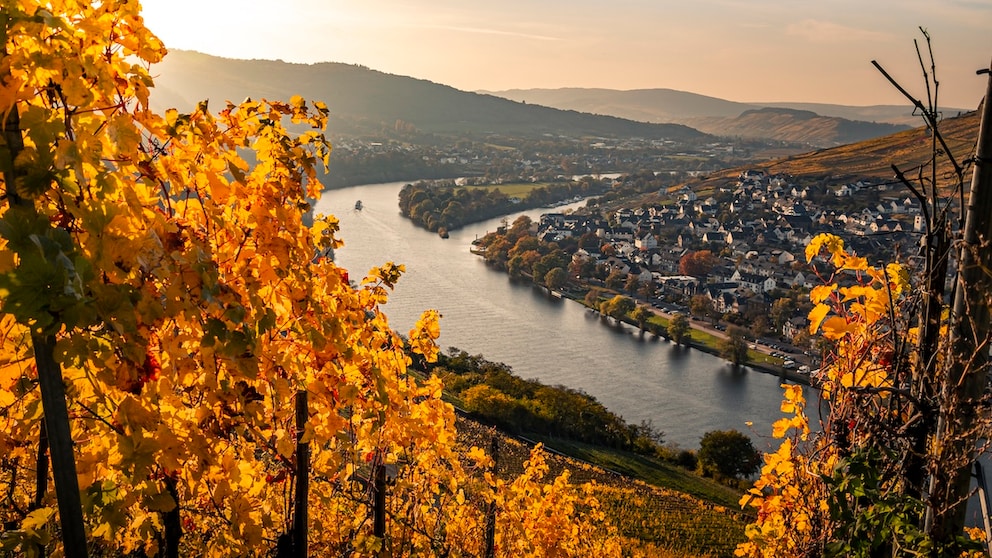
September 9, 2026, 3:15 pm | Read time: 7 minutes
Fall is arguably the most beautiful time for a short vacation in Germany’s wine regions. Between steep river valleys, historic wine towns, and colorful vineyards, many growing areas offer particularly atmospheric stays. TRAVELBOOK presents seven wine regions—from surprising insider tips to well-known classics—that are especially worth visiting in the fall.
Germany has a total of 13 wine-growing regions, producing diverse landscapes and wine traditions from the Elbe to the Rhine. As the world’s largest Riesling producer, the country is primarily known for white wine. However, the variety of regions makes it an attractive destination for a fall getaway—with wine hikes, regional cuisine, and historic wine towns.
Overview
- Saxony–Germany’s Northeastern Wine Insider Tip
- Württemberg–The Underrated Neighbor of Baden
- Franconia–Wine, Cuisine, and Fall Atmosphere on the Main
- Ahr Valley–Germany’s Red Wine Hotspot
- Middle Rhine–Riesling Between Castles and Rhine Loops
- Mosel–Germany’s Riesling Stronghold
- Palatinate–Germany’s Perhaps Most Beautiful Wine Region
Saxony–Germany’s Northeastern Wine Insider Tip
If you want to combine a wine vacation with culture, Saxony should be on your radar. The growing area along the Elbe between Pirna, Dresden, Radebeul, and Meissen is one of the smallest in Germany. It is also considered the northeasternmost quality wine-growing region in Europe. Wine lovers will find plenty to enjoy. In addition to Riesling and Burgundy varieties, the Goldriesling grows here, a grape variety cultivated exclusively in Saxony.
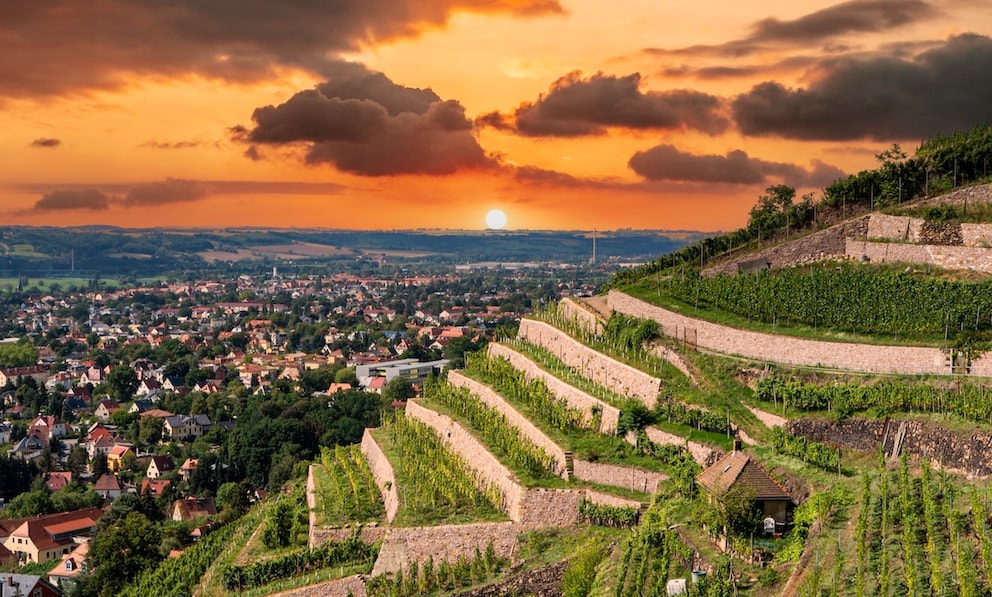
The “Saxon Wine Route” with terraced steep slopes, historic wine towns, and Dresden’s cultural scene gives the region a character that distinctly differs from the more famous wine landscapes in western Germany.
Württemberg–The Underrated Neighbor of Baden
Württemberg receives significantly less attention than the Baden region. Yet, the area around Stuttgart, the Rems Valley, and the Neckar Valley is just as appealing for a fall getaway. Among vineyards, historic town centers, and scenic highlands, you’ll find a wine landscape that is often underestimated.
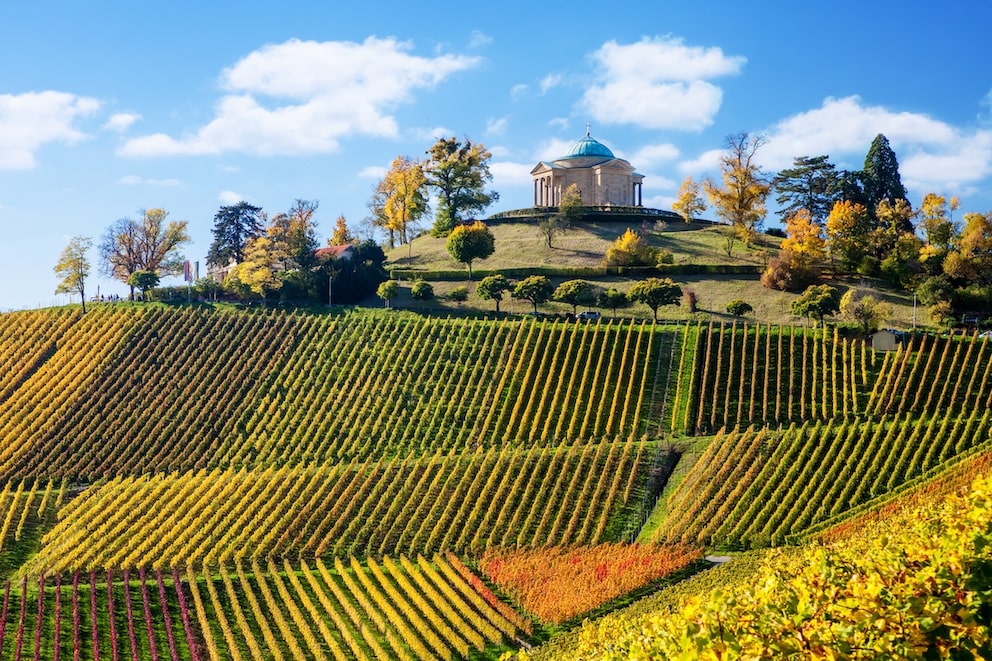
A unique feature here is the close connection between viticulture and regional everyday culture. Many wines are served directly on-site at wineries, cellars, and the region’s typical “Besenwirtschaften” (seasonal wine taverns). Alongside traditional Swabian dishes, you’ll find characteristic grape varieties like Trollinger and Lemberger, giving Württemberg its distinct flavor.
Franconia–Wine, Cuisine, and Fall Atmosphere on the Main
In Franconia, vineyards stretch along the Main through a landscape of historic wine towns, gentle slopes, and distinctive river loops. Especially the Main loop around Volkach is considered one of the most beautiful destinations for a fall getaway. Furthermore, Würzburg with its old town and baroque residence is an ideal excursion spot.
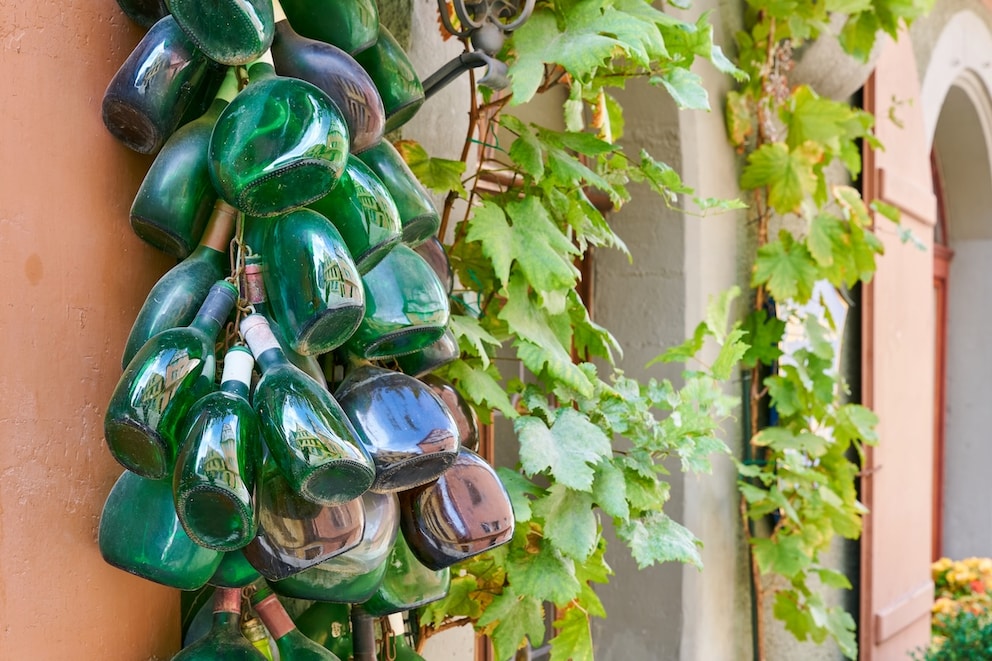
Franconia is the home of Silvaner, which thrives particularly well on the region’s typical shell limestone soils. Many wines are still sold in the characteristic Bocksbeutel, a flat, bulbous bottle that has long become a symbol of the region. In addition to wine tastings, cozy wine taverns, rustic inns, and another major attraction await: Franconian cuisine, often just a few steps from the nearest vineyard.
Ahr Valley–Germany’s Red Wine Hotspot
The Ahr Valley is considered Germany’s red wine paradise. In the river valley characterized by steep rock faces, mainly Pinot Noir and Frühburgunder are produced, which are highly appreciated beyond the region. The small-scale vineyards are often still cultivated by hand, as the steep slopes leave little room for machinery.
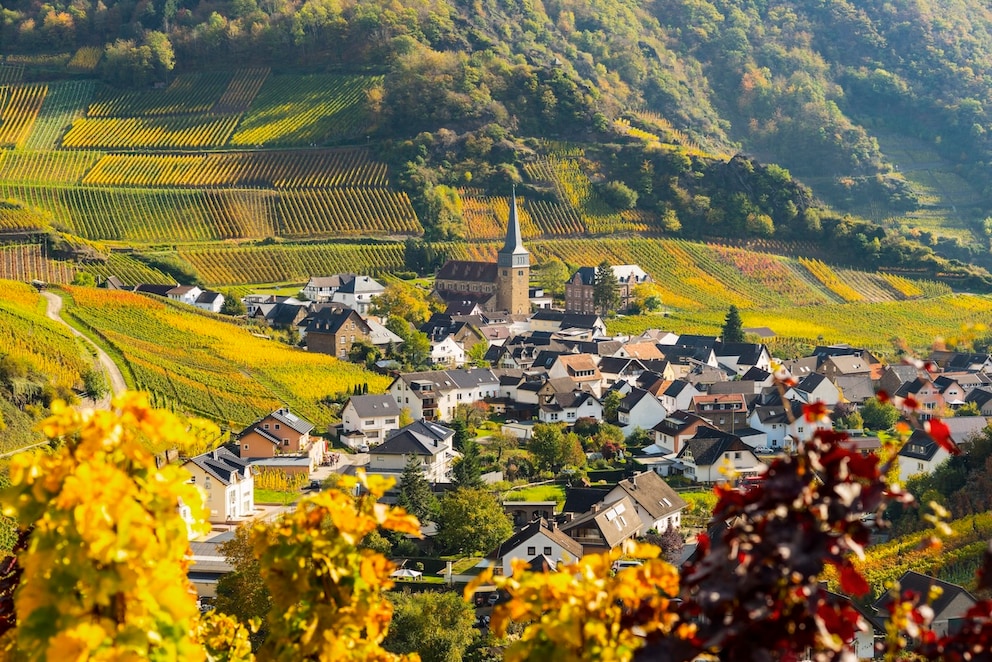
The Ahr Valley is particularly suitable for a fall vacation for those who want to combine wine and activity. Wine towns, hiking trails, and viewpoints are often just minutes apart. Besides wine, the reconstruction after the 2021 flood disaster still shapes the region’s image, making a visit an opportunity to support the traditional wine landscape.
Middle Rhine–Riesling Between Castles and Rhine Loops
Few German wine-growing regions offer such a postcard motif as the Middle Rhine. Between Bingen and Koblenz, vineyards stretch along the Rhine past castles, medieval towns, and the famous Loreley. The Upper Middle Rhine Valley has been a UNESCO World Heritage site since 2002 and is considered one of Germany’s most significant cultural landscapes.
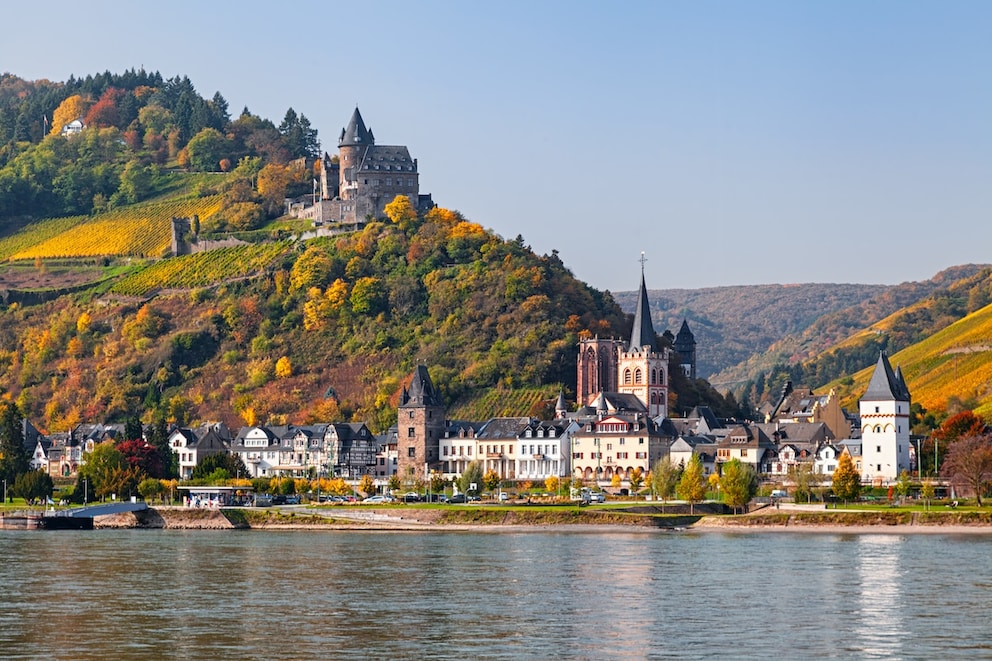
Like the Mosel, the Middle Rhine primarily grows Riesling on steep slate slopes. However, the focus here is not solely on wine but on the combination of cultivation, history, and river landscape. Wine towns like Bacharach, Oberwesel, or Boppard are nestled between castles, vineyards, and the Rhine—making the region especially attractive for leisure and culture travelers.
Also interesting: Germany Ranks 4th! These Are Europe’s Best Insider Destinations

Germany’s Ahr Valley Is Europe’s Most Beautiful Wine Region
The Valais Region in Switzerland Is One of the Most Beautiful Wine Regions in Europe
Mosel–Germany’s Riesling Stronghold
The Mosel is one of Germany’s most famous wine-growing regions and is renowned far beyond the country’s borders for its Rieslings. Along the river, some of Europe’s steepest vineyards extend. Wine towns like Bernkastel-Kues, Traben-Trarbach, or Cochem have been among the most well-known addresses in German viticulture for generations.
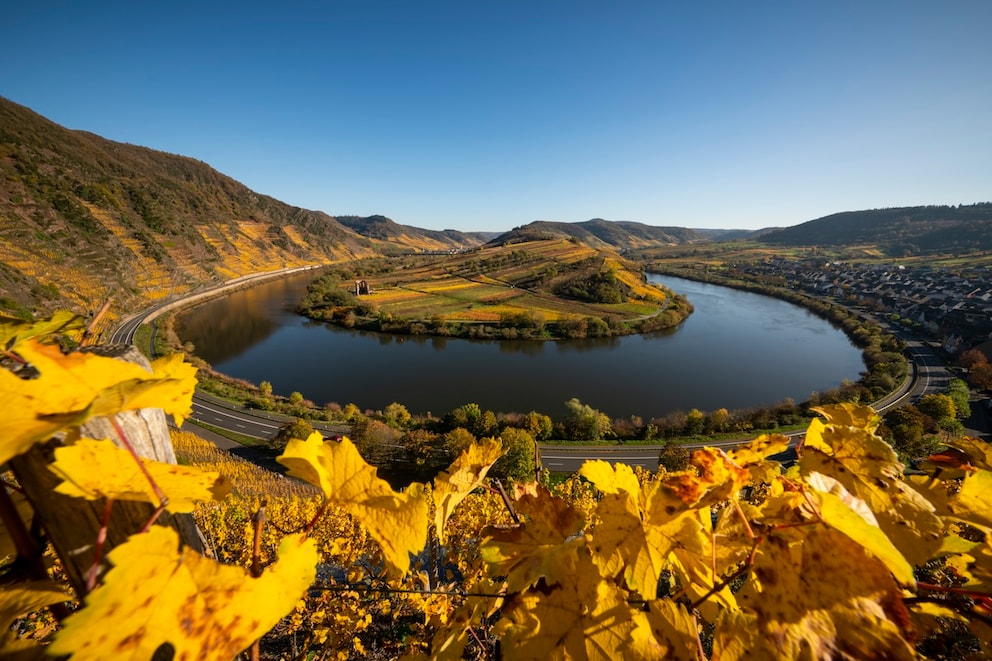
Characteristic are the Rieslings grown on slate soils, which are considered the region’s flagship. Many towns have lived from viticulture for centuries—wineries, wine cellars, and tastings are a natural part of the townscape.
Palatinate–Germany’s Perhaps Most Beautiful Wine Region
For many wine enthusiasts, the Palatinate is the epitome of a fall indulgence vacation. Along the German Wine Route, wine towns, wineries, and vineyards line up, while the vineyards turn warm shades of yellow and red in the fall. The Dürkheimer Wurstmarkt, the largest wine festival in Germany, also takes place here.
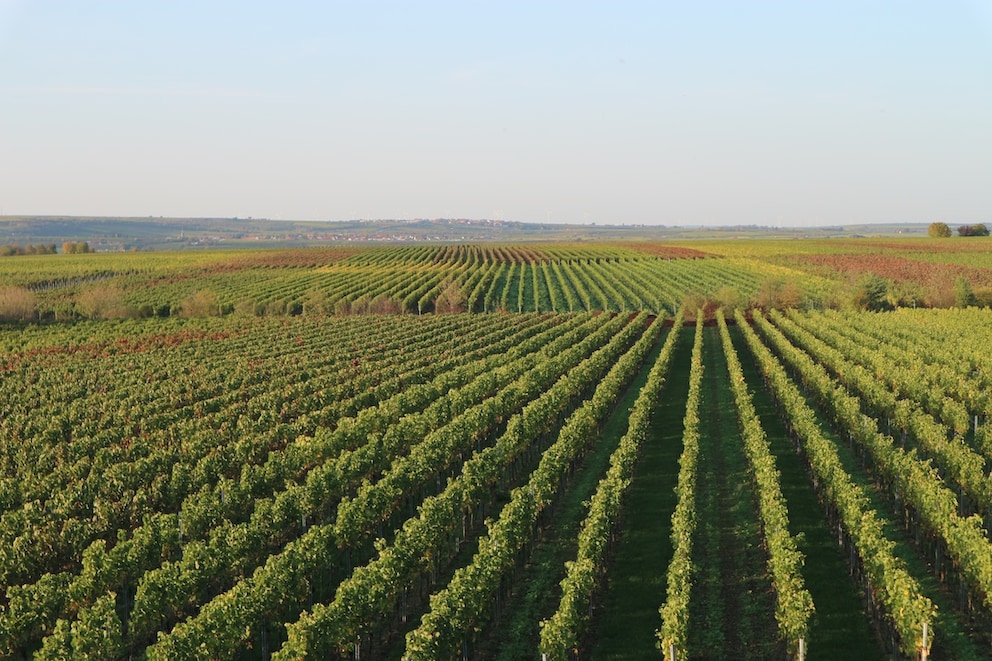
In addition to Riesling, Pinot Blanc, and Pinot Gris, the region’s wine taverns and “Straußwirtschaften” (seasonal wine taverns) also shape the area. The wine is often served in the typical Palatinate “Dubbeglas,” which has long become a trademark. The combination of wine, cuisine, and relatively many hours of sunshine makes the Palatinate one of the best destinations for a wine vacation in Germany for many.
Also interesting: Vacation on the Wine Route–This Spa Town Is Definitely Worth a Visit
*Note: Alcohol requires responsible handling. Alcohol consumption can endanger health and lead to addiction. Do not participate in road traffic if you have consumed alcohol, and observe youth protection regulations. Find tips for responsible alcohol consumption here.