

August 27, 2026, 10:43 am | Read time: 3 minutes
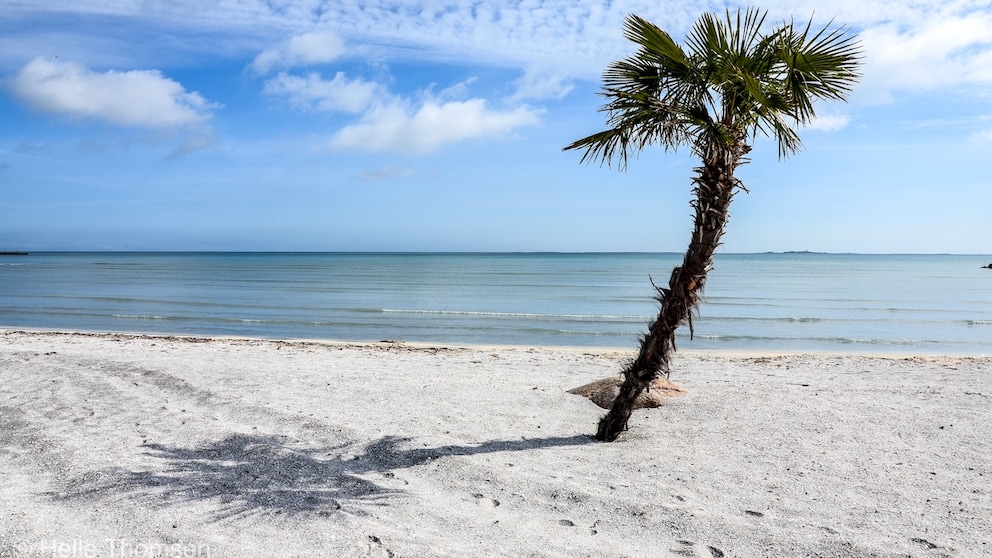
Many associate Denmark with colorful houses, wide beaches, high dunes, and green meadows. Palm trees are not typically what comes to mind when thinking of the Scandinavian country. However, what few people know is that the port city of Frederikshavn boasts a large palm beach, giving at least a hint of a Caribbean feel.
The beach was originally created to make Frederikshavn more attractive to tourists. According to the Danish TV station TV 2 Nord, it was artificially filled with sand in 1977, bringing a vacation vibe to the city for the first time. The idea of a palm beach came later and was initially intended as a joke by two city administration employees. Given the relatively low summer temperatures of around 68 degrees Fahrenheit and the cold winters, palm trees were not expected there. Although the marketing strategy initially sounded crazy, the city eventually implemented the idea. In 2004, the first 30 Italian hemp palms were planted on the beach.
What Makes the Palm Beach So Popular
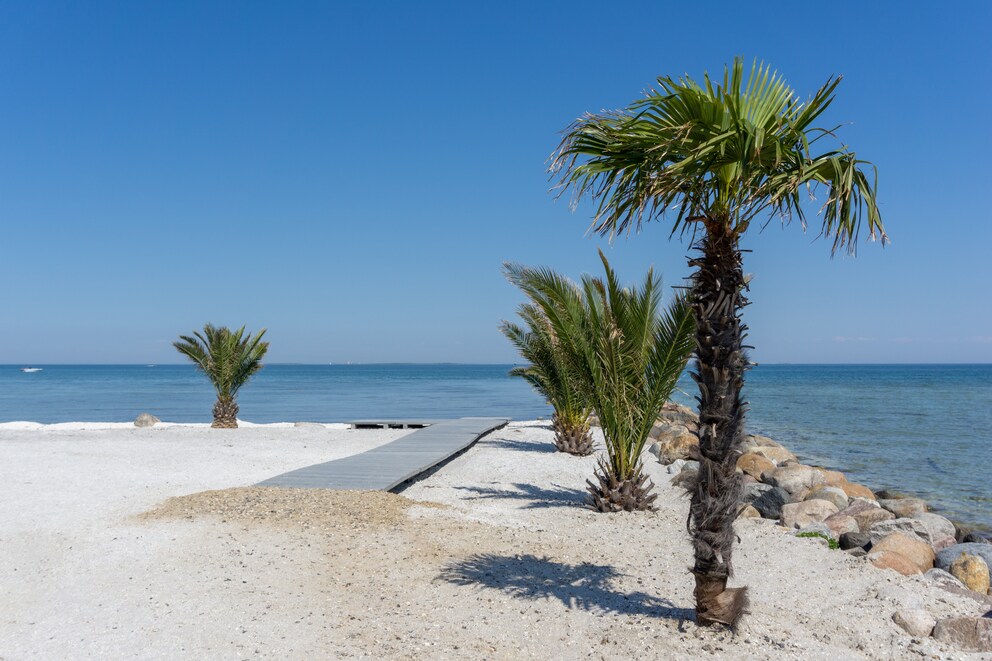
By now, the number of palm trees has more than tripled. According to “TV 2 Nord,” about 100 palm trees now stand on the approximately 82-foot-wide and 1,640-foot-long sandy beach. The beach is located on Ålbæk Bay and is not far from the city center. The white sandy beach, the palm trees, and the proximity to the harbor create a vacation atmosphere more commonly associated with southern countries.
In addition to the tropical palms, there are beach volleyball courts, playgrounds, and areas with beach chairs and umbrellas. A beach bar and an ice cream hut are also part of Frederikshavn’s vacation oasis.
The Region in Italy With the Most Pristine Beaches
12 of the Most Beautiful Travel Destinations for a January Vacation
Hygiene and Safety Are a Top Priority Here
Families, in particular, feel comfortable at the beach. The water is mostly shallow and calm, with breakwaters providing additional protection for the swimming area. During the peak season, lifeguards watch over the beach activities. A red lifeguard tower serves as a highly visible landmark near the water.
Also noteworthy is the Blue Flag flying at the palm beach. It stands for clean water quality, good facilities, and a high level of attention to safety and the environment.
What Happens in Winter?
As beautiful as the palms may look in summer, one might wonder: How do the plants survive the Danish winter? To prevent the palms from dying, the city of Frederikshavn has found a simple solution. During the winter months, the palms are moved to the city’s greenhouses. There, they stay cozy and warm, unaffected by the cold. In May, they return to the beach, once again lending the city its Caribbean-like summer atmosphere.