


November 21, 2025, 1:38 pm | Read time: 6 minutes
Antarctica, the Canary Islands, or Montmartre in Paris—this is just a small selection of popular vacation destinations that, according to the travel guide “Fodor’s,” should not be visited next year. Not because there are dangers lurking for tourists, but because these destinations are increasingly suffering from the effects of mass tourism. TRAVELBOOK explains further and also shows why Fodor’s “No List” should be viewed with nuance.
Increased waste production, water scarcity, damage to fragile ecosystems, or higher living costs for locals. When tourism gets out of hand, it brings various negative impacts. To raise awareness of these issues and discourage people from visiting places heavily affected by overtourism, the travel guide “Fodor’s” publishes an annual “No List.” This list includes popular destinations that should be avoided next year to prevent contributing to existing problems.
However, this list should not be seen as a general call to boycott the mentioned destinations, as Fodor’s itself emphasizes. “The ‘No List’ is a gentle but firm suggestion to give a place a break now—not forever—and to give every place a chance to breathe,” states the corresponding article from the famous travel guide. At the same time, many destinations are particularly crowded during their peak season. Those who can travel during the off-season can still visit some of the listed destinations with a clear conscience.
Destinations Not to Visit According to Fodor’s 2026
Antarctica
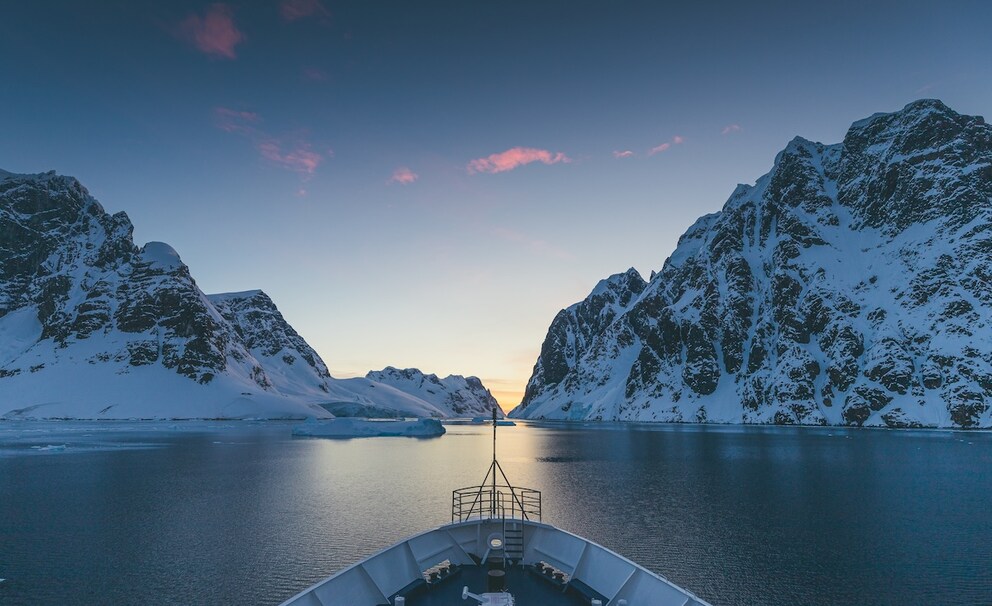
Antarctica seems like a hostile place. Yet, perhaps precisely because of this, it fascinates many, and more tourists visit each year. According to Fodor’s, around 120,000 visitors traveled to Antarctica between 2023 and 2024. This number is expected to double by 2033. Currently, there is no cap on tourists allowed to land in Antarctica, which is heavily threatened by climate change. “Unfortunately, Antarctica has moved more toward mass tourism rather than traditional ecotourism in the last quarter-century,” Fodor’s quotes Mike Gunter, a professor of political science and department chair at Rollins College in Florida, who researches ecotourism and environmental policy. The way many tourists travel to Antarctica and their motives are often problematic.
Large ships are not allowed to dock in Antarctica, but small expedition ships are, as well as private vessels, which often are not members of the International Association of Antarctica Tour Operators (IAATO). Founded in 1991, this voluntary industry association promotes “safe and environmentally responsible travel to Antarctica.” It has established a list of rules and regulations that its members must follow. However, with the growth of tourism in the region and increased access by wealthy individuals with private ships, Antarctica’s fragile ecosystem is increasingly under pressure. For this reason, Fodor’s suggests removing the southern continent from your bucket list for now.
Canary Islands, Spain
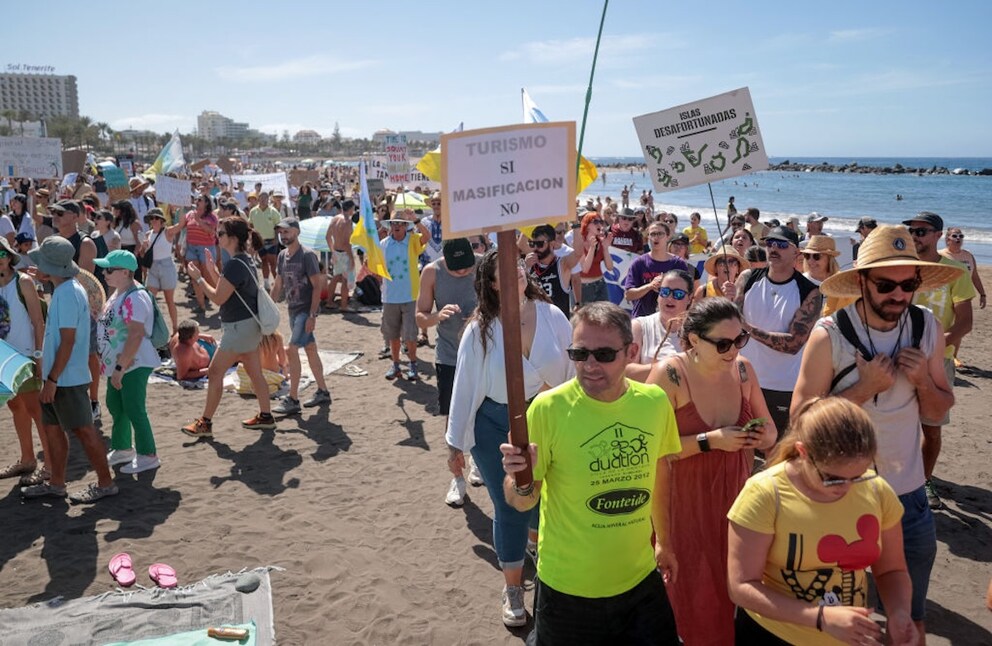
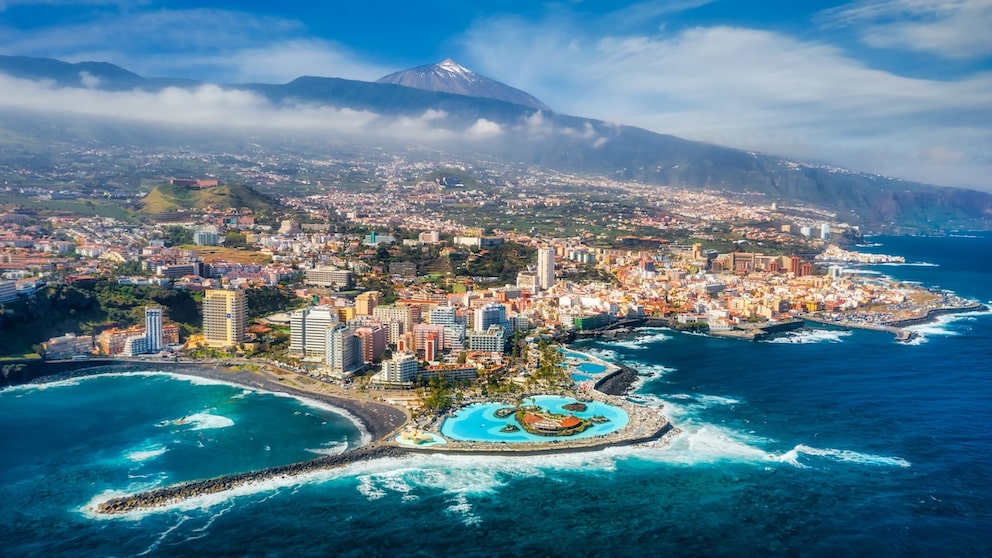
For some time now, the Canary Islands have seen increasingly frequent anti-tourist graffiti and protests due to mass tourism. Most recently, in May, thousands took to the streets in Tenerife, Gran Canaria, and Lanzarote under the motto “Canarias tiene un límite” (“The Canaries have a limit”). Their message was clear: booming tourism, skyrocketing housing costs, and increasing environmental stress threaten the islands’ livelihoods. According to Fodor’s, 7.8 million people visited the Canaries in the first half of 2025 alone—an increase of five percent compared to the previous year.
The travel guide quotes a spokesperson from ATAN, an environmental association in the Canaries, with stark words: “The continuous arrival of new residents—especially Europeans—exacerbates overpopulation, environmental destruction, and land consumption given the very limited space of the islands. Essential resources like water are reaching their limits.”
It should be noted that not all the Canary Islands are equally affected by mass tourism. The most visited islands are Tenerife, Gran Canaria, Lanzarote, and Fuerteventura. The share of tourists on the other inhabited islands, La Palma, La Gomera, El Hierro, and La Graciosa, is only a few percent, so Fodor’s recommendation cannot be applied to all the Canary Islands.
Isola Sacra, Italy
Popular tourist destinations in Europe, including Venice and Santorini, show the devastating effects of an unchecked cruise industry. Nevertheless, Italian authorities in the coastal municipality of Fiumicino near Rome have given the green light for a new port. Here, in the area of Isola Sacra, some of the world’s largest cruise ships are soon to dock. The plans face opposition from residents and environmentalists.

The planned port, named Fiumicino Waterfront, is according to Fodor’s a collaboration between cruise giant Royal Caribbean and the British investment fund Icon Infrastructure. It will include berths for around 1,000 small boats and a pier for mega cruise ships, with a capacity of up to 6,000 passengers. Environmentalists are concerned that the construction could destroy a nearby protected nature reserve. Large parts of the coast would also be concreted over. The municipal council, however, emphasizes that the project includes measures to protect marine biodiversity and complies with regulations for areas in the Natura 2000 network, a network of protected areas for Europe’s most valuable species and habitats.
Activists also point to the disruption caused by thousands of cruise passengers disembarking and traveling to Rome—a city already struggling with over 35 million tourists per year. Experts say the current road infrastructure cannot handle such traffic volume, and air pollution will increase, exacerbated by hundreds of port workers commuting the same route. The area is already burdened by traffic to the nearby Fiumicino airport.
Additionally, according to Fodor’s, a new publicly operated commercial port for Fiumicino’s fishing fleet is planned, where cruise ships will also dock—a few kilometers further north at the mouth of the Fiumicino Canal—which will further impact the coast. Work on this port began in 2024 and is expected to be completed by December 2026.
Other Destinations to Avoid
In addition to the previously listed destinations, “Fodor’s” has compiled other places to avoid in 2026. These destinations have not yet attracted much media attention, but industry insiders are already expressing concerns based on their observations and experiences. More about Fodor’s reasons can be read here.
The following destinations should also be avoided in 2026:
- Glacier National Park, USA
- Jungfrau Region, Switzerland
- Mexico City, Mexico
- Mombasa, Kenya
- Montmartre, Paris
Fodor’s emphasizes that well-known destinations affected by mass tourism, such as Venice or Barcelona, which have been part of the “No List” in recent years, continue to face significant problems. This year, however, the focus was deliberately shifted to other, less-known hotspots that also “need a break,” according to the travel guide.