

February 17, 2026, 11:33 am | Read time: 7 minutes
TRAVELBOOK author Frank Lehmann cycled through Egypt’s vibrant history to the Valley of the Kings—a tour between dust, history, and everyday life.
Exploring Thebes-West by bike means experiencing the region with all your senses: the dust on your tongue, the wind on your face, the calls of the vendors, and the clatter of donkey carts in your ears. It’s a journey that leads not only to the grand monuments but also to the small moments that make Egypt so unforgettable. Here, you can wonderfully conquer a fascinating part of the Nile landscape away from the air-conditioned tour buses.
Overview
Get on the Bike!
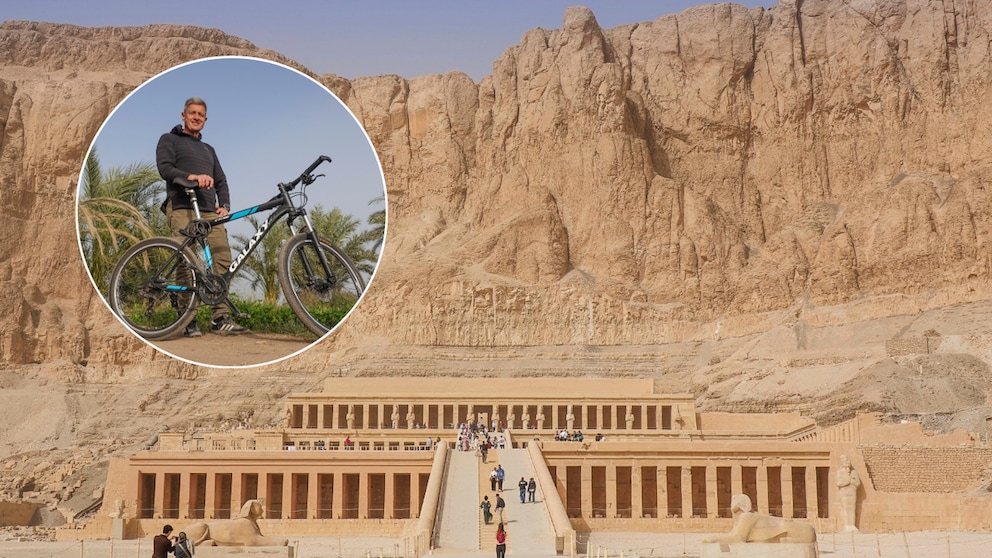
The starting point is in Luxor on the west bank of the Nile. You can reach it by small ferry boats that chug across the river for 50 pounds—less than a euro. The journey begins at a small, unassuming bike rental on Al Qarna Road, run by Mohamed Setouhy. For a mere five euros a day, you get a solid, brand-new bike—perfect for the dusty trails that await you here. Mohamed, a man with a sun-weathered face and a smile that has welcomed countless travelers, briefly explains the route: “First to the Colossi of Memnon, then turn right, past the Ramesseum, then just follow the road. But watch out for the dogs!” And one more important tip: If you have a flat tire, just call via WhatsApp–Mohamed—will come and help.
Colossi of Memnon
And then you’re off. The first few meters lead over the bumpy village road, past simple mud-brick houses and small shops offering tea, fresh bread, and delicious falafel. The wind blows warm, the dust swirls up and leaves a fine layer on skin and clothing. But that’s part of the experience.
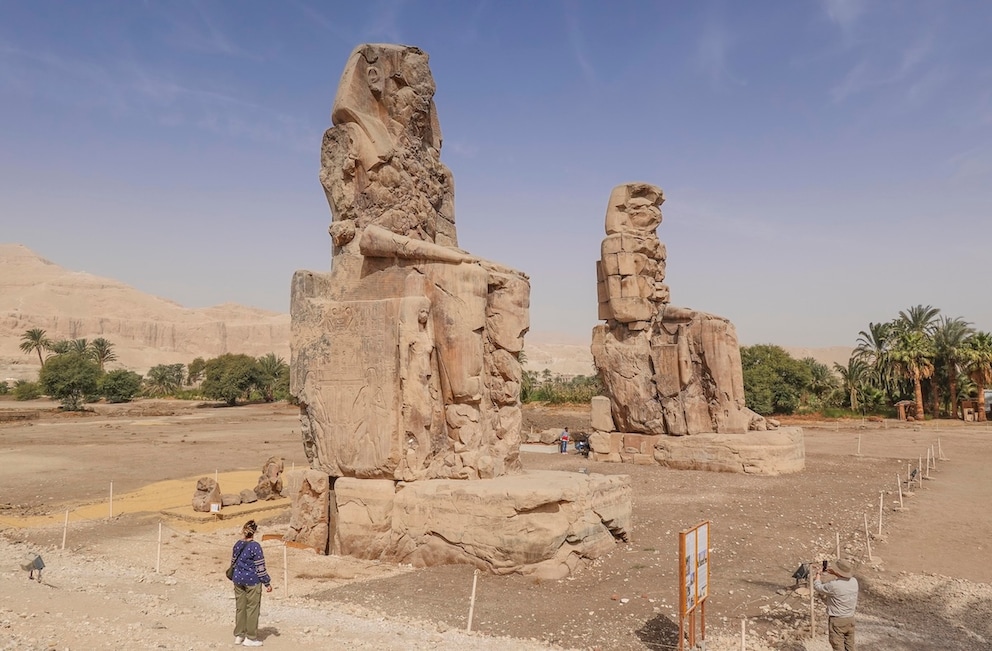
After just a few kilometers, the Colossi of Memnon—two massive seated statues of Pharaoh Amenhotep III—loom by the roadside. No entrance fee, no crowds, they simply stand mightily in the fields. The colossi seem like silent guardians of a long-lost era. It’s worth pausing here to marvel at their dimensions.
The path continues through green fields where women in colorful garments lay out tomatoes to dry on large areas. The colors shine in contrast to the dusty ground and the fresh green—a vivid image that burns into memory. The women look on curiously, sometimes smiling, sometimes shy. A brief “Salaam” often opens the door to a short conversation or a friendly wave.

Ramesseum–Legacy Among Colossi and Ruins
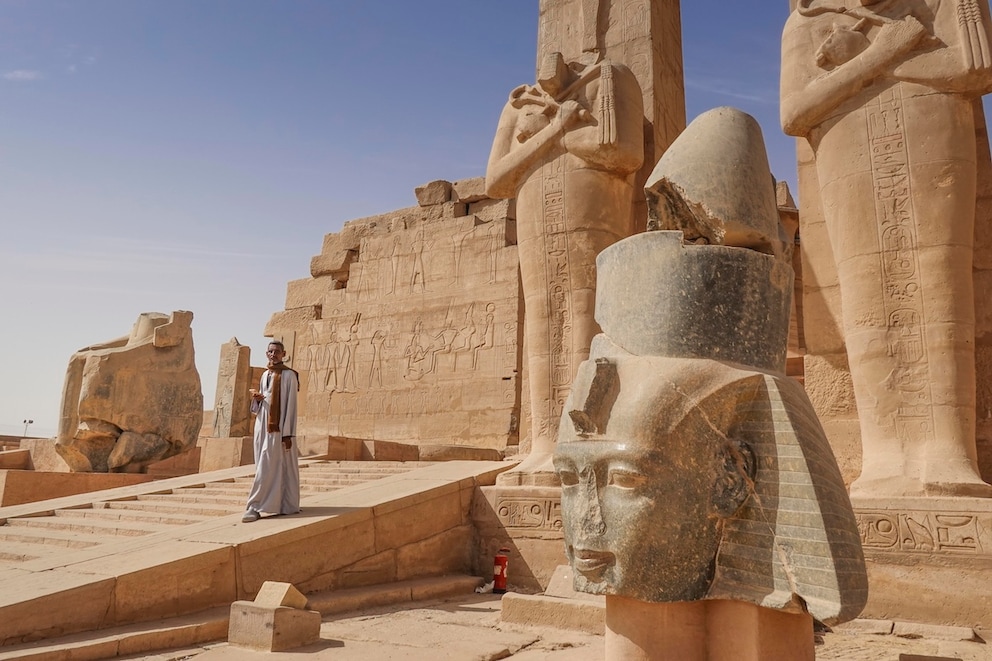
After about twenty minutes, you reach the Ramesseum, the mortuary temple of Ramses II. The gigantic statues of the pharaoh still sit impressively among the remnants of columns. But the real highlight lies in the first courtyard: Here rests the head of the famous toppled colossus of Ramses II—a monumental granite fragment. Just one ear is about a meter long! The head once belonged to a seated figure over 17.5 meters high and weighing over 1,000 tons. The thought of how this statue once dominated the landscape is overwhelming.
Tombs of the Nobles
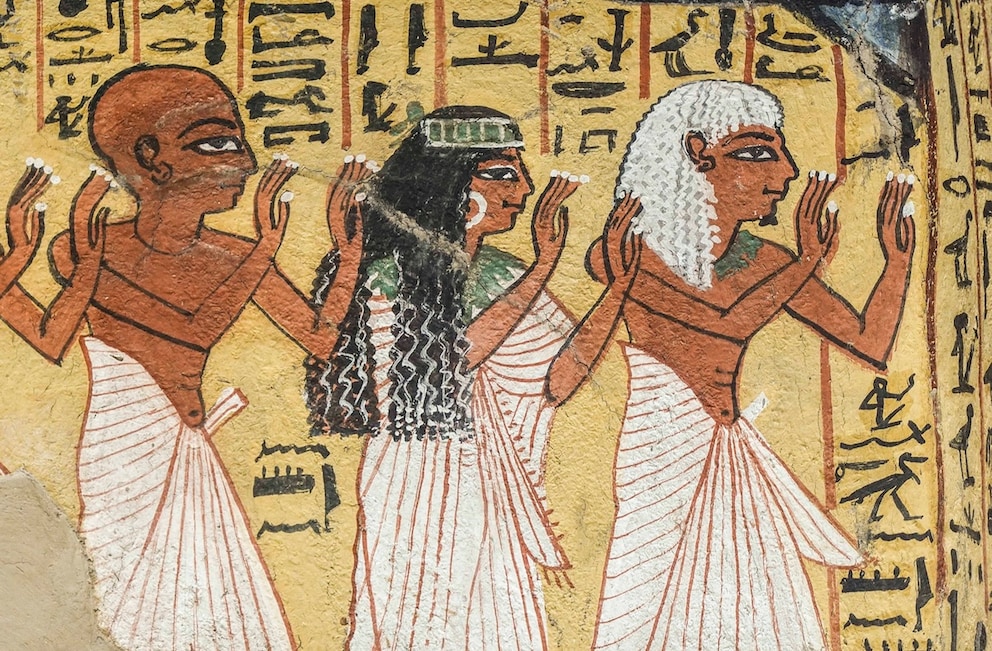
The journey continues to the Tombs of the Nobles. These are less crowded alternatives to the famous royal tombs. The wall paintings here are over 3,000 years old and often very well preserved. Sure, many deities are depicted, but also some scenes from the everyday life of the ancient Egyptians, like dancers or craftsmen. Particularly noteworthy is the tomb of Pashedu—a gem with colorful depictions of musicians and banquets. Sometimes you have to ask a guard to unlock the tombs. A small tip is well-deserved, as he opens the door to hidden treasures. Don’t miss the tombs of Sennedjem and Inherkha!
Tickets for the Tombs of the Nobles are available at the police station just past the Colossi of Memnon (Visa payment is possible) or online on the official website of the Egyptian Ministry of Antiquities.
Deir el-Medina and Temple of Hatshepsut
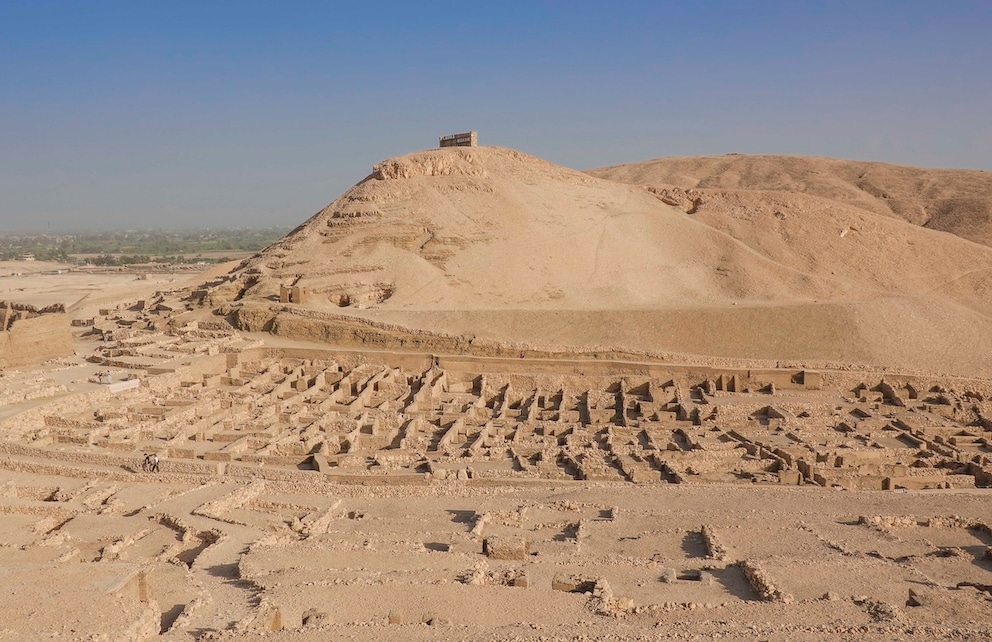
A short detour leads to Deir el-Medina, one of Egypt’s most fascinating historical villages. Here lived the craftsmen and artists who worked on the tombs in the Valley of the Kings. The well-preserved ruins of the workers’ houses, the Temple of Hathor, and the small chapels tell of a vibrant community life. Particularly impressive are the ostraca–pottery shards on which the workers left sketches, letters, and even complaints about their working conditions.
Deir el-Medina is a place that shows what daily life was like for the people who created the monumental tombs. A walk through the narrow alleys and over the old walls is like a journey back in time to the everyday life of ancient Egypt. In 1159 B.C., the first documented strike in human history took place here. Allegedly, the workers in the village were strictly confined because they knew the exact locations of the kings’ tombs with their immense treasures and were not allowed to reveal this to anyone.
Another short detour leads to the Temple of Hatshepsut, an architectural gem nestled into the rock face. But beware: Here, the crowds gather, arriving by bus from Luxor. Those seeking peace should limit their visit and quickly move on. However, the story of the queen, who had to present herself as a male pharaoh for a long time to be recognized as a regent, is truly fascinating.
The Long, Dusty Road to the Valley of the Kings
The ride to the Valley of the Kings is not for leisure cyclists. The road is long, winding, and dusty, and the sun beats down mercilessly. But those who persevere are rewarded with the knowledge that at the end of the road, beneath the barren earth, lie some of the world’s most magnificent tombs. The basic ticket for the valley costs about 12 euros, allowing you to see three tombs. Some tombs, like that of Tutankhamun, require an additional fee. I recommend the extra ticket for the tomb of Ramses VI for four more euros; the paintings are breathtaking. But the tomb of Pharaoh Setnakht is also worth seeing, and the tomb of Ramses III is a must!

7 Destinations Where It’s Warm in December

Why a visit to Marrakech is definitely worthwhile
Village Life and Encounters
The real charm of the tour lies in the small villages you pass through on the way back. Here, bread is still baked in clay ovens, donkey carts are loaded with fresh vegetables, and men sit under shady trees discussing everything under the sun. Those with time should stop, listen, and perhaps even accept an invitation for tea. A friendly “Salaam” to the farmers sitting by the roadside often opens the door to a conversation. They almost all speak some broken English.
Note: Along the way, you’ll be accompanied by barking dogs that greet strangers curiously but are mostly harmless.
Info and Tips for the Route
The described tour covered about 30 kilometers in total, which can be comfortably done in a day. However, I recommend taking two to three days to avoid rushing through these world sensations. This also leaves time to stop at a roadside café, read a book, or discover other hidden treasures like the massive Medinet Habu Temple. Take your time to explore this exciting side of Luxor. Yes, on the opposite east bank are the great Karnak Temple, the Luxor Temple, and the Avenue of Sphinxes, but the west bank of the Nile is even more enchanting. Many family-run guesthouses are available here, such as the Saraha Palace. And wonderful restaurants are located right on the Nile promenade.