

November 24, 2025, 10:57 am | Read time: 4 minutes
Worldwide, there are several natural travel destinations that captivate with their impressive appearance and rank among the most popular photo spots. This includes the distinctive rock formation at Kelingking Beach in Indonesia, known as the “T-Rex Rock.” Recently, an illegal construction project intended to benefit visitors caused an uproar. Now it’s clear: The work will be undone! TRAVELBOOK explains the background.
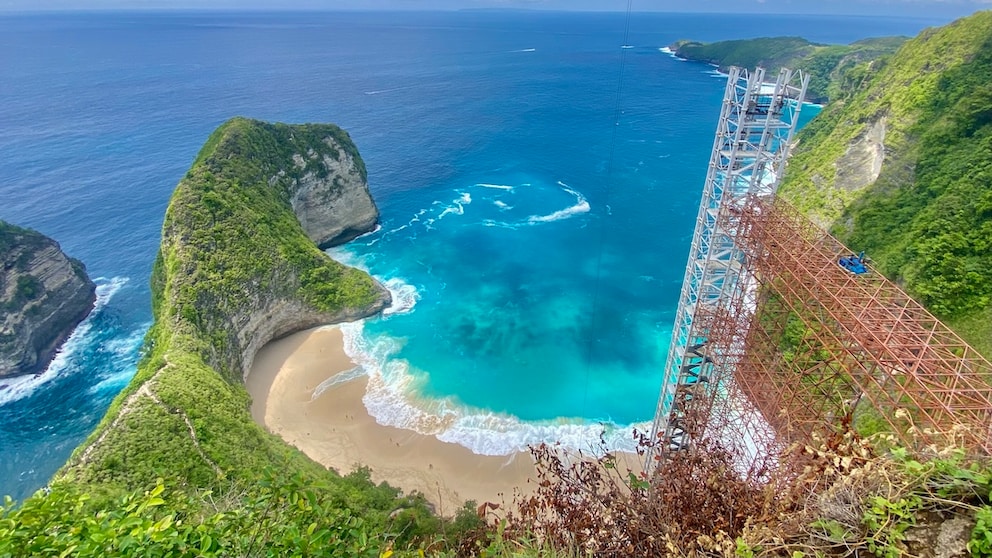
Some may know it: On the Indonesian island of Nusa Penida, about 25 kilometers from Bali, lies the so-called “Cap de T-Rex” at Kelingking Beach. With a bit of imagination, especially from a bird’s-eye view, the rock formation resembles the head of a prehistoric animal. Although the island is only accessible by boat, it is no longer a hidden gem and now attracts numerous visitors daily. However, those currently visiting this paradise will quickly notice that something new catches the eye next to the famous rock.
Construction Scaffolding Instead of Natural Idyll
Normally, the path to the supposedly most beautiful beach on the island leads steeply down the cliffs. The descent takes about 45 minutes over narrow paths, where a few branches and ropes serve as makeshift handrails. Without sturdy footwear, this trip is hardly manageable. But that was about to change: Right next to the famous rock, there is currently scaffolding for a 182-meter-high glass elevator. According to “Travelnews,” it was built by a Chinese developer who wanted to make access to the beach easier.


11 of the Most Beautiful Beaches on Bali
A Single Field of Debris: What Is Really Happening at the Famous Bingin Beach in Bali?
Intense Criticism of Construction Project
However, the construction project at the famous viewpoint caused an uproar among island residents and on social media. The construction company was accused of disrupting the landscape and showing little regard for nature. A local resident told the “Bali Sun”: “It’s a shame that the beautiful view of Kelingking Beach has been ruined by the elevator project.” Many also expressed disappointment on social media. Under an Instagram post showing the elevator, users commented, “I’m glad I was there ten years ago and won’t be coming back” or “What are they thinking?” In another post, it said: “I’m so heartbroken to see this” and “Never fight against nature […]”.
Environmental protection also played a significant role in the criticism. The coast of Nusa Penida is mostly made of porous sandstone and is particularly susceptible to erosion and rockfalls. A construction project like the 182-meter-high glass elevator could further endanger the natural stability of the cliffs. Drilling foundations or supports into the rock can further weaken the stone, increasing the risk of erosion.
According to the “BBC,” the approximately $12 million project was also carried out without sufficient permits—a crucial document has reportedly not yet been submitted. Additionally, there is said to be no environmental impact assessment so far.
After Construction Halt Comes Demolition
After weeks of heated discussions and a temporary construction halt, it is now clear: The construction project will not be completed, and there will be no glass elevator to take visitors directly down to the beach. Bali’s Governor I Wayan Koster has ordered, according to “Travelnews,” that the half-finished project must be dismantled. Violations of environmental and building regulations are cited as the reason.
About 70 percent of the steel scaffolding was already in place at the time of the construction halt—now the operating company has six months to remove everything. Subsequently, the site is to be restored to its original state within three months. If this deadline is not met, the provincial government plans to intervene. The governor emphasized after announcing the decision that this is not a sign of hostility to investment. Rather, it is part of a comprehensive strategy to protect Bali’s nature and cultural values.