


October 22, 2025, 4:33 am | Read time: 4 minutes
Vacationing on Menorca, the little sister of Mallorca, offers a lot: beautiful beaches, peace, and relaxation. And a noteworthy island capital called Maó. TRAVELBOOK reveals what there is to discover there.
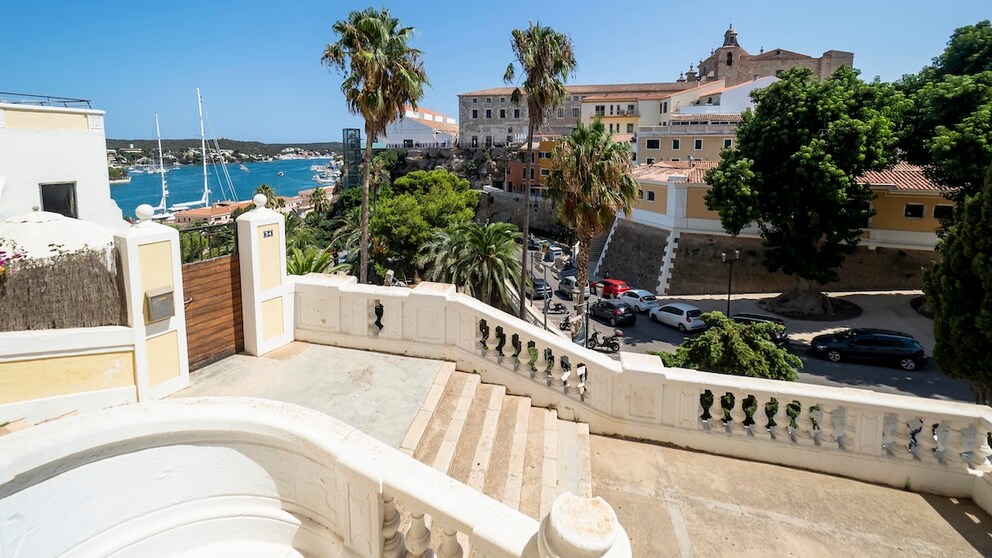
The Spanish name for Menorca’s capital is Mahón. The city has seen Moors, Spaniards, English, and French. This is reflected in the architecture of the old town, which clings to the hill above the harbor. Additionally, Maó is a modern city that invites you to stroll through its shops.
Overview
Why Maó Feels So British
Maó was founded by the Carthaginians. Legend has it that a brother of the famous Hannibal pitched the first tents on the east coast. After the fall of the Western Roman Empire, the Moors conquered the island in 903. It wasn’t until the 13th century that Alfonso III secured the island for the Spanish crown. In 1708, the English had a brief interlude on Menorca, followed by the French. Menorca became Spanish again only in 1783.
The British moved the capital of Menorca to Maó in 1722 because the location on the east coast has a large natural harbor. The city, with its impressive buildings, sits on a hill directly above the harbor. Steep stairs connect the old town with the harbor. In the old town, Catalan and British architectural elements mix.

Sights in Maó
City Gate Pont de Sant Roc
The old town of Maó is particularly worth seeing. It should be entered through the old city gate Pont de Sant Roc. Along Carrer Isabell II, walkers pass many beautiful old buildings, mainly from the 18th century. The street leads directly to the town hall and the cathedral.

The Cathedral Santa Maria
The single-nave hall church was built on the foundations of a Gothic house of worship from the 8th century. It wasn’t until the 18th century that the cathedral took on its current form. The organ from 1809 is particularly noteworthy. With 3,120 pipes, it is one of the largest in Europe. From June to October, organ concerts are held daily except Sundays at 11 a.m.
Town Hall with London Clock
Almost next to the cathedral is the town hall of Maó. The part that still exists today dates back to the 18th century and has an English touch. The clock tower comes directly from London. Some paintings in the town hall are worth seeing.
Shopping in the Former Monastery
Near the church Nuestra Senora des Carmen, a former monastery has been converted into a shopping center with a supermarket and numerous shops. In the former cloister, there are shops and cafés. Above the western cloister is the city history museum Colleccio Hernandez Mora.
The Harbor of Maó
One should not miss a tour of the harbor of Maó. It is the largest natural harbor in the Mediterranean. During the summer season, there are regular harbor tours. In the winter months, however, only for groups by appointment.
Fort Marlborough
The Marlborough Fortress above the town of Cala de Sant Esteve on the southern side of Maó consists of three parts. As the name suggests, it is of English origin. When the English ruled Menorca, Sir John Churchill, Duke of Marlborough, built the fort between 1710 and 1726. The fort is located at a strategically important point and served to control the important harbor of Maó. The fort was almost entirely carved out of the rock. On the site, you can see remnants of the predecessor building Castillo de Sant Felip and the Torre Stuart. The fort houses a museum that depicts the history of the fort in the 18th century.
The Fortress La Mola
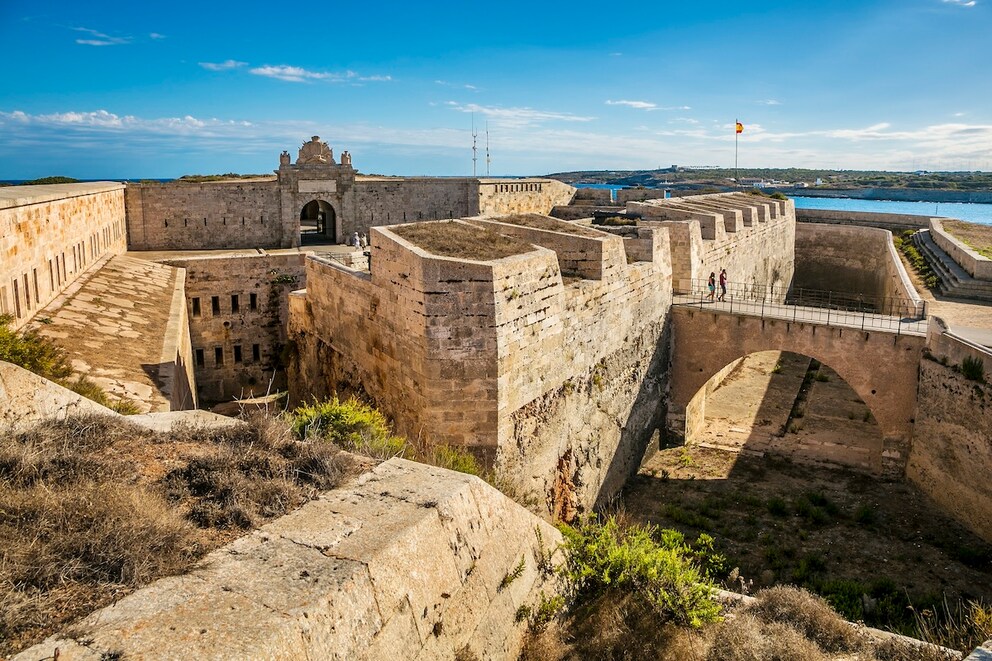
While Fort Marlborough is on the southern side of the harbor, the massive fortress complex La Mola stretches across the northern part of the harbor entrance. Commissioned by Isabella II in the mid-19th century, the fortress was already technically outdated when it was completed in 1875. The fortress at the harbor of Maó has an underground tunnel system that served as a prison until the 1960s. The complex can be visited on guided tours. The fortress is also a place where birdwatchers can observe migratory birds in spring and fall.
The Maó Express
A small train on wheels takes you to the sights of the city of Maó. Departure is at Placa del Esplanada. The ride lasts about 50 minutes. Tickets cost 6 euros, reduced price 5 euros.