

July 30, 2025, 4:35 am | Read time: 7 minutes
Martinique entices with white dream beaches, lush green nature, and countless flowers. In this overview, TRAVELBOOK presents the most important travel destinations, attractions, and country data, and offers tips on activities on the popular Caribbean island.
“Madinina” (“Island of Flowers”) was what people used to say when talking about their home island of Martinique. And this name for the Caribbean island belonging to the Lesser Antilles fits perfectly. Nature plays a leading role on Martinique. The island is covered with plants like ginger, bougainvillea, flamingo flowers, and many more.
Martinique is located north of St. Lucia and south of Dominica, and because it belongs to France, you travel within Europe and pay with the euro. The official language is French. Only the weather has little to do with Europe, as it is pleasantly warm on Martinique at any time of year. In the north, Martinique is lush and humid, while the south is somewhat drier.
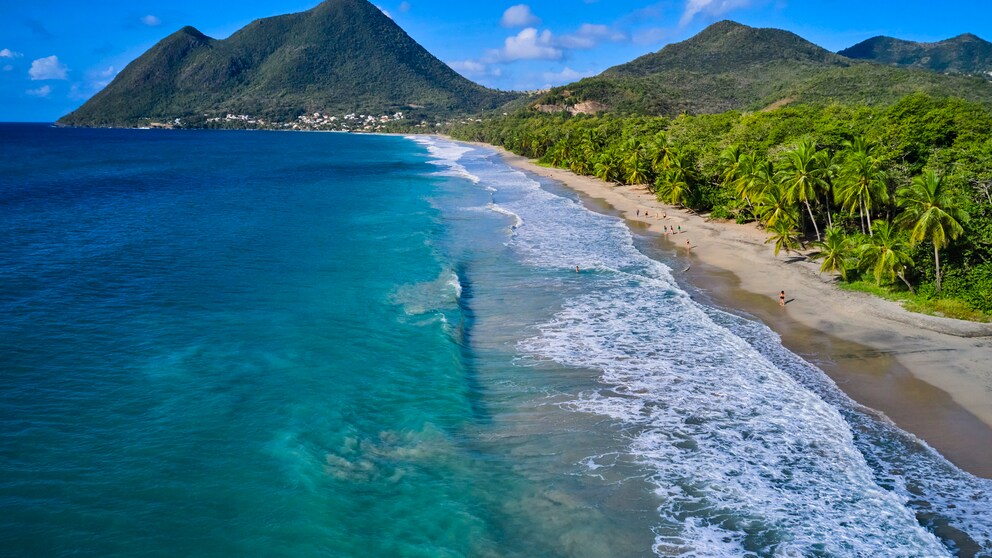
For nature lovers, the north of the island is particularly appealing with its wild mountain and forest landscape, numerous waterfalls, and the 1,397-meter-high volcano Mont Pelée. The area is especially popular with hikers. Those visiting Martinique often come for the stunning beaches. Famous are the Grande Anse de Diamant in the southwest, the Grande Anse des Salines, and Anse Trabaud—all white sand beaches with turquoise water and palm trees. However, these three are far from the only ones on Martinique. Those who want to snorkel can head to Anse d’Arlet, where you can see many colorful fish in the shallow water.
Martinique was discovered by Christopher Columbus on June 15, 1502. He was followed by the French, who in 1685 began a dark chapter on the island: slavery. Ending it was the aim of French politician Victor Schoelcher, who was instrumental in its abolition in 1848. A monument in the capital Fort-de-France commemorates him today.
Our Tip: Those visiting Martinique should plan their trip themselves, as the few package deals are often very expensive. Comparatively affordable flights are available from Paris, and there is a wide selection of hotels.
Overview
Profile
| Region | Caribbean |
| Capital | Fort-de-France |
| Time Difference | -5 hours (Winter); UTC-4 |
| Area | 1,128 km² |
| Population | 341,664 |
| Languages | French, Creole |
| Currencies | Euro (EUR) |
| Visa & Entry | Business: No visa required Tourist: No visa required |
Top 10 Travel Destinations in Martinique
Martinique boasts many beautiful and exciting cities and coastal villages that are worth visiting during a vacation or even for shorter stays. Click through our photo gallery of the top 10 travel destinations in Martinique.

Top 10 Attractions in Martinique
Tropical plants in the botanical garden, fascinating insights into history, and of course, plenty of picturesque sandy beaches—Martinique has much to offer its visitors and residents. Click through our photo gallery of the top 10 attractions in Martinique.
Top 10 Activities in Martinique
In addition to numerous attractions, Martinique also offers various activities that are worthwhile. These include exploring stunning beaches, diving and snorkeling, hiking, and dining. Click through our photo gallery of the top 10 activities in Martinique.
Editorial Reading Tips
Martinique Map

Guadeloupe: The Most Beautiful Destinations and Best Tips
Dominica: The Most Beautiful Destinations and Best Tips
Weather and Climate
The climate on Martinique is considered tropical, with temperatures remaining more or less constant year-round. The average temperature is 25 degrees Celsius. It is coolest in January and February and warmest in August and September. The rainy season is between June and November, with frequent short but heavy showers. During this time, it is also particularly humid, and hurricanes are a possibility. The dry season lasts from December to May, with March being the driest month. The humidity is more pleasant during this time, but it remains humid.
While temperatures change little throughout the year, the climate on Martinique varies significantly by region. For example, it is warmest and rains the least on the south and southeast coasts. In contrast, Martinique is up to twelve degrees cooler in the north and inland, and it rains more.
Travel Advice for Martinique (French Overseas Department)
(Textual contribution: Silke Böttcher)