

October 17, 2026, 5:33 am | Read time: 6 minutes
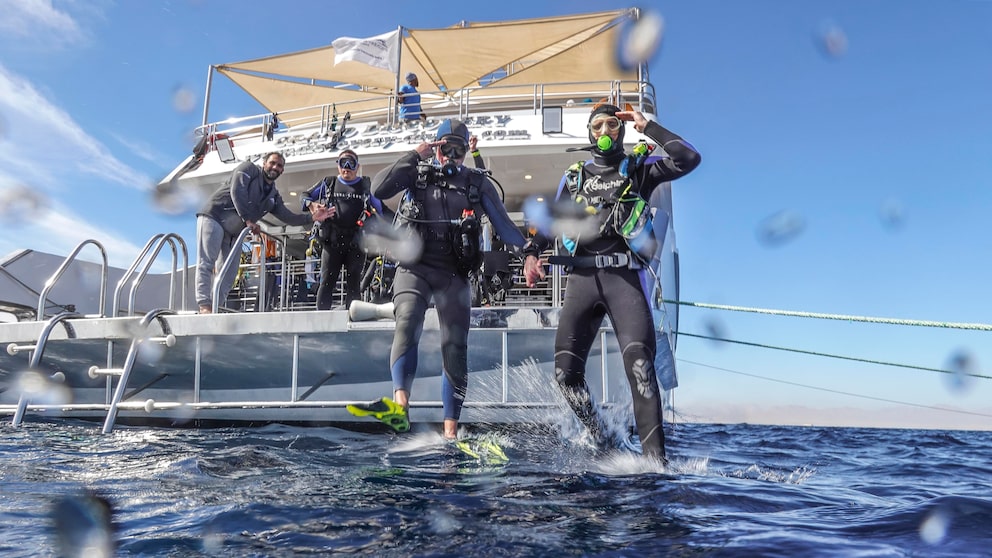
In February 2026, our author Frank Lehmann spends a week on a diving safari in the Red Sea. Away from the coasts, a dive boat takes him to some of Egypt’s most famous reefs. Among shipwrecks, vibrant coral gardens, and encounters with sharks, he experiences a journey that even seasoned divers won’t soon forget.
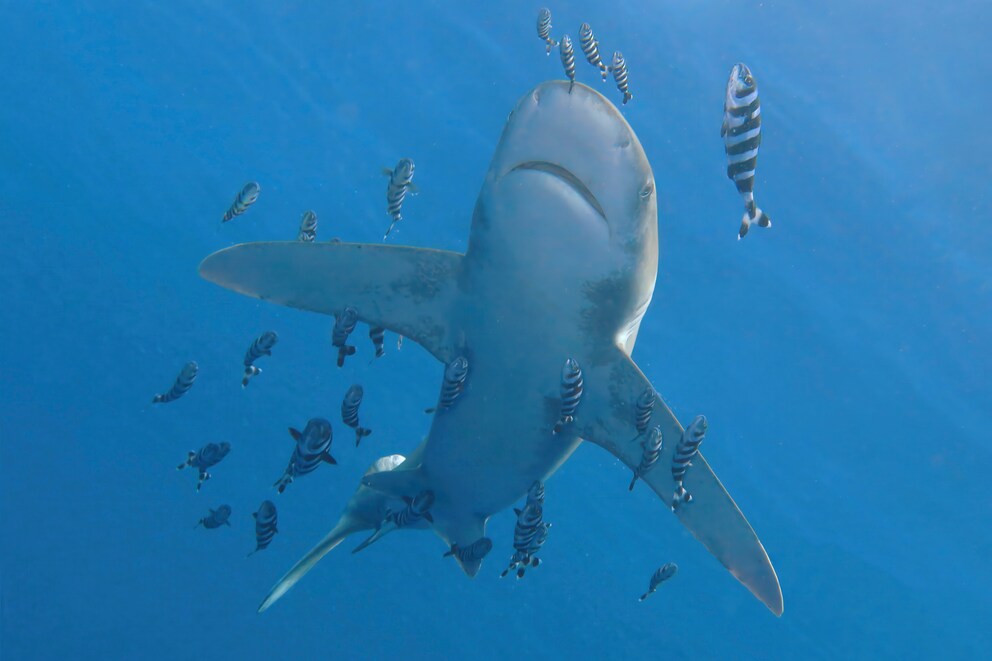
Here comes the predator towards us. I’m with my dive group at a depth of 10 meters, and the oceanic whitetip shark approaches with gentle swings. The curious eyes of the four-meter-long creature are wide open. It seems to be sniffing me out. Now it’s time to follow the rules for a shark encounter: maintain an upright posture, don’t flee, face the predator, and calmly look it in the eyes. The elegance of the shark, also known as Longimanus, is simply enchanting. It knows full well that here at the Brothers Reef, it is the king, and the divers are neither a threat nor prey. So, the active predator circles a few times until it loses interest and leisurely disappears back into the vast blue.
We surface and shout with joy! Such an encounter is unique. The respect for the shark is there, but above all, the excitement of experiencing such a magnificent creature in the wild. On board the dive boat, everyone is chattering away. Who saw it? How close was it? Will it come back again?
The Shipwrecks at the Brother Islands – One of the Best Diving Spots Worldwide
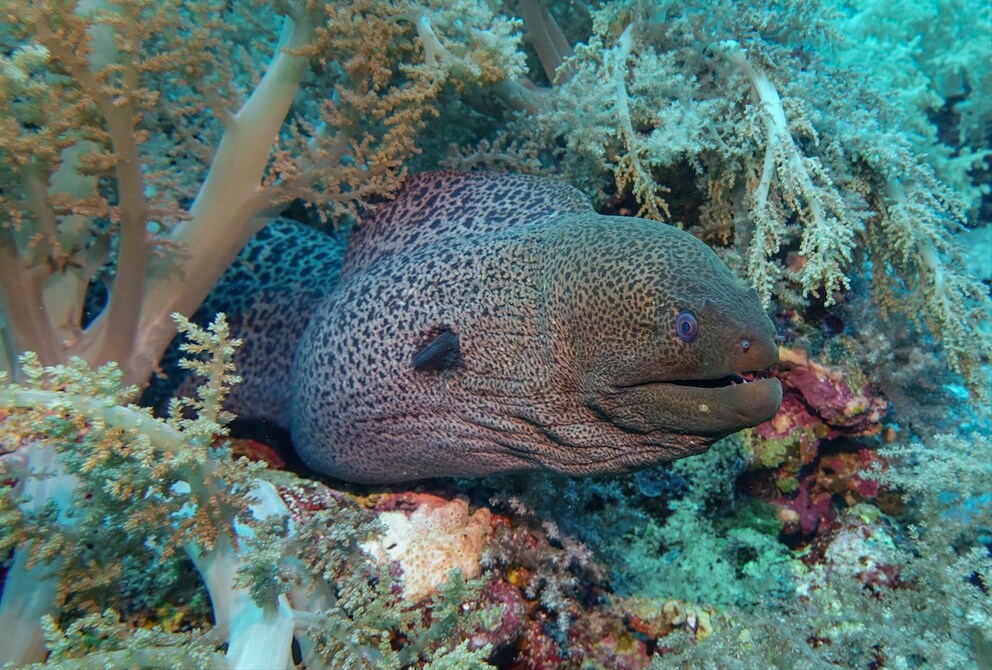
We are on a week-long diving safari far from the mainland. The ship took us 150 kilometers southeast of Hurghada into the open Red Sea. After eight hours of stormy crossing, we reach two brown spots in the sea. These are the Brother Islands. They rise only a few meters above sea level. A lighthouse, a few rocks, no trees, no shrubs. What am I doing here? The answer comes quickly when you jump into the water. We are in a marine park under strict protection. As barren and dull as it is above water, it is just as fascinating and colorful below the waterline. We are allowed to dive in the intact, large coral reefs, home to a wide variety of fish.
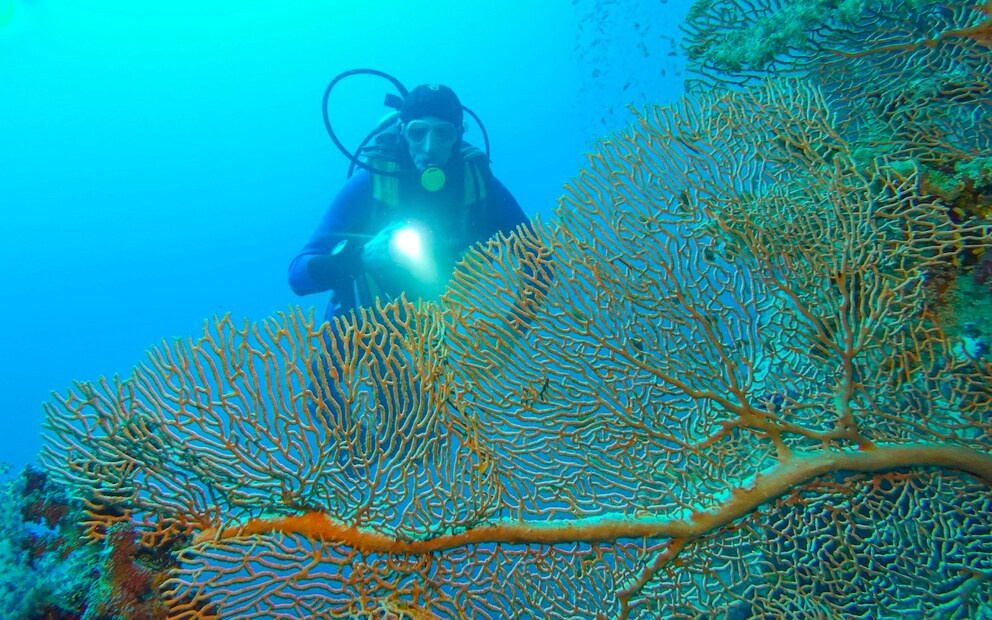
The fish feel most at home in the two wrecks lying at the Big Brother: The Numidia was a 137-meter-long steamer that sank here in 1901, and the 75-meter-long Aida met its fate in 1957. Both ships have now become fantastic biotopes teeming with underwater life. We spend two days here full of joy in one of the best diving spots in the world.
Night dives are not allowed because if you get swept away by the often strong currents here, you might not reach the coast for days–if you’re lucky. So, the Brothers are for experienced divers. It is recommended to have at least 50 logged dives for these islands. The Brothers were also closed to divers from 2018 to 2019 due to accidents with the Longimanus: Some idiots had fed the animals with food scraps, agitating the sharks and leading to attacks on divers.
Hammerhead Shark Schools at Daedalus Reef
We are a bit sad when the captain calls for departure, as he steers his ship further to the famous Daedalus Reef. After nearly 200 kilometers through the open blue, we reach the tiny island where a few soldiers have to guard a lighthouse. Underwater, the same game again–we are thrilled: The huge anemone city especially captivates us. Dozens of clownfish live here and defend the anemones against anyone who approaches. But the main attraction is the hammerhead sharks of Daedalus. If you’re lucky, you might even see them in schools. But we are unlucky, not a single hammerhead is in sight. We console ourselves with many other experiences, like the large Napoleon wrasses.
And on we go to the Elphinstone Reef, located 80 kilometers further south. What more attractions can come here? We are almost saturated with impressions and overjoyed with what we have already seen. And besides, we are here in early February, so no big fish come to Elphinstone–the water is still too cold for them at 23 degrees. Or so we thought! Others in the group allegedly saw a manta and a silky shark was also said to be there. Too bad I missed that. But during the morning dive, I was able to spot a hammerhead at a depth of 30 meters. It already commanded my respect, as it was early in the day and it was probably looking for its breakfast. Its movements were a bit frantic.
Longer than a blue whale! Researchers discover the world’s largest coral to date
Shark photos! This man has a dangerous hobby
Like Hitting the Jackpot: Whale Shark Sighting!
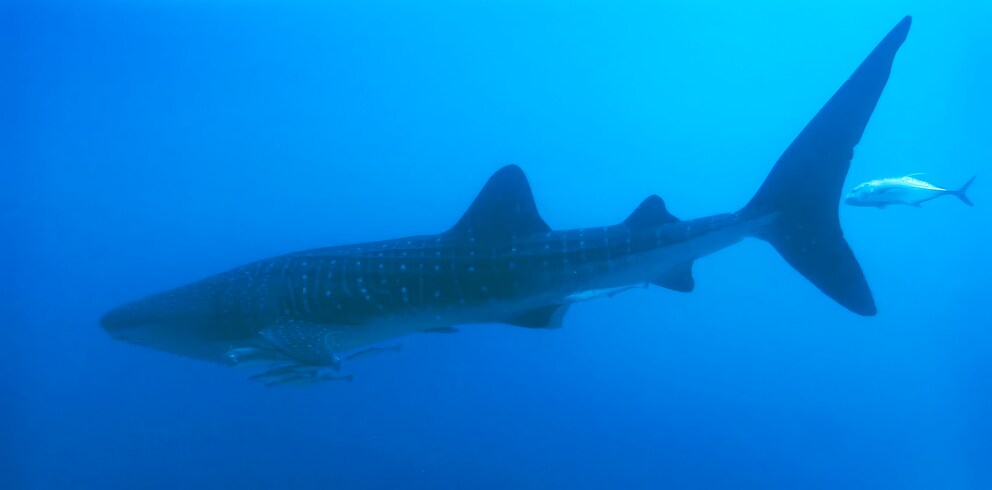
So, we surface again, have breakfast, and look forward to the midday dive. We jump into the water, dive leisurely to a depth of 20 meters above the southern plateau, and enjoy a cute little pufferfish. But what is that huge shadow approaching? A whale shark! I forget to breathe, and our group of three divers is at a loss. The shark is about six to seven meters long and glides very leisurely past us. Accompanied by dorados and other fish that feel very comfortable in its vicinity. Such an encounter is like hitting the jackpot. We are just in awe, and I send a prayer of thanks to the Creator. How magnificent this creature is!
The Underwater World is a Threatened Paradise
So the week in the Red Sea slowly comes to an end. The time on the dive boat flew by because we were so richly rewarded by the depths, the coral reefs, and the beauty of the sea. Despite all the excitement, we have not forgotten how threatened this paradise is. According to the science magazine Spektrum, global populations of sharks and rays have declined by over 70 percent in the last 50 years (since 1970). Numerous sharks are threatened with extinction. The blame lies with humans, as we relentlessly hunt them and mercilessly destroy their habitats. It is not the shark that threatens humans–no, we kill these wonderful and immensely important creatures for nature. Sharks are at the top of the food chain in the sea, and when this is disrupted, everything in the magnificent blue goes awry.
My tip: Feel free to go diving in winter and spring from November to March. Yes, it’s a bit colder, but much quieter in the Red Sea. And always remember: Touch nothing, take nothing but photos from down there. The colorful world of the reefs must be preserved!