

June 1, 2026, 4:45 am | Read time: 7 minutes
What is the city of the “three without”? It has the meadow without grass, the saint without a name, and the café without a door. It doesn’t just sound magical, but it is! These three famous landmarks are located in Padua. However, it is clear that one of the oldest cities in Veneto is anything but “without,” as this cultural gem holds a wealth of extraordinary sights in a typically Italian atmosphere. Our author was there and shares her best tips.
If you have limited time, you can explore six cultural highlights in the old town in one day, strolling through squares enlivened by street musicians, along miles of arcades, or through mysterious alleys. At almost every corner, imaginative figures peer down from house facades at visitors, and cafés and bars invite you to linger and admire the beauty all around.
Being in Padua also means enjoying la dolce vita! It’s no coincidence that Aperol was invented here. Away from mass tourism, Padua is a hidden gem for city travelers, culture enthusiasts, as well as pilgrims, connoisseurs, and those seeking peace. Here are six attractions that are not far apart, easily accessible on foot, and some are part of the UNESCO World Heritage. Let’s start the walk!
Overview
Morning
Cappella degli Scrovegni: A Glimpse into Hell and Heaven
Once in a lifetime, take a look at Giotto’s famous visions of hell and heaven that adorn the walls of the early 14th-century chapel. On the way there, the seat covers of some trams already display the bright blue starry sky with Halley’s Comet, which the world-famous painter and forerunner of the Renaissance immortalized on the chapel ceiling.
The building, constructed around 1303 to 1305 and once attached to the palace of the noble Scrovegni family, was part of a Roman arena, of which only a few remains are left on the site. All the more impressive is the preservation of Giotto’s colorful fresco cycle, thanks in part to an air conditioning system.
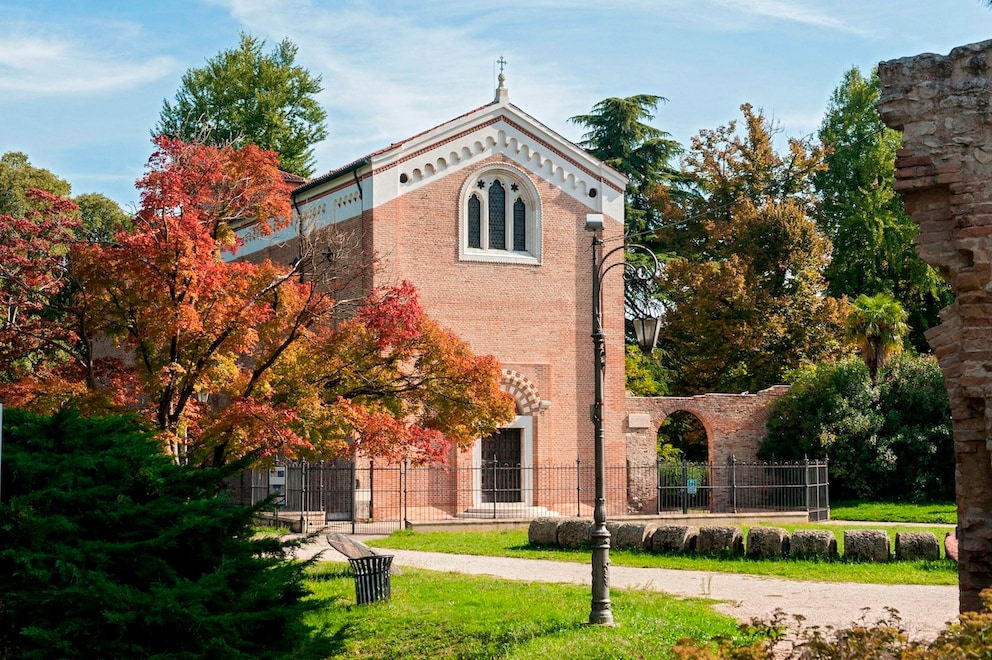
According to tradition, the usurer Reginaldo’s son commissioned the chapel’s construction to cleanse the family of sins. His father’s dealings were so notorious that even the great poet Dante condemned him to hell in the “Divine Comedy.” The wall paintings in the chapel depict the gruesome horror there: hairy devil creatures barbarically torturing, hanging, or devouring sinners. On the other side of the fresco, the virtuous are seen stepping before the Last Judgment with a blissful smile.
For this most significant attraction in the city, prior ticket booking is necessary, preferably at least one day in advance. Each visitor has 30 minutes on-site, including a film.
Opening hours: Daily from 9 a.m. to 7 p.m.
Palazzo della Ragione
Not to be missed! In the center is the magnificent Palazzo della Ragione, whose construction began around 1218. Visitors marvel daily at one of Europe’s largest column-free halls, 82 meters long, with a roof resembling an inverted ship’s hull. Now a town hall and one of the city’s most famous monuments, the splendid building served as the seat of the courts in the Middle Ages. These walls also feature a fresco cycle by Giotto, which was destroyed in a fire in 1420 but later restored.
The “Stone of Shame” in the hall, in turn, reminds us of medieval penitents who had to sit there three times, clad only in a shirt, repeating each time: “I will pay my debt.” Tip: Before visiting, one of the many cafés around the square is recommended.
Opening hours: Tuesday to Sunday, 9 a.m. to 7 p.m.

The 6 Most Beautiful Sights on Lake Maggiore
This Italian City Is Still a True Hidden Gem!
Midday
Caffe Pedrocchi: Legendary Café without Doors
Where does the nickname “without doors” come from? It dates back to when this iconic café was open around the clock from 1831 for many years, attracting a diverse crowd of artists, students, and politicians. A bullet hole in the wall still recalls the 1848 student uprising against Austrian troops. This neoclassical café with its large historic halls resembles a palace through which a democratic spirit once blew. Here, citizens from all walks of life came together, discussed ideas, or simply enjoyed the special ambiance.

On the ground floor are three magnificent rooms in green, red, and white—the national colors of Italy. The “green salon” was mainly used by students for free reading without having to order anything. The red salon remains the centerpiece with a café and bar, sometimes accompanied by a pianist. The white salon houses a bistro and restaurant. Prominent intellectuals like Lord Byron or Stendhal once praised the café as the “best in the world.” However, today it comes at a price. Its trademark is the “mint espresso,” topped with mint cream and cocoa powder. The upper floor offers ten more rooms with a small museum. To this day, the café is a place full of inspiration!
Opening hours: Daily 8 a.m. to midnight
Afternoon
Prato della Valle: Meadow without Grass
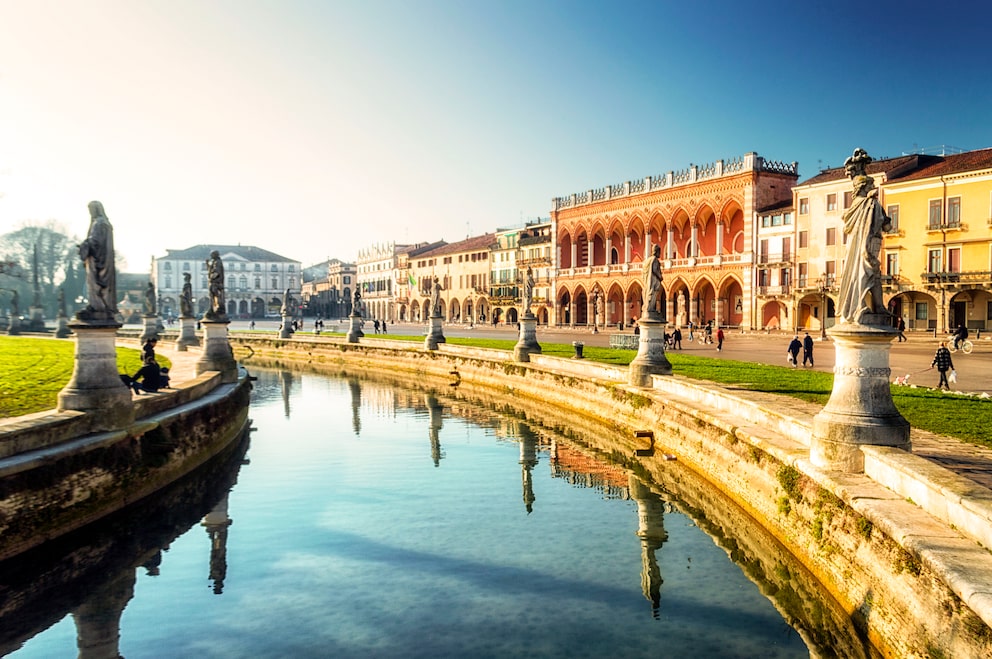
Meadow without grass? The name for one of Europe’s largest squares dates back to times when the 90,000-square-meter area was used for military parades and markets, so little grass grew there. Elliptically laid out, a green island is in the middle, bordered by a canal and 78 statues. Nowadays, lush greenery thrives there, offering young people and families a place to rest, skate, or picnic in the shade of the trees during summer. This historic site regularly hosts events, concerts, and large markets.
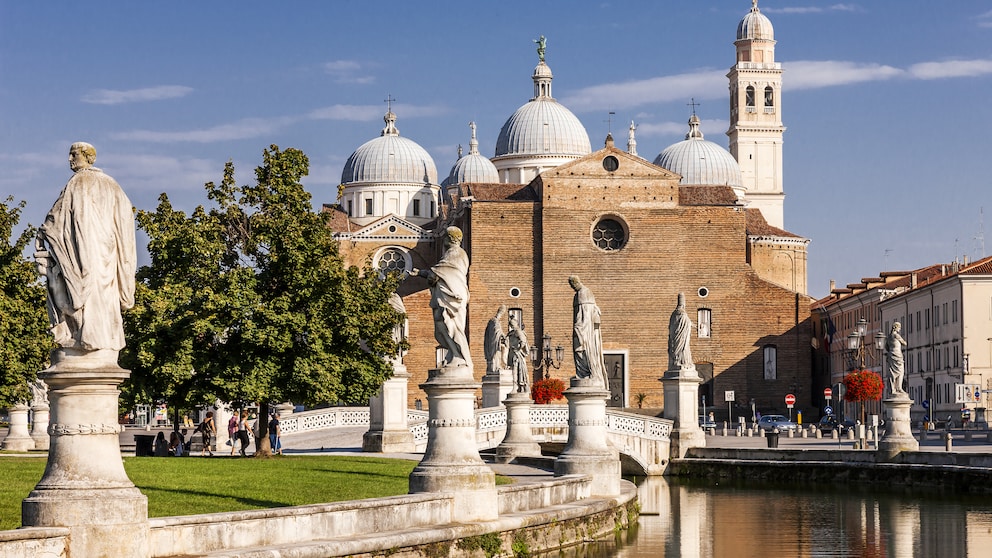
A roughly 15-minute walk from the center leads there. Right next to it is the famous Basilica of Santa Giustina.
Basilica of Saint Anthony: Saint without a Name
Miracles may happen where miracle workers once acted. Whether that’s true can be discovered by those who join the long lines at the tomb of the patron saint of travelers and the poor in the Basilica of Saint Anthony. He is known as the “saint without a name” because he stands as a synonym for the saint par excellence—virtually the pop star among saints. After all, Anthony is also considered a helper in finding lost items and is colloquially called “Schlamperl-Toni.”
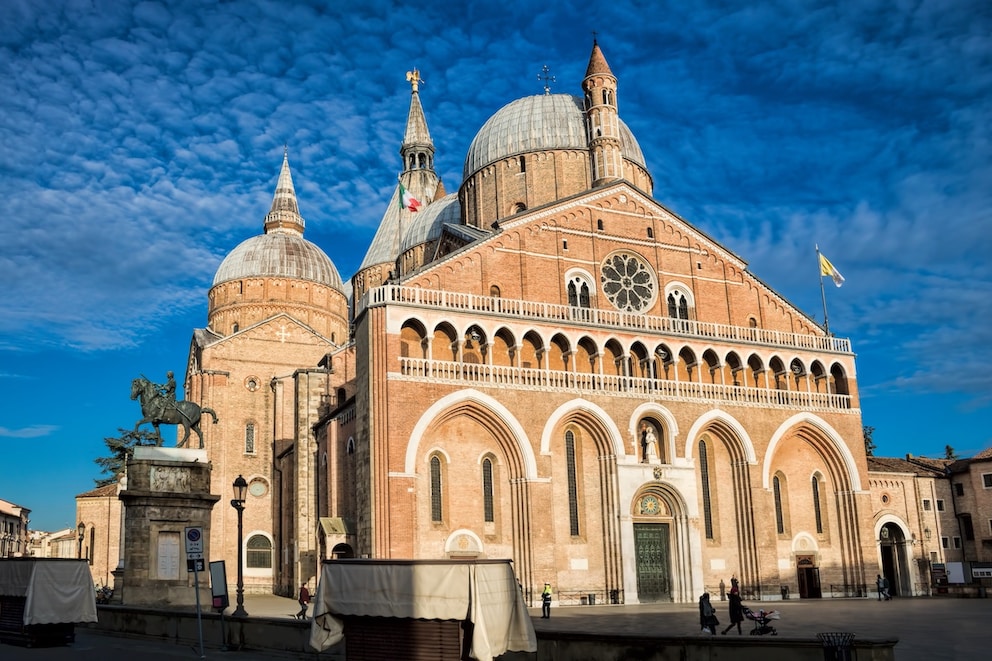
With seven oriental-looking domes, a pointed main dome, two slender bell towers, and small turrets, the basilica immediately catches the eye from the outside. Inside, it’s hard to know where to look first: at the magnificent ceiling paintings or the numerous relics, artworks, and statues? It’s no wonder the basilica is one of Italy’s most visited shrines. From 1238 to the 14th century, the church developed into a magnificent building and one of Italy’s most important pilgrimage sites.
Opening hours: Every day, from 6:15 a.m. to 6:45 p.m.
In between, holy masses with partial closures
Botanical Garden: Place of Superlatives
Another place of superlatives! The world’s oldest university botanical garden was founded in 1545. Among the 3,500 plant species are rare exotic medicinal plants with healing properties. The so-called Goethe Palm, planted in 1585, is considered the oldest plant in Europe. Numerous school classes stand daily in front of this greenhouse to learn more about Goethe’s botanical studies and his theory of metamorphosis, which suggests that all plants developed from a single basic form. “F… you, Goethe” was presumably scribbled by one of the students with a pen on a stone on the ground.
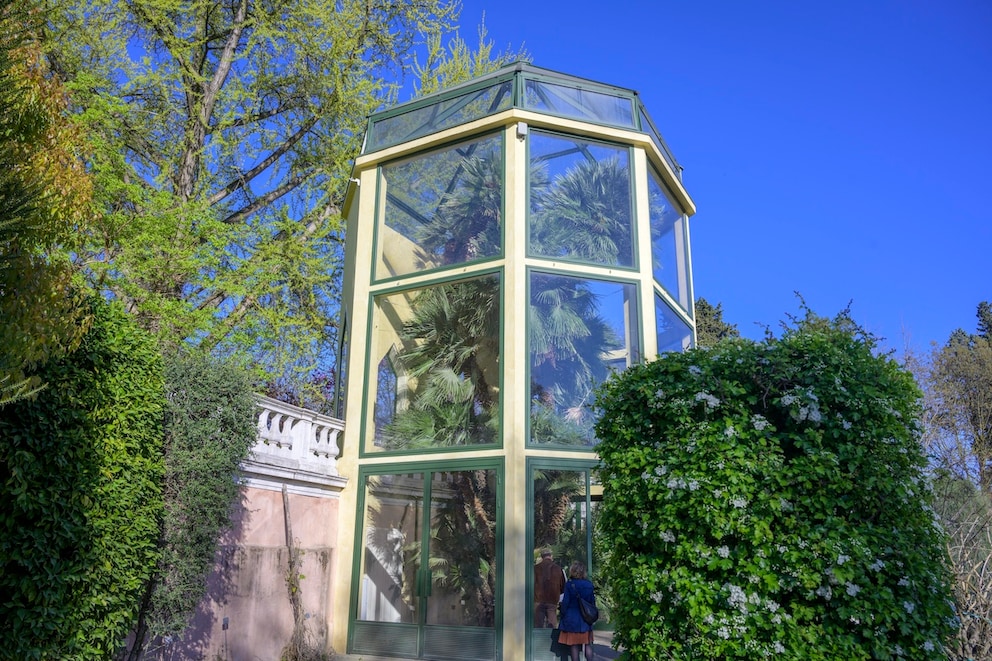
The cleverly designed and walled garden is considered the “original of all botanical gardens” and the cradle of science and understanding of the relationship between nature and culture. One thing is certain: between bubbling fountains and ponds with water lilies, in the shade of lush greenery and surrounded by blooming roses, it’s a perfect place to relax on one of the benches. A place of peace and relaxation, full of changing colors and scents!
Opening hours: May to September: 9 a.m. to 7 p.m.