


December 29, 2025, 9:22 am | Read time: 3 minutes
The Canary Islands offer summer temperatures year-round—and are among the most popular vacation destinations in Europe. Whether it’s Fuerteventura, Tenerife, Gran Canaria, or Lanzarote, each island is worth seeing and has its own charm. However, few know where the name “Canary Islands” actually comes from—and the answer might surprise some.
The total of eight Canary Islands belong to Spain and are located off the northwest coast of Africa in the Atlantic. They are all of volcanic origin and host unique animal and plant life. But what does the name “Canary Islands” actually mean? Many wonder about the true origin of the name and whether it is connected to canaries. However, the origin lies elsewhere—and traces back to the islands’ history. TRAVELBOOK uncovers the background: What is myth—and what is truth?
Ancient Description of the Island Paradise
According to “Planet Wissen,” the Canaries appear in ancient sources as the “Islands of the Blessed”—a mythical paradise at the edge of the world, characterized by a mild climate and astonishing vegetation. The first systematic descriptions are attributed to the Roman naturalist Pliny the Elder, who relied on reports from the Mauretanian King Juba II. In the 1st century B.C., he had the islands explored alongside his realm. This provided the earliest scientific information about the flora, fauna, and inhabitants of the island group.
In these writings, Latin island names appear for the first time, including an island named “Canaria,” which later formed the basis for the naming. Over the centuries, numerous myths also emerged: The island group was repeatedly linked to the legend of Atlantis. Some saw the Canaries as the last peaks of the sunken realm rising from the sea. In Greco-Roman antiquity, the Atlantic west of the Strait of Gibraltar was also considered the “end of the world.”

Why a Trip to North Carolina’s Outer Banks Is Worth It

Do You Know What the Macaronesian Islands Are?
Origin of the Name: Dogs, Seals, or Even a Tribe?
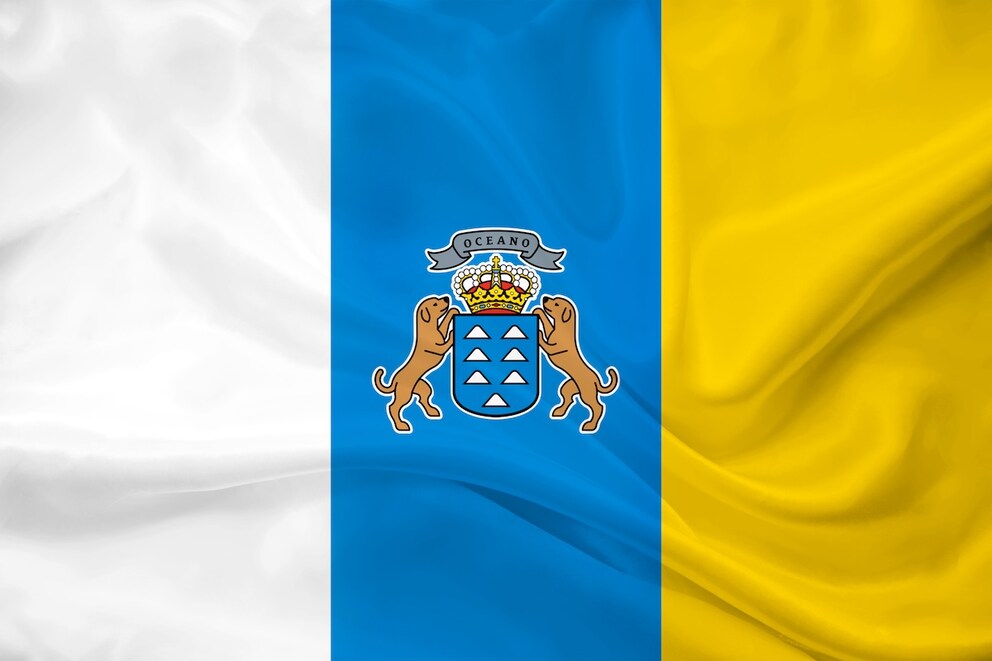
The name of the Canary Islands traces back to the Latin “Canariae Insulae”—translated as “Islands of the Dogs.” According to the portal “VillaGranCanaria,” Roman sailors early on reported remarkably large animals on one of the islands. Whether these were actually dogs is not definitively proven. Some experts consider it possible that the ancient reports actually referred to seals, which were present in the region and colloquially called “sea dogs.”
Another plausible interpretation refers to the North African Berber tribe called “Canarii.” In this theory, “Canaria” was originally the “Island of the Canarii,” named after the indigenous people of the Canary Islands, whose origins lie in the Berber peoples of North Africa. Which explanation is correct remains unresolved to this day. What is certain is that the name originated in Roman times and is based on ancient descriptions—not modern notions.
The Story Behind Canaries
The most well-known myth is that the Canary Islands were named after canaries. But in fact, the opposite is true—the birds are named after the island group. It was European sailors who brought the wild Atlantic canary from the islands to Europe. Here, it was domesticated and became the pet “canary,” which gained great popularity in the 17th and 18th centuries. The misconception persists likely because the canary is now considered a symbol animal and is much more strongly associated with the islands than the true historical origins of the name.