


October 30, 2025, 4:28 pm | Read time: 3 minutes
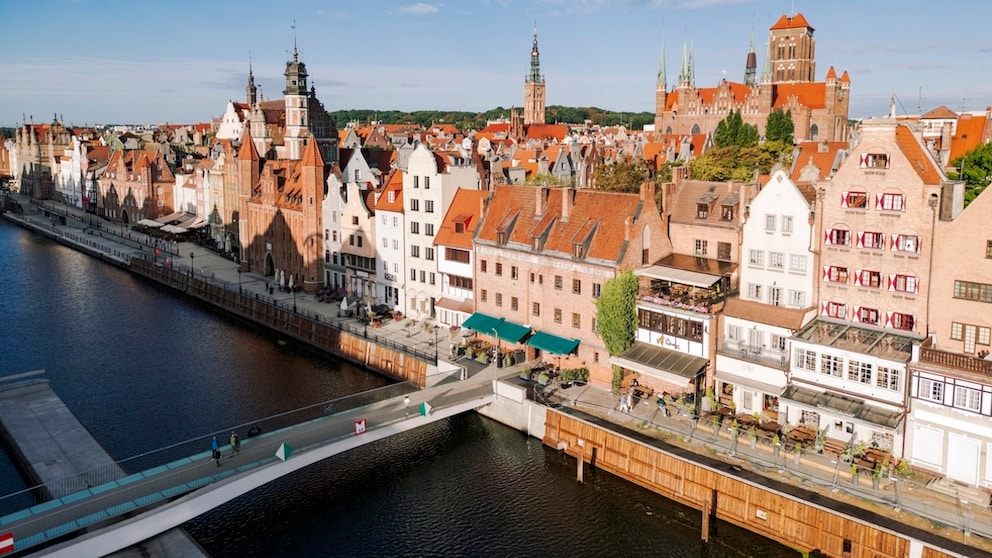
The Polish city of Gdansk impresses with its brick Gothic architecture, ornately decorated facades, magnificent city palaces, and one of the largest churches in Europe. TRAVELBOOK has the best tips for the port city near the Baltic Sea.
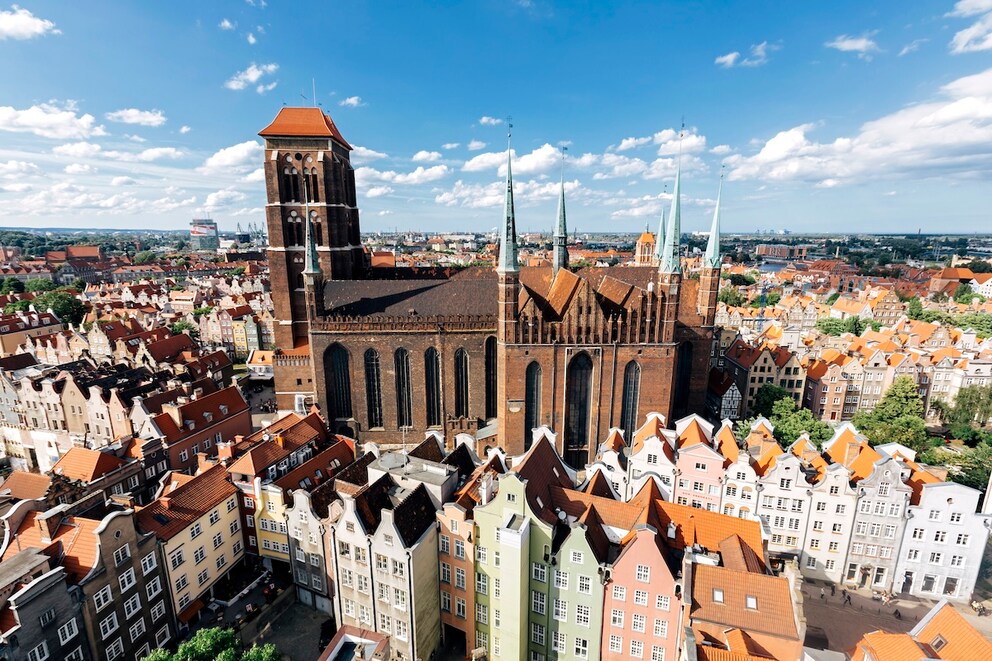
The central meeting point of Gdansk is the Long Market with the Neptune Fountain. The most splendid houses in Gdansk are located there. In summer, people gather for many festivals, and before Christmas for the symbolic meal under the fir tree. The most beautiful buildings in the city are grouped around the square, including the Artus Court with its bright white facade. Neptune has been enjoying the water there for almost 400 years. The two-story brick building of the Old Town Hall dates back to 1587. In the historic center, you’ll also find St. Mary’s Church, the largest Gothic brick church in the world.
On the Royal Route through the Historic Center
The heart of the so-called Main Town is the Royal Route, which leads from the High Gate to the banks of the Motlawa River with the Crane Gate. You should linger in the so-called Long Lane. On the ground floors of the splendid houses, wealthy merchants had their offices, and the families lived above. In the Uphagen House, for example, you feel transported back several centuries. In addition to the quirky cafes and usual souvenir shops, there are also small mom-and-pop stores where you can still experience the original Polish way of life. Through the palatial Green Gate, you can reach the banks of the Motlawa from the Long Market.
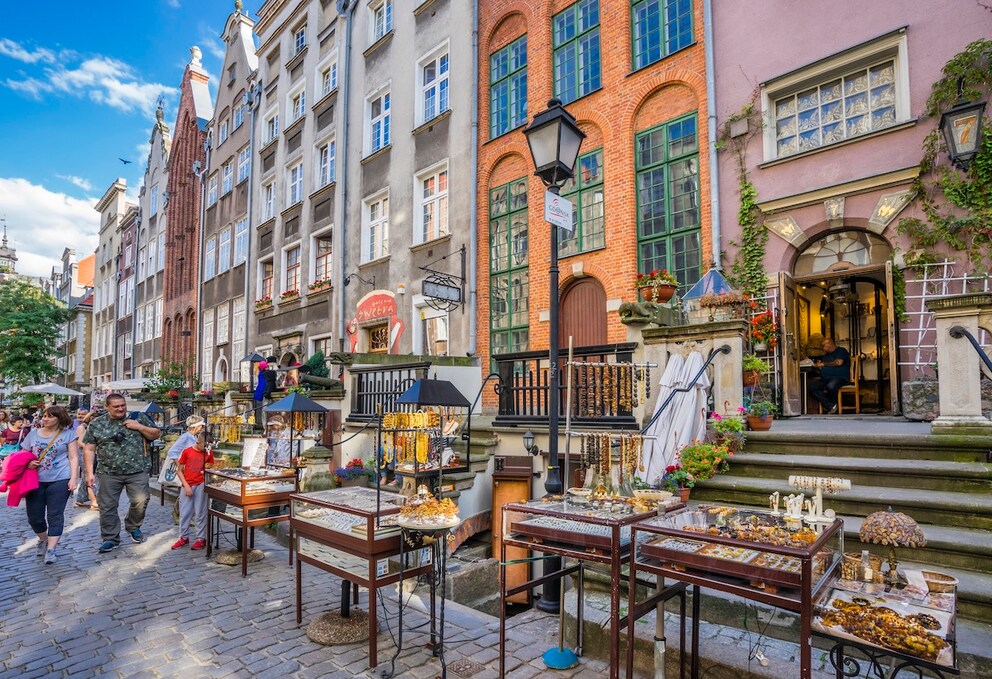
Characteristic of the neighboring Mariacka Street are the terraces, where amber sellers offer their goods. Gdansk is the most important trading place for the “Gold of the Baltic.” In the Amber Museum, located in the foregate of the Long Lane at the Coal Market, you can learn how amber is formed, how it is extracted, and how it is processed. Some breathtaking stones with enclosed animals and plants can be seen there.
Important events in Polish history are linked to Gdansk. This includes the Westerplatte, where the first shots of World War II were fired in 1939, marking the beginning of Nazi Germany’s invasion of Poland. The founding of the Solidarity trade union by the workers of the Lenin Shipyard ended the era of real existing socialism in the former Eastern Bloc.
Following in the footsteps of Günter Grass, you can explore the Langfuhr district. The birthplace of the Nobel Prize-winning author is located there, as well as a sculpture of his Tin Drum character Oskar Matzerath. The village-like suburb of Oliwa, ten kilometers away, also attracts visitors with its Gothic cathedral. Popular souvenirs from Gdansk, in addition to amber, include the spiced liqueur “Danziger Goldwasser,” with small flakes of gold leaf floating in it.
Excursion to the Baltic Sea
The fashionable seaside resort of Sopot adjoins Gdansk, which was already considered the Rimini of the North in the 1920s and today recalls its heyday. On both sides of the approximately half-kilometer-long wooden pier stretch golden-yellow sandy beaches, and the promenade is lined with charming villas in the style of spa architecture. In the port city of Gdynia, architecture enthusiasts will find numerous functionalist buildings in the Bauhaus tradition.