

October 4, 2025, 6:15 am | Read time: 7 minutes
Most people know Champagne primarily for the high-quality sparkling wine produced there. However, nestled among vineyards, historic towns, and villages, it’s also a wonderful vacation spot, as our author knows from personal experience. In TRAVELBOOK, he shares his top tips.
If Bordeaux is the mecca for fine red wines, then Épernay is the center for the finest champagne. Notably, THE champagne, as only sparkling wine from the Champagne region can be called champagne. The growing area is located in northern France and spans about 150 kilometers.

Overview
The Most Beautiful Places in Champagne
Épernay
In the heart of Champagne lies the picturesque town of Épernay. This small town, with around 23,000 residents, is nestled among endless vineyards. Its main street, the majestic “Avenue de Champagne,” is home to major wine production houses and has been a UNESCO World Heritage site since 2015. The town, with one of the highest per capita incomes in France, thrives on the sparkling wine industry and boasts 110 kilometers of wine cellars–more kilometers underground than streets above. A labyrinth in the chalk soil.
Here, around 200 million bottles of champagne mature in the consistently cool temperatures, waiting to be uncorked. Almost all champagne houses offer guided tours where you can book a tasting of the exquisite beverage.
The Headquarters of Moët & Chandon
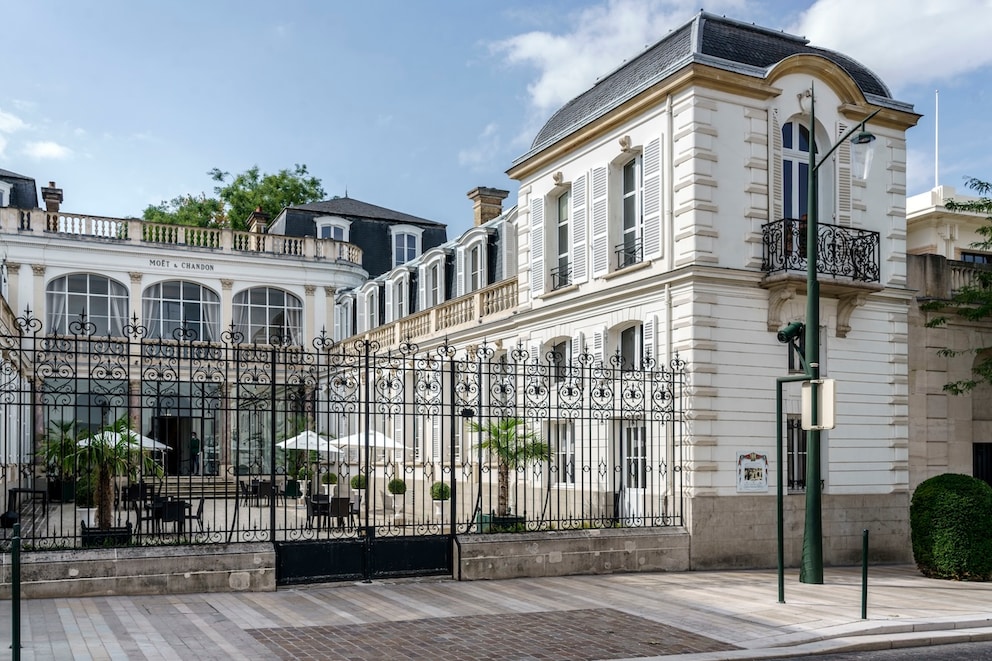
The largest and oldest house on the street is the impressive residence of Moët & Chandon. The name “Moët” is familiar to many, yet the question of its correct pronunciation often arises. In fact, Moët ends with a “t” that is not silent, as the family name is of Flemish or Dutch origin. The correct pronunciation is “Mo-ett.” The champagne house, which has been part of the luxury group LVMH since 1987, established its headquarters on the famous street as early as 1743.
For those who don’t wish to eat or drink on the many terraces or in the often expensive restaurants of the champagne houses, there are numerous other options in downtown Épernay.
Between Splendor and Stark Concrete
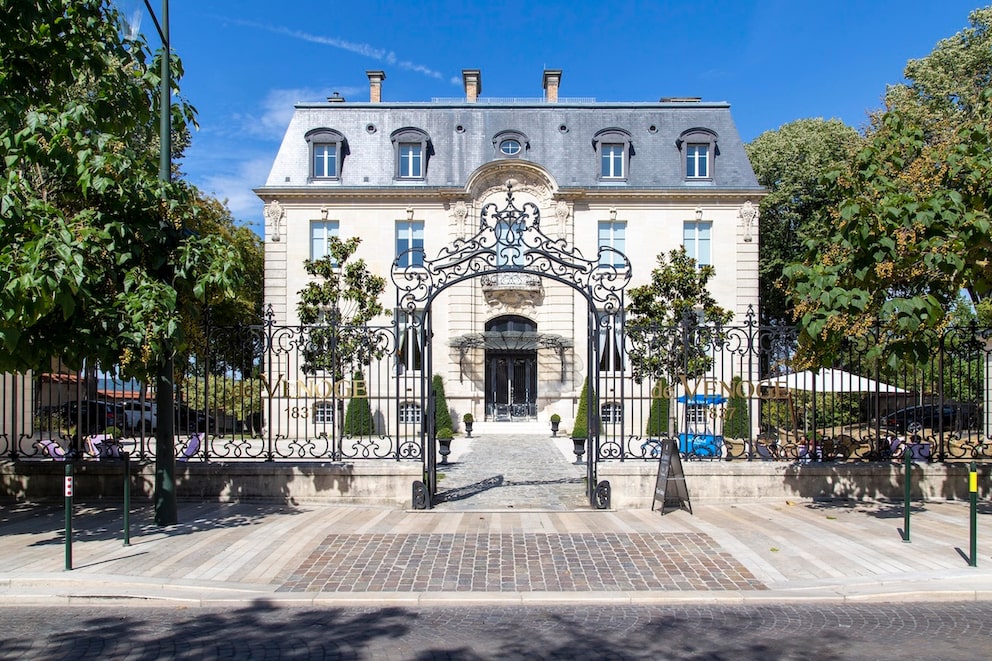
Épernay exemplifies everything that makes champagne production unique. The town combines all elements of traditional artisanal and modern industrial champagne production. The production and distribution chains of the luxury beverage have been centralized here for centuries. Épernay also vividly demonstrates the significant influence champagne houses have had on urban infrastructure. Where it was important to display power and influence, everything is magnificent and representative: the villas, the parks, the visible areas of champagne production, the publicly accessible cellars.
Yet beyond the magnificent Avenue de Champagne and the nearby walled gardens of the opulent town hall, Épernay is a city that clearly shows not everyone shares in the prosperity. Many streets, which you pass through when strolling toward the train station or parking lot, lack charm. Stark concrete, sometimes neglected. Backrooms in the heart of the champagne city.
The Village of Ay
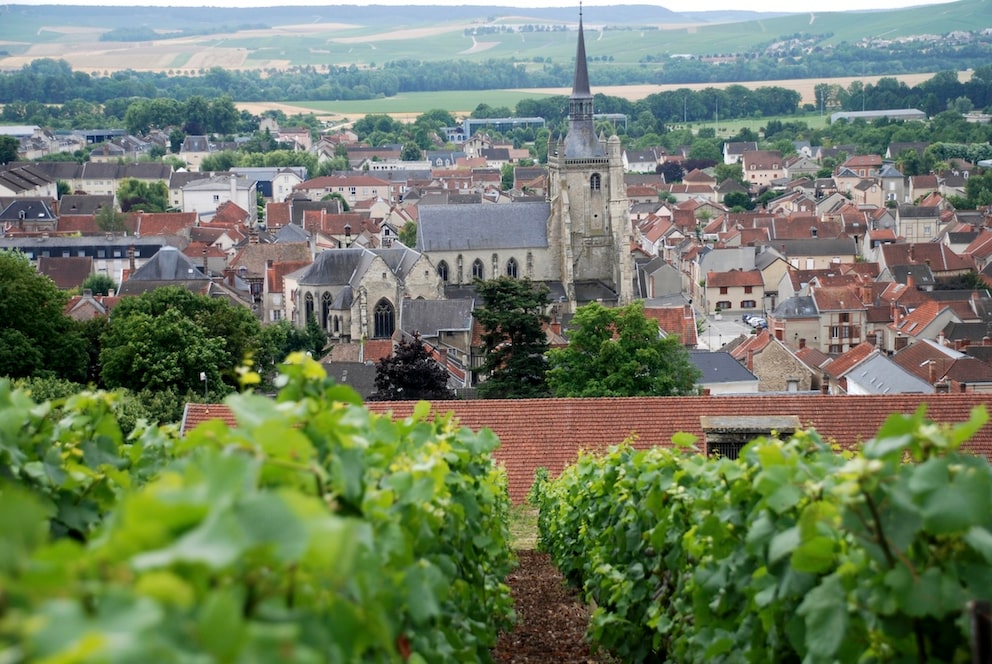
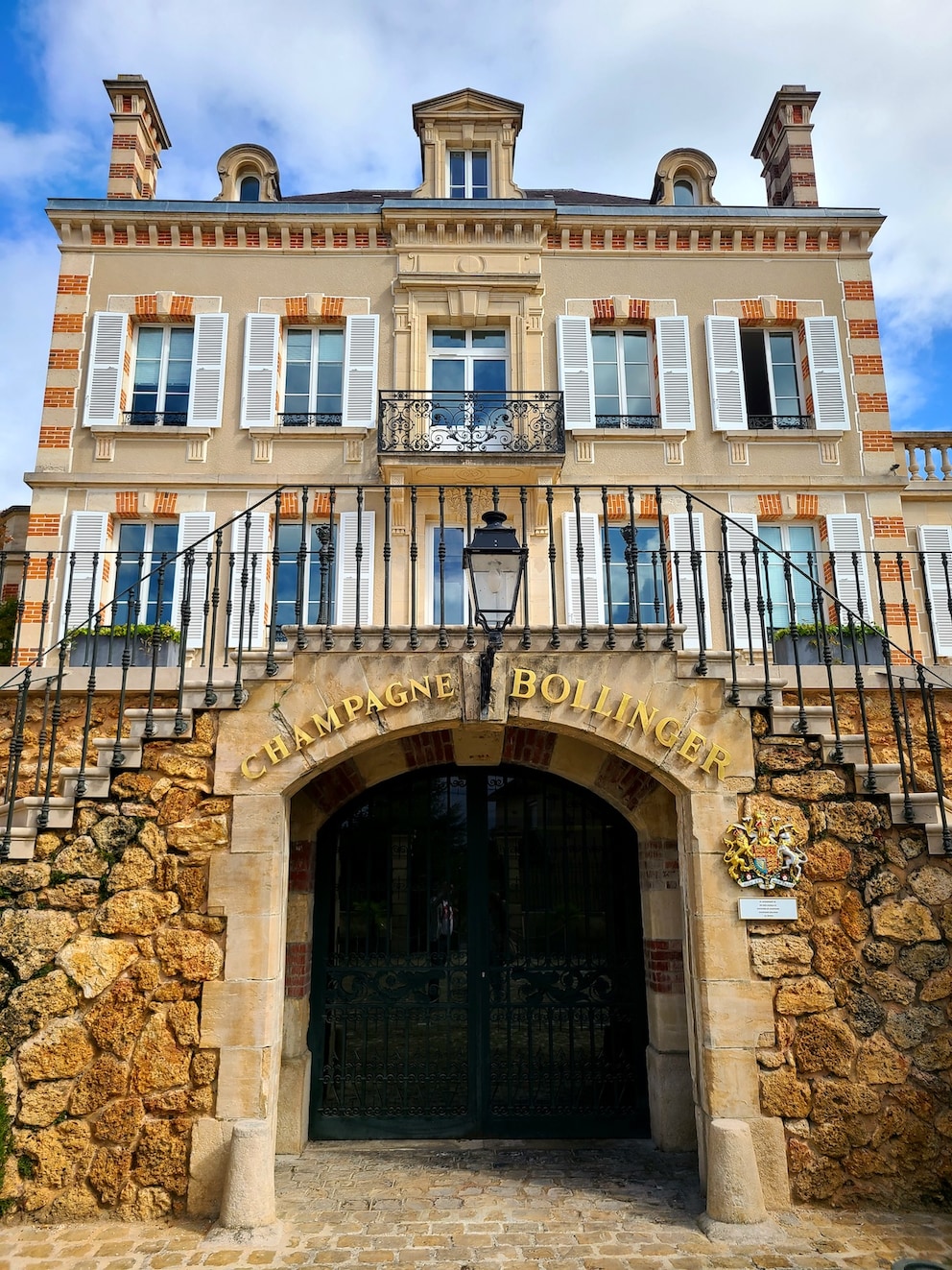
Five kilometers further west lies the small village of Ay. Ay is one of the most famous villages in Champagne, with its 429 hectares of vineyards. The winemaking tradition dates back to Gallo-Roman times, as excavations have shown. The wines are considered “Grand Cru Classé” wines of the region. Major champagne houses like Deutz, Gosset, and Bollinger are based in Ay, as well as the “Institut International des Vins de Champagne.” Housed in Villa Bissinger, it is considered the Vatican of champagne. This institute also serves as a wine school, where laypeople can book courses on champagne and tastings.
The Bollinger house is one of the last major champagne houses still privately owned. “I drink champagne when I’m happy and when I’m sad. Sometimes I drink it when I’m alone; and when I have company, it must not be missing. When I have no appetite, it makes me hungry, and when I’m hungry, I enjoy it. Otherwise, I don’t touch it, unless I’m thirsty.” This quote from Madame Lily Bollinger suggests that Bollinger champagne is something special among the approximately 11,000 champagne brands–and James Bond’s favorite champagne!
The starting point for a discovery tour is the center. Two large signs show the way. Those in a hurry visit the Church of Saint-Brice directly, a radiant building from the 16th and 17th centuries in Gothic style. The facade is adorned with a large portal whose sculptures tell the life of Saint Brice. Inside, tourists can admire the large nave with five side altars, a beautiful baroque organ from the 18th century that was recently renovated, and small stools for the children’s choir from the same period.
From Épernay Through the Vineyards to Venteuil
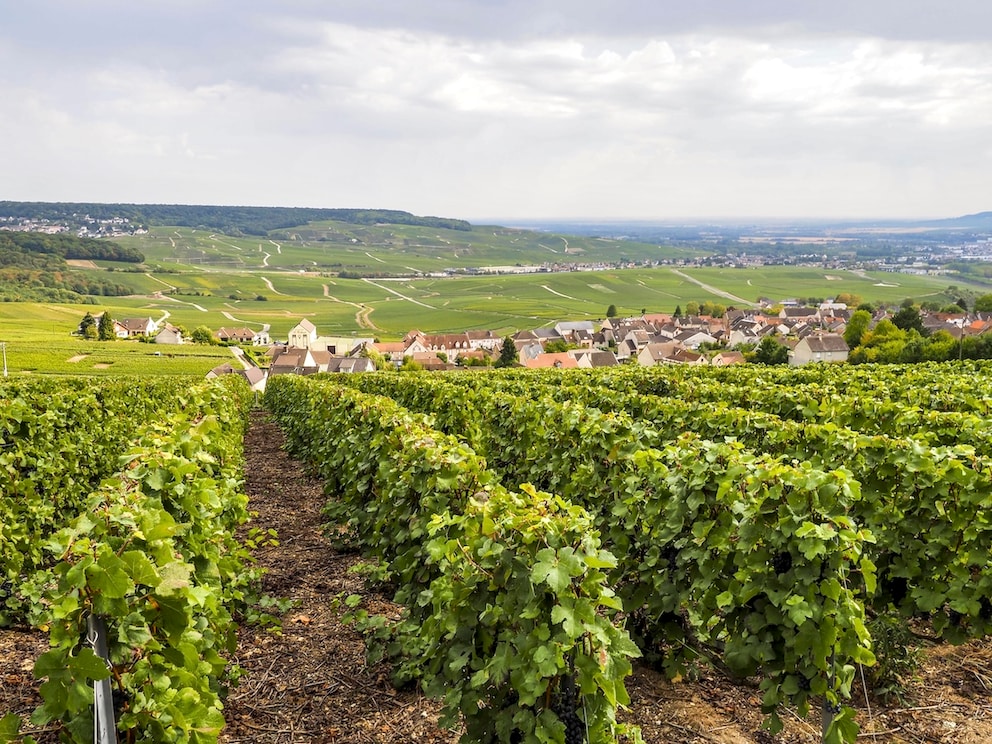
The Champagne Route “Vallée de la Marne” leads from Épernay on the right side of the Marne, mostly along the river, to Dormans. But first, it goes uphill towards Champillon, from where you can enjoy magnificent views of the vineyards. At the “Royal Champagne” parking lot, you can stroll along the “Chemin du paradis,” a truly paradisiacal path through the vineyards.
The path continues over the wooded plateau to Saint-Imoges and further downhill to Hautvillers. In this charming winemaking village lies the cradle of champagne, as cellar master Dom Pérignon discovered the principle of sparkling wine here. According to legend, he “invented” champagne by bringing the bubbles (carbon dioxide) into the wine–in fact, it was about improving the process of bottle fermentation and product stability. His saying “Come quickly, I am tasting the stars!” is legendary. Dom Pérignon is buried in the abbey church in Hautvillers.
Everywhere you can admire vineyards and stop at small, unknown champagne cellars. On the route between Damery and Venteuil, you can see the Château de Boursault on the south bank of the Marne.
Château de Boursault
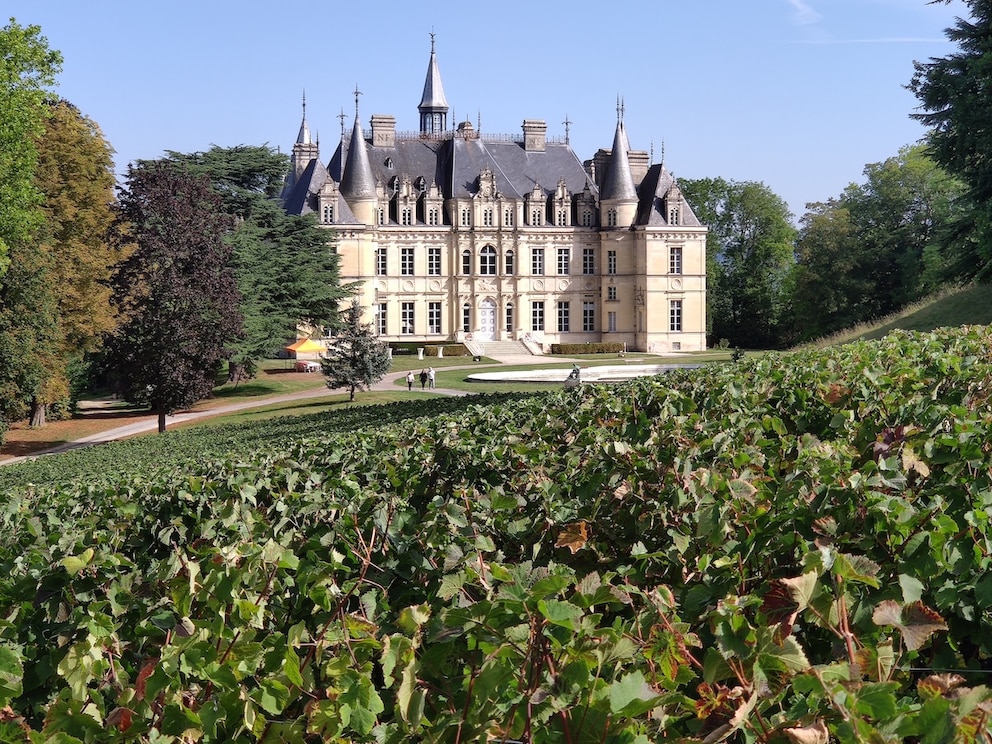
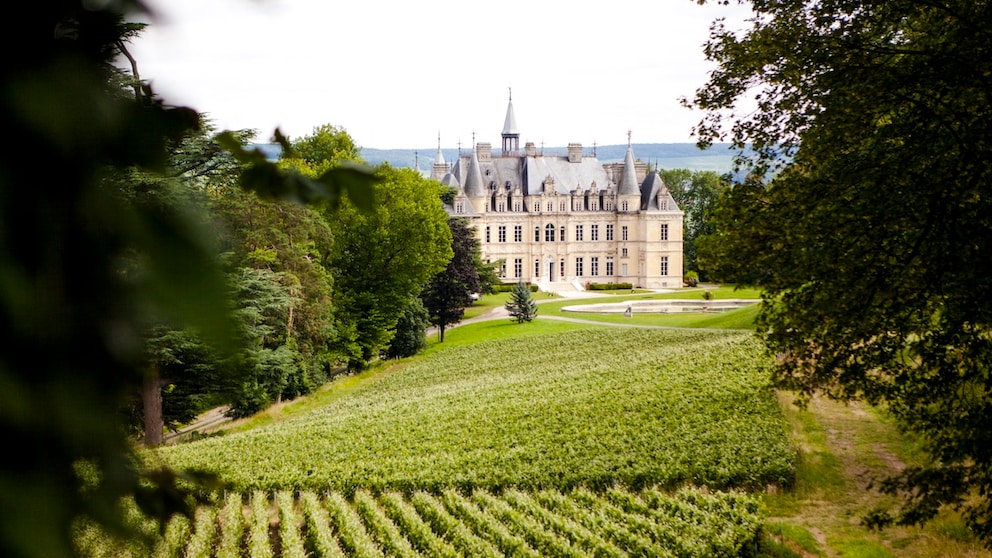
The Château de Boursault, majestically situated on the left bank of the Marne Valley, amidst gentle hills, is just ten kilometers from Épernay. It was built in the 19th century by the legendary widow (Veuve) Clicquot, a remarkable woman who, with a boldness far ahead of her time, shaped the world of champagne. The Veuve Clicquot found not only refuge in this château but also her final resting place when she passed away here in 1866.
This splendid estate, a true masterpiece of architecture, changed hands several times after her death and witnessed the upheavals of history until it was acquired by the Fringhian family in 1927. This special heritage, one of the few estates in Champagne that houses a clos (a walled vineyard), where the vineyards, the press, the cuverie, and the cellars are united, stands as a symbol of the inseparable connection between tradition and terroir. Today, under the leadership of Alex Fringhian, the family continues its rich tradition of champagne production, united in a masterful balance of craftsmanship, respect for nature, and a history spanning nearly two centuries.