

July 31, 2026, 3:15 pm | Read time: 5 minutes
White sandy beaches, turquoise shimmering waters, and spectacular nature await visitors not only in the Caribbean. Off the coast of Galicia lies an archipelago that even many Spain vacationers hardly know. However, those who wish to visit the Illas Cíes must adhere to strict rules. This is precisely what has helped the islands maintain their original character to this day.
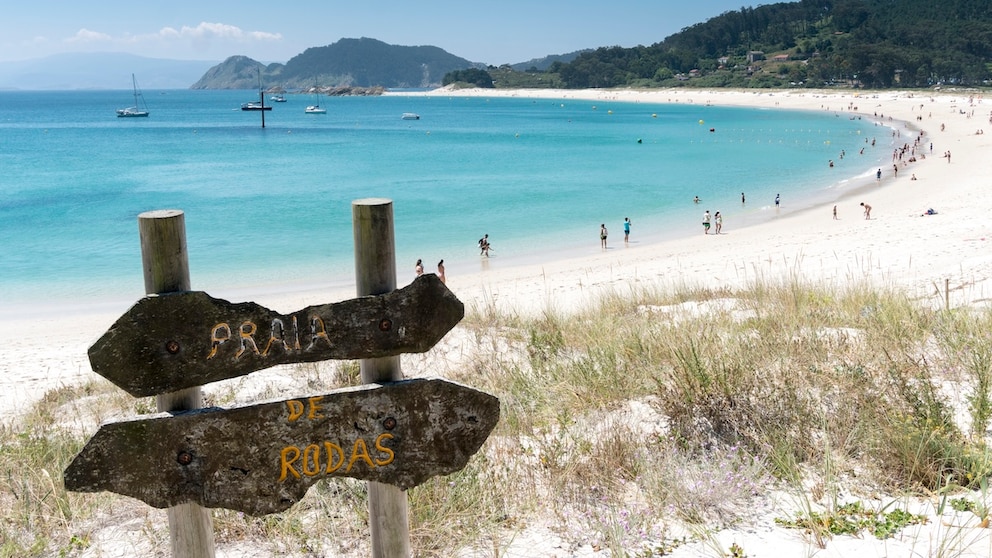
Mallorca and Gran Canaria are among Spain’s most well-known travel destinations. In contrast, the Illas Cíes in the Atlantic off Galicia are much less known. The arrival by ferry alone amazes many visitors: Right at the dock stretches Praia das Rodas, a nearly perfectly shaped crescent beach with fine, snow-white sand and crystal-clear, emerald-green water (see large photo above).
The approximately one-and-a-half-kilometer-long crescent-shaped strip of sand connects the two main islands, Monteagudo and Do Faro. Praia das Rodas is considered one of the most beautiful beaches in Spain. The British newspaper “The Guardian” even called it the most beautiful beach in the world a few years ago. Despite this accolade, the large international influx of visitors has yet to materialize.
National Park with Limited Visitor Numbers
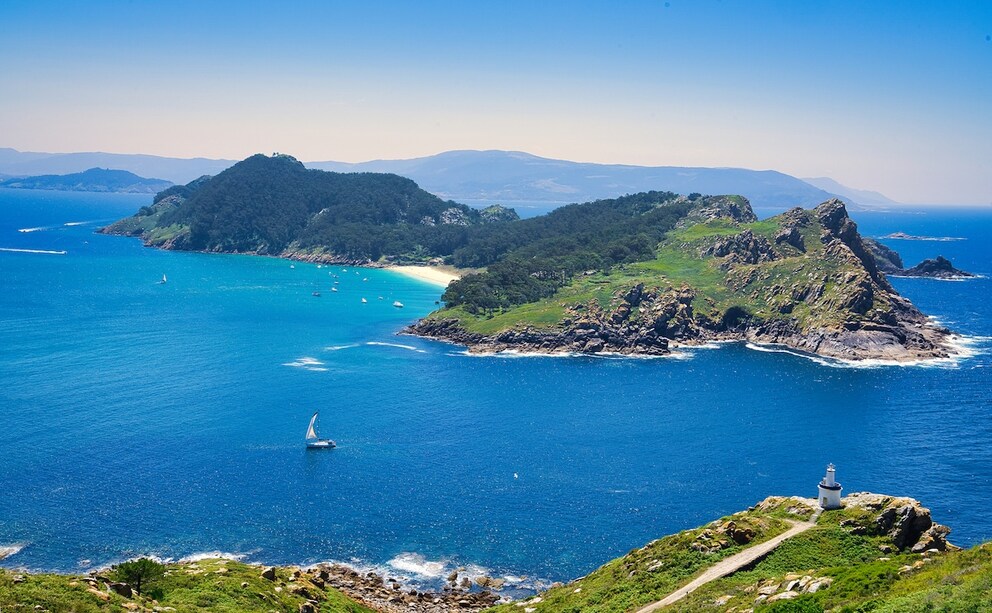
Together with Ons, Sálvora, and Cortegada, the Cíes Islands are part of the Galician Atlantic Islands National Park, founded in 2002. To protect the sensitive habitats, no more than 2,200 people per day are allowed to visit the Illas Cíes during the summer months. Additionally, a special rule applies: All waste must be taken back to the mainland by visitors.
The islands lie directly in front of the fjords of the Galician mainland. The exchange between the salty Atlantic and the fresh river water of the fjords here ensures high water quality and nutrient concentration.
This has created a rich ecosystem with more than 200 species of algae, as well as numerous fish, octopuses, and crustaceans. Dolphins, sea turtles, and whales also inhabit the waters around the island group. The Illas Cíes therefore offer ideal conditions for snorkelers and divers.
Forests, Dunes, and the “Beach of the Germans”
Those who prefer to explore on land will find a well-developed network of hiking trails on Monteagudo. These lead through pine and eucalyptus forests, past wild thyme, and repeatedly to viewpoints over dunes and hidden coves.
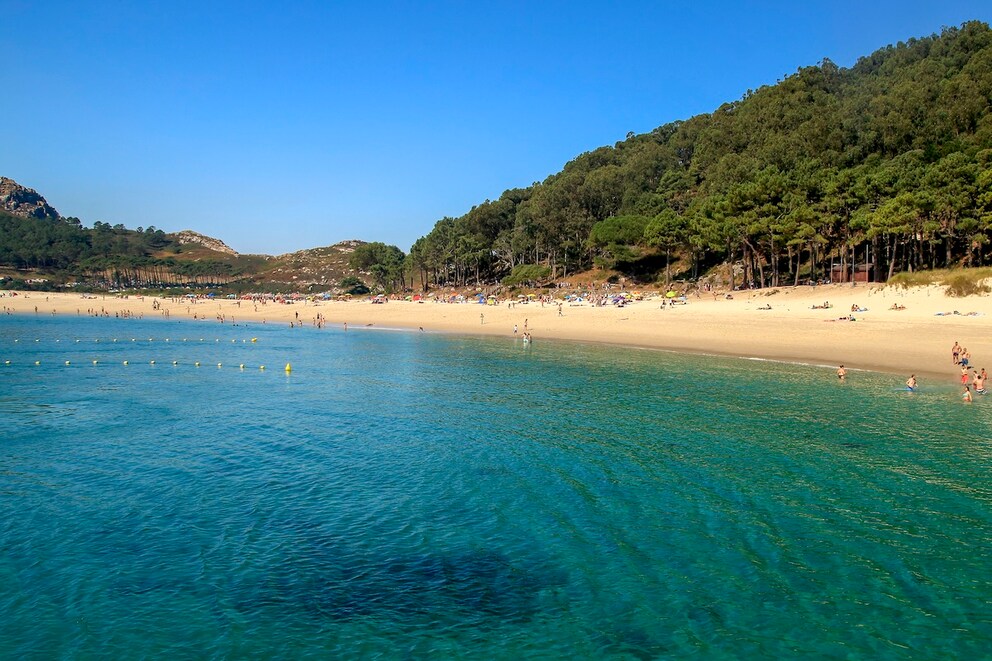
Among the most well-known beach sections is Praia de Figueiras, also known as the “Beach of the Germans.” In the 1950s, a northern German family named Steimbrügge, living on the mainland side in Vigo, is said to have unofficially made the bay Spain’s first nudist beach.
Significant Refuge for Seabirds
On the side facing the open Atlantic, the cliffs rise significantly. The rugged rock walls provide ideal breeding grounds for numerous bird species. The steep slopes are home to important Spanish breeding areas for cormorants, gannets, and guillemots.
With binoculars, one can observe, among others, European shags, storm petrels, and Mediterranean gulls. Until a few years ago, around 20,000 pairs of gulls lived here, making the islands one of the largest gull colonies in the world.
Viewpoints Over the “Islands of the Gods”
A popular hiking destination is the Alto do Príncipe. The path leads past the remains of an ancient stone ruin. People lived on the islands as early as about 3,000 years ago. From the viewpoint, the view extends over the Atlantic as well as the fjord-like coast of Galicia and the other islands of the national park. Here it becomes clear why the Romans once called the archipelago the “Islands of the Gods.”
From the second century AD, Romans settled on the Cíes Islands and neighboring islets. In the Middle Ages, monks primarily used the islands and defended them against Normans and Vikings. Since the 18th century, the island group has been uninhabited.
Lighthouse Hike and Camping Overnight
The island of San Martiño cannot be visited due to its status as a bird sanctuary. However, from the neighboring island of Do Faro, a roughly three-and-a-half-kilometer hike to the lighthouse offers an impressive view of the protected island. The lighthouse dates back to the 19th century and marks the highest point of the island at 175 meters.
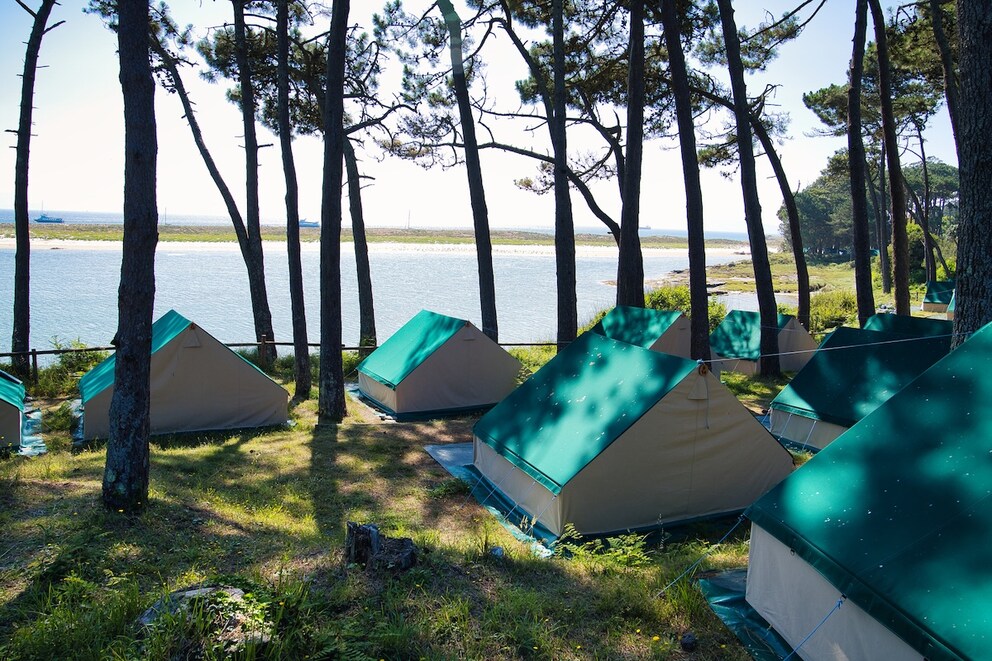
Those seeking entertainment, parties, and nightlife will not find it on the Illas Cíes. There are also no hotels. Overnight stays are only possible at the campsite. After prior registration in the national park, visitors can rent tents there, which stand under large pines by a lagoon behind Praia das Rodas.
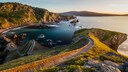
7 of the Most Beautiful Beaches in Spain
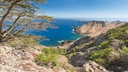
The 5 Most Beautiful Beaches on Porto Santo—One Being 9 Kilometers Long!
Galician Specialties at the Campsite
Culinarily, the islands have much to offer. The campsite restaurant serves fresh sea bass, razor clams, and the region’s typical octopus dishes. Galicia is considered one of Spain’s leading regions for fish and seafood. Accordingly, the reputation of the cuisine is high, even on the remote Atlantic islands.
For now, mainly Spanish vacationers are discovering the Illas Cíes for themselves. The combination of unspoiled beaches, protected landscape, and limited visitor numbers makes the archipelago a comparatively quiet travel destination. Once the last ferries depart for the mainland in the evening, peace largely returns to the islands.
Getting There

With Lufthansa, Iberia, or Air Europa via Madrid or Barcelona to Vigo. From here or other ports (Cangas do Morrazo or Baiona) continue by ferry.
With material from dpa