

May 11, 2026, 5:09 am | Read time: 7 minutes
Our author lived in Argentina for several years as a young adult. During that time, she always avoided Patagonia, the cold south of the country. Later, she regretted only discovering this special region shortly before returning to Germany—because in the city of El Calafate, she found a national park whose visit would become one of the most impressive travel experiences of her life.
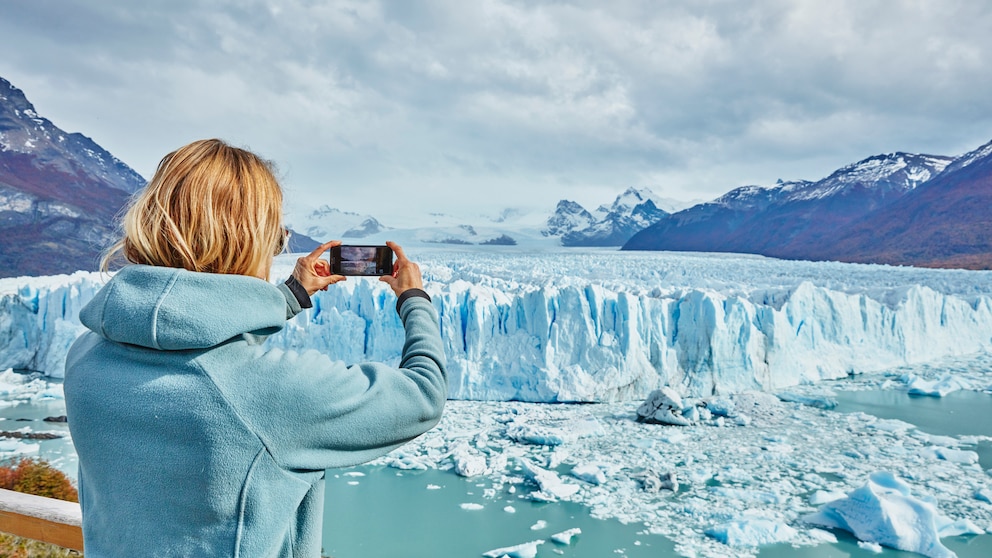
While living in Argentina, I initially skipped a trip to the south of the country. “Why bother?” I thought—the most remarkable parts of the country are the desert mountains in the northwest, the jungle at the border with Brazil and Paraguay, or the bustling capital Buenos Aires. I was wrong! Seeing the Perito Moreno Glacier in person was one of the most impressive experiences of my life.
An Attempt to Escape the Cold
I emigrated at 18, spent a whole year in the desert city of San Juan, and then moved to Buenos Aires for another four years. Even though winters can be colder in both cities—especially in the desert climate of San Juan—I didn’t want to experience freezing temperatures in my new home. So, I avoided Patagonia during my time in Argentina until my parents came to visit.
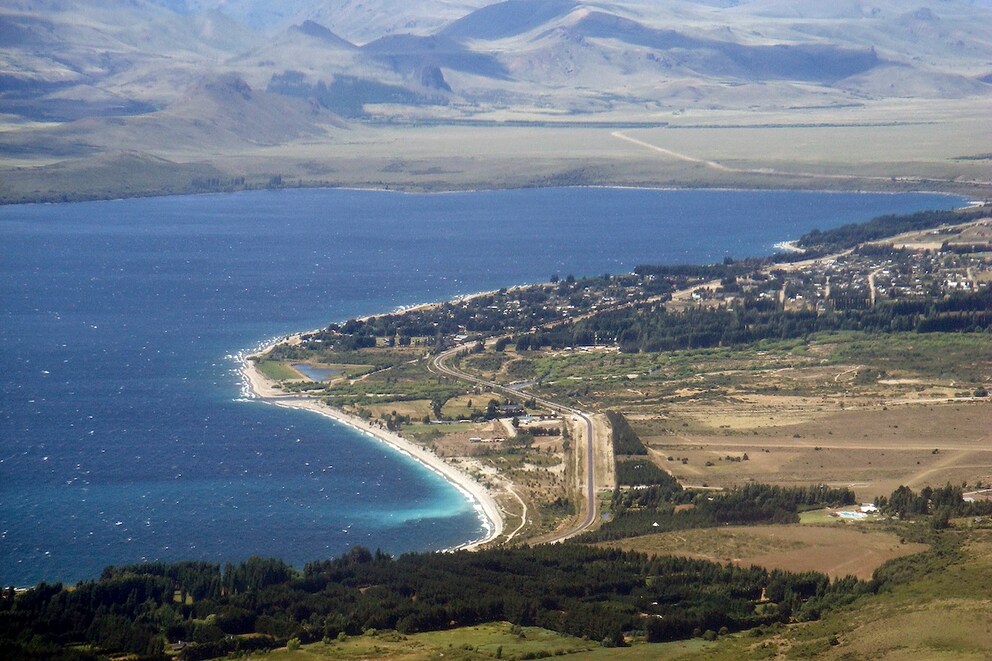
Their wish was to see Patagonia. On their first visit, we were in Buenos Aires, San Juan, and Mendoza. But even in the Argentine fall, my mother found the temperatures in these cities, located in subtropical and arid parts of Argentina, too high. So, I learned from my “mistake” of dragging my parents to tourist activities under the blazing sun. We needed to go to a cooler climate zone. Since Argentina has many of those, I found a destination in the cold, dry province of Santa Cruz: the city of El Calafate. From Buenos Aires, this destination was easily reachable within three hours by plane.
My Favorite Surprise: the Glacier Cows
A highlight accessible from the city of El Calafate via Route 11 is called “Perito Moreno.” This is a massive glacier that was even growing at the time of my visit! There are various ways to approach the glacier. You can either view it from a boat on the water or walk on it. Both a boat tour and various hiking tours are offered. Since even the shortest trekking routes were too long for us, we opted for the relaxed catamaran tour. An advantage of this is that you not only see the largest glacier, Perito Moreno, but also make stops at other icebergs like Upsala and Viedma.
There was also a stop to stretch our legs, which was more like a guided walk than a hike. I was amazed when, after a few hours on the boat, we stopped at a green shore. In the distance, I could already make out a small hut, which—as I learned—is steeped in history. From the small piece of land in the middle of the glacier landscape, I watched the water. My gaze wandered over the Andes mountains, where I could barely make out large animals in the distance. At first, I thought I was spotting the guanacos that often roam the Andes. “That can’t be,” I thought. The wild animals whose outlines I tried to discern looked much more like oversized goats, or even… long-haired and muscular cows!

An Almost Successful Mission
The guide told us that the small viewpoint in the middle of the glacier landscape is called the “Puesto de Las Vacas” (translated: Cow Post). An Englishman settled cattle and cows here from the province of La Pampa in the glacier area in the early 20th century. But when the Argentine state decided in 1949 to turn some national reserves into tourist national parks, cattle farming had to give way to the decree. After unsuccessful attempts by the authorities to prevent the rapid spread of the cattle, Finnish immigrant Harry Johannes Hilden was hired. He lived on the “Puesto de Las Vacas” for several years in the 1980s for this mission.
He came up with creative ideas: His modus operandi was to lure the cattle with salted bread and then transport them on an improvised raft across Lago Argentino out of the glacier area. A complete relocation was not achieved; after all, I could still spot the animals four decades later between the green areas and rocks of the national park. Harry Johannes Hilden also left his mark. We boat tourists were allowed to visit his hut on the “Puesto de Las Vacas.” From family photos of the Finn to a teapot perched on the stove, the interior of the hut was visible through thick window panes. Entering was not possible, which speaks to the tourist principle in Patagonia: Nature and history should be admired but not altered. Tourist activities in the Argentine part of Patagonia are carefully regulated by the national government.
Where Exactly Is the Proverbial “Pampa”?
16 Spectacular Places on Earth
The Highlight of the Boat Tour: the Perito Moreno
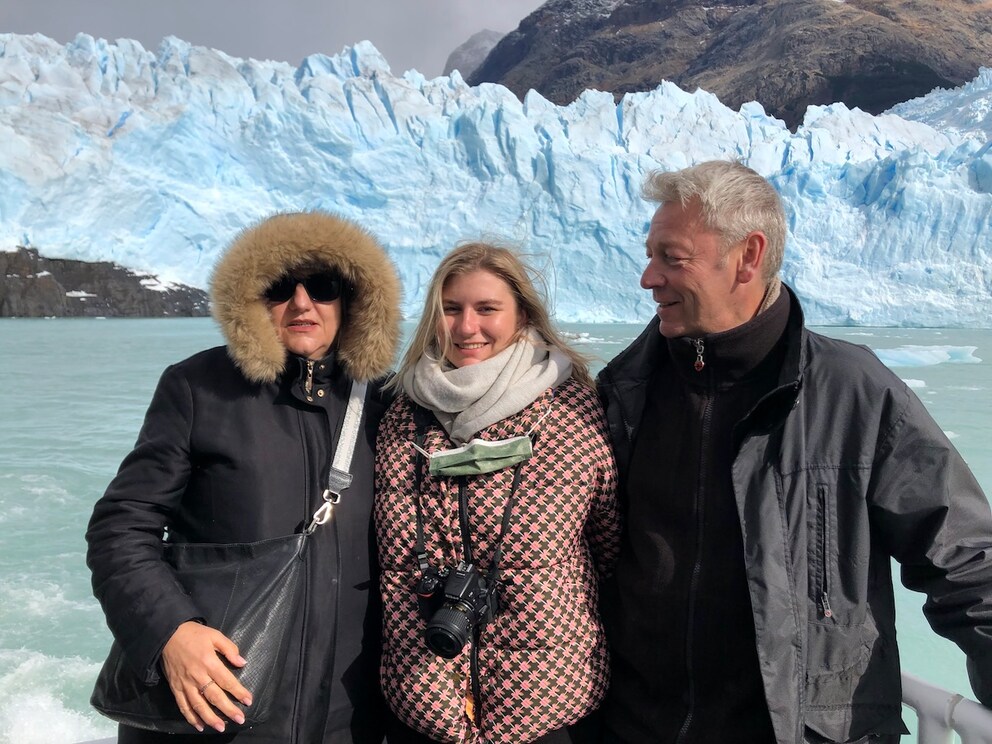
After the already impressive tracking of Harry Hilden, we returned to the ship. You could either sit inside the catamaran and view the glaciers resting on Lago Argentino through the window, or go up to the deck. There was plenty of space for my parents and me throughout the trip. We took several photos as we passed smaller icebergs. We had to make room when we reached the highlight of the booked tour: the Perito Moreno.
This is a 260-square-kilometer glacier whose ice walls reach almost 60 meters in height. It has been a UNESCO World Heritage site since 1981. The apparent infinity of the glacier left me speechless. The last time I experienced a comparably immense natural wonder was when I visited the Iguazú Falls in northeastern Argentina. These are moments when you feel wonderfully small. Experiencing it up close puts everything in a whole new perspective—and in the best sense.
Patagonia Appeals to All the Senses
That’s the most interesting thing about the steppe landscape of Patagonia. At first glance, the landscape seems barren due to its vastness, but if you look closely, you encounter a wealth of life. It doesn’t matter whether you look up to the sky and see Andean condors or catch a herd of guanacos on a walk. This made even the bus ride from our hotel to the boat a real spectacle. Normally, I’m a talkative person, but I could hardly exchange a word with my parents during the drives through the province of Santa Cruz. I was too busy inspecting the area closely.
The entire trip to Santa Cruz was a true feast for the senses. Visually, the landscape with its turquoise waters, humorously called glacier milk, is a true dream. Added to this are the bird calls and the howling of the wind. In February, the early fall in Argentina, the weather in the Santa Cruz region was already cooler, so I enjoyed a pleasant, fresh breeze on my skin; after all, the weather in my then-hometown, Buenos Aires, was hot and extremely humid at the time. This provided a pleasant contrast. And for my sense of taste, the trip to El Calafate was also a delight. The restaurants in the town are geared towards hearty cuisine, with finely prepared meat dishes and excellent wines to accompany them.