

March 5, 2026, 8:49 am | Read time: 5 minutes
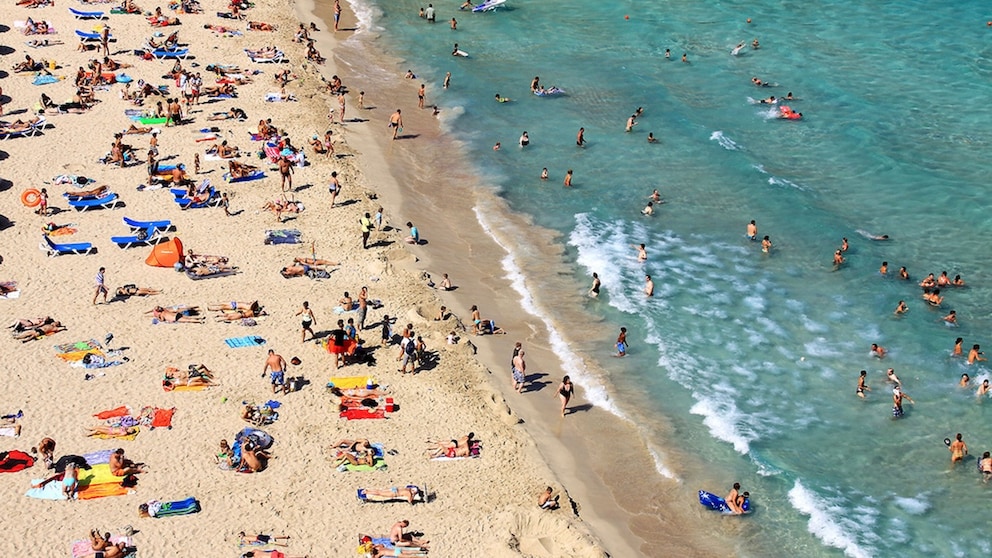
Heading into town in your swimwear or building a sandcastle on the beach—you might want to avoid these activities on your next vacation in Italy. They might be prohibited and could lead to hefty fines. Discover what else is banned in Italy and which rules you might never have imagined existed.
Sun, sand, sea—Italy offers everything you need for a relaxing vacation. But what many don’t know is that some cities and regions have rather unusual laws and regulations. Ignoring them could result in a hefty fine, ruining your relaxation. TRAVELBOOK presents eleven surprising things that are banned in Italy.
1. Buying from Beach Vendors
They’re familiar sights on many beaches worldwide, and Italy is no exception: beach vendors. They often try to sell you towels, sunglasses, handbags, and various other trinkets. These are often counterfeit products, which is the issue. Buying from beach vendors isn’t a crime, but it is an administrative offense.
The local police aim to tackle the problem of illegal beach vendors and counterfeit goods with this ban. The fines can vary. The city of Jesolo on the Adriatic states on its website that fines can reach up to 7,000 euros.
2. Building Sandcastles
Whether adults or children, many enjoy building sandcastles. But at the beach in Eraclea near Venice, it’s best to put the shovel aside. Building sandcastles is prohibited there. While not explicitly mentioned in the official ordinance, there is a rule against creating obstacles to public access to the sea and promenade. It also states that no changes through sand movements are allowed.
This can be interpreted to include sandcastles. Those who don’t comply face a fine ranging from 100 to 1,000 euros. Whether a small sand pile made by children will actually cost that much remains to be seen.
3. Cycling Through the City
There’s a widespread rumor that pulling a rolling suitcase through Venice’s old town is banned. It apparently originated from the city’s consideration to ban plastic rolling suitcases due to noise and damage to cobblestones back in 2014. However, it never happened. Instead, something else is banned in the historic center: cycling. Not only riding but also pushing a bike is prohibited on some routes. Violators face a 100-euro fine.
4. Sitting on Historic Grounds
In Italy, summer months are usually hot—perfect for ice cream or a cool drink, right? But be careful! In cities like Rome or Florence, it’s prohibited—at least near historic buildings or significant sites. In Rome, not only is eating banned, but sitting is too. If you sit on the Spanish Steps, officials will whistle at you to stand up immediately. A serious violation can result in a fine of up to 400 euros.
5. Wearing Swimwear in the City
It should be obvious, and thus not particularly surprising, that in some Italian cities like Venice, it’s forbidden to walk around in swimwear. Bikinis, swim trunks, and the like belong on the beach—those who don’t comply, for example, in Venice, face a fine of about 250 euros.
6. Hiking in Flip-Flops
The Cinque Terre is a beautiful coastal region on the Ligurian Riviera, consisting of five villages connected by hiking trails. Experienced hikers know how to dress appropriately. However, many tourists take such hikes lightly and set off in flip-flops. To prevent this recklessness, clear rules are in place: Flip-flops are not allowed on the trails, according to the Cinque Terre tourist site. Sneakers or, better yet, hiking boots and suitable clothing are recommended.
Speaking of suitable shoes: On Capri, there’s a rule from 1960 that still seems to exist, though it’s rather questionable. It states that wooden clogs are not allowed throughout the municipality of Capri due to the noise they create. Whether this rule is still enforced today is doubtful—after all, shoes with heels should technically be included too.
7. Drinking from Glass Bottles
Something banned on many Italian beaches, which might surprise some, is glass bottles. Most beach regulations include a glass ban. The reason is clear: broken glass poses a risk and could cause injuries. Violators can face fines ranging from 25 to 500 euros.
8. Not Setting the Parking Disc Exactly
While in Germany you set the parking disc in your car to the next half hour, in Italy it’s not so lenient. The disc must be set to the exact arrival time. Otherwise, it’s an administrative offense that can cost up to 168 euros, depending on the municipality.
9. Walking the Dog Without a Water Bottle
On the island of Ponza, there’s a regulation not found elsewhere in Italy. The mayor has issued an ordinance affecting dog owners, reports the Italian portal “il Giornale.” They are required to carry a bottle of water or similar when walking their dogs. The reason: to rinse away their pet’s urine. Not having the bottle can cost up to 500 euros.
Also interesting: The Current Rules and Bans in Italian Vacation Spots at a Glance
Rules Travelers Must Follow at Beaches Worldwide
These Bans Apply to Mallorca’s Beaches
10. Placing a Towel Directly on the Sand
At La Pelosa beach in Stintino, Sardinia, a towel ban is issued every summer. Specifically, beachgoers are not allowed to place their towels directly on the sand. Instead, they must use a special mat underneath. This is to prevent sand from sticking to towels and being removed from the beach.
11. Standing Still in the Alleys
A curious regulation can also be found in Portofino. Since the village is almost overrun by tourists in the summer months, a regulation is in place at particularly busy spots. It states that tourists may continue to stroll but not stop. Violators face a fine of up to 275 euros.