

August 14, 2026, 8:01 am | Read time: 8 minutes
If you had to describe Vancouver Island in one word, it would certainly be: wild! Orcas and humpback whales live off the coast, bald eagles and hummingbirds fly in the sky, and bears, wolves, and cougars roam the forests. The unique aspect is the extreme contrast between the temperate, mild east and the rugged, wild west coast with the Pacific Rim National Park and the well-known surf hotspots of the former fishing villages Tofino and Ucluelet. Our author visited–and is thrilled.
Vancouver Island is an island of superlatives: It is the largest North American Pacific island and impresses with its extreme landscape diversity. The island is over 280 miles long and about 62 miles wide, with a total area larger than Belgium. The highest mountain is the Golden Hinde at 7,201 feet. Despite its size, only about 750,000 people live on the island, which corresponds to about 23 people per square kilometer.
My Visit to the “Most Beautiful Island in Canada”
According to the “Travel+Leisure World’s Best Awards 2026,” Vancouver Island is considered the most beautiful island in Canada. I begin my journey on the stormy, rugged west side facing the Pacific–in Ucluelet. The first thing I notice as a European are the road signs warning of a possible tsunami–yes, really! If there is an undersea earthquake somewhere off Japan or Hawaii, it could trigger a massive tsunami that would hit Vancouver Island with full force. That’s why you find “Tsunami Evacuation Routes” all along the west coast to ensure safety.
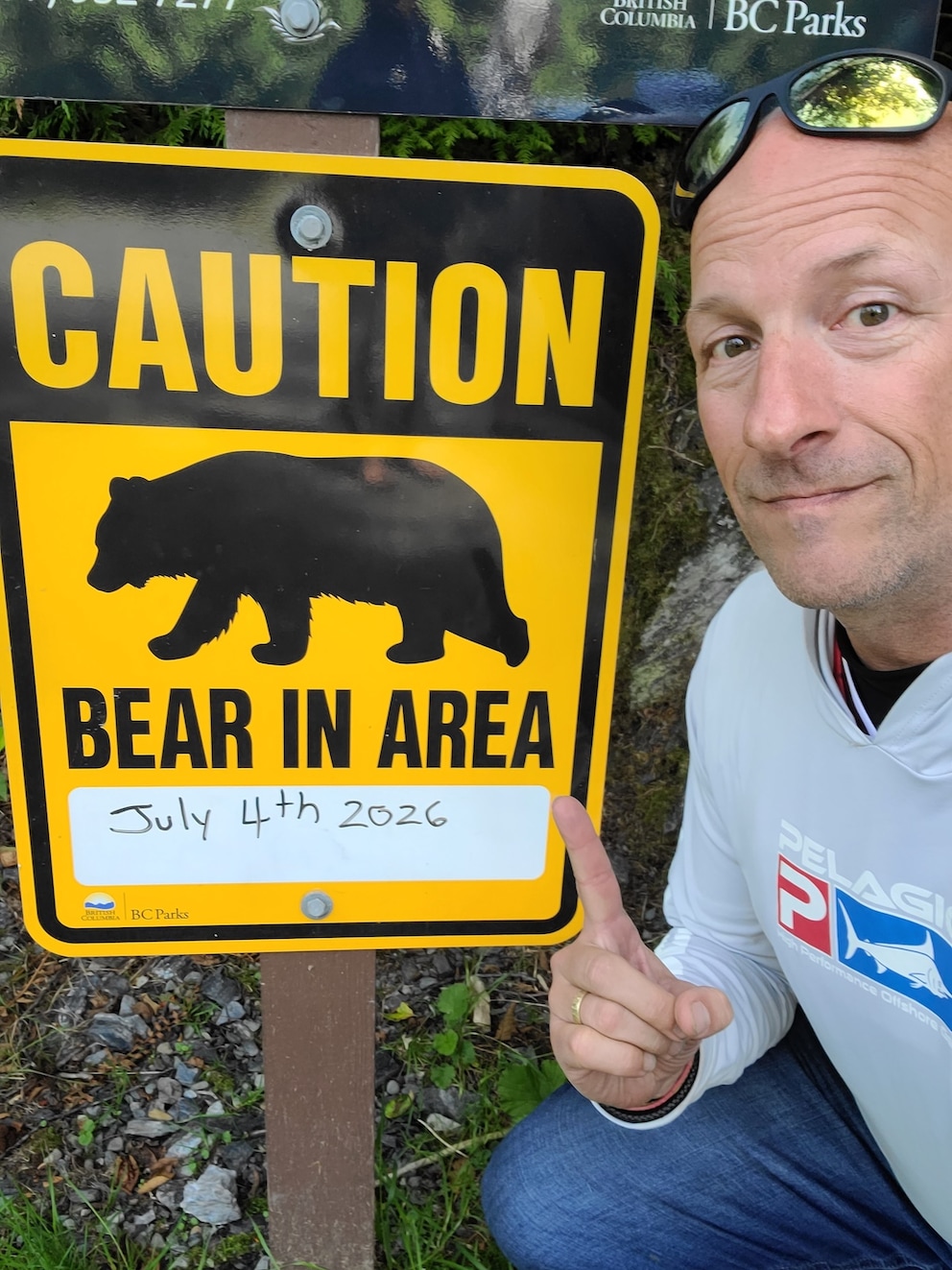
Ucluelet is also home to the Wild Pacific Trail, a scenic hiking path that winds along the coast. Here, too, I find another warning sign: Apparently, a black bear was spotted here two days ago, so caution is advised. It’s important to know that Vancouver Island has the highest density of black bears in the world. An estimated 7,000 to 12,000 of these animals live here. Essentially, you could encounter a black bear almost anywhere on Vancouver Island.
Giant Trees, Eagles, and Seals
Fortunately, I don’t see any bears on the hiking trail, but I do see plenty of other giants. Mighty trees! The canopy of giant cedars, hemlocks, and Sitka spruces is dense. To see their crowns, you have to crane your neck. Such a giant can easily be over 295 feet tall and 800 years old. The trunks twist and spiral like corkscrews into the sky–crooked and bizarre. Under the thick bark, growths sprout that resemble goiters. Roots snake over the ground and don’t even stop at their fallen comrades, which have been rotting for centuries–the foundation of new life. With views of Barkley Sound, the Broken Group Islands, and the vast Pacific, the Wild Pacific Trail offers breathtaking coastal panoramas.
Next, I head to Tofino. The small town is Canada’s famous surfer paradise and a dream spot for kayaking tours in the UNESCO Biosphere Reserve Clayoquot Sound. However, the water is icy cold, with currents bringing cold water from Alaska south to Vancouver Island. A thick wetsuit is recommended for every surfer. Cox Bay, Chesterman Beach, and MacKenzie Beach offer waves for every level–from gentler beginner waves to strong breaks.
Since I’m not a surfer, I book a four-hour kayaking tour. Many tours combine kayaking with a short hike to ancient, giant cedars on Meares Island. Our guide took us to an almost forgotten world–we got to touch starfish, learn more about their habitat, and were even accompanied by eagles and seals. The detour into the rainforest with its ancient cedar trees was simply magical. Highly recommended for all nature lovers.
Canadian Romance on the Beach
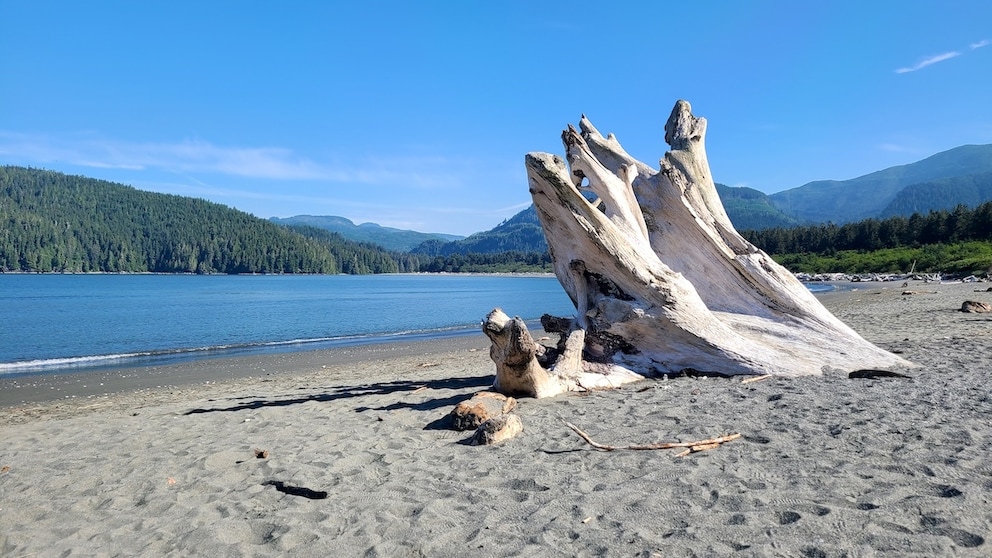
Further south lies Port Renfrew. The town is known for its massive driftwood beaches and salmon fishing. We park our RV just a hundred meters from the beach and fall asleep to the sound of the sea and a campfire–pure Canadian romance! The next morning, we head out on a small boat to fish and set crab traps. The Dungeness crabs here must be at least 165 mm wide (measured across the shell in front of the claws). Only male crabs can be kept; females must be released immediately. A Canadian “Tidal Water Fishing Licence” is mandatory. After four hours, we catch only two fish (a salmon and a black rockfish) but 24 crabs. At a store price of 30 dollars each (about 18 euros), it’s a real treasure! Two hours later, the fish and crabs are cooked and on our plates–it doesn’t get any fresher.
Vancouver Island is dotted with numerous streams, rivers, and lakes, nestled in a landscape of contrasting mountains and beaches. With so many unique and diverse destinations to explore, you wouldn’t want to spend your time at a roadside rest stop. But just off Highway 4, behind the “Taylor River Rest Area,” lies a hidden swimming spot that you must see and is worth a stop on any road trip.
Caution, the Water is Ice Cold!
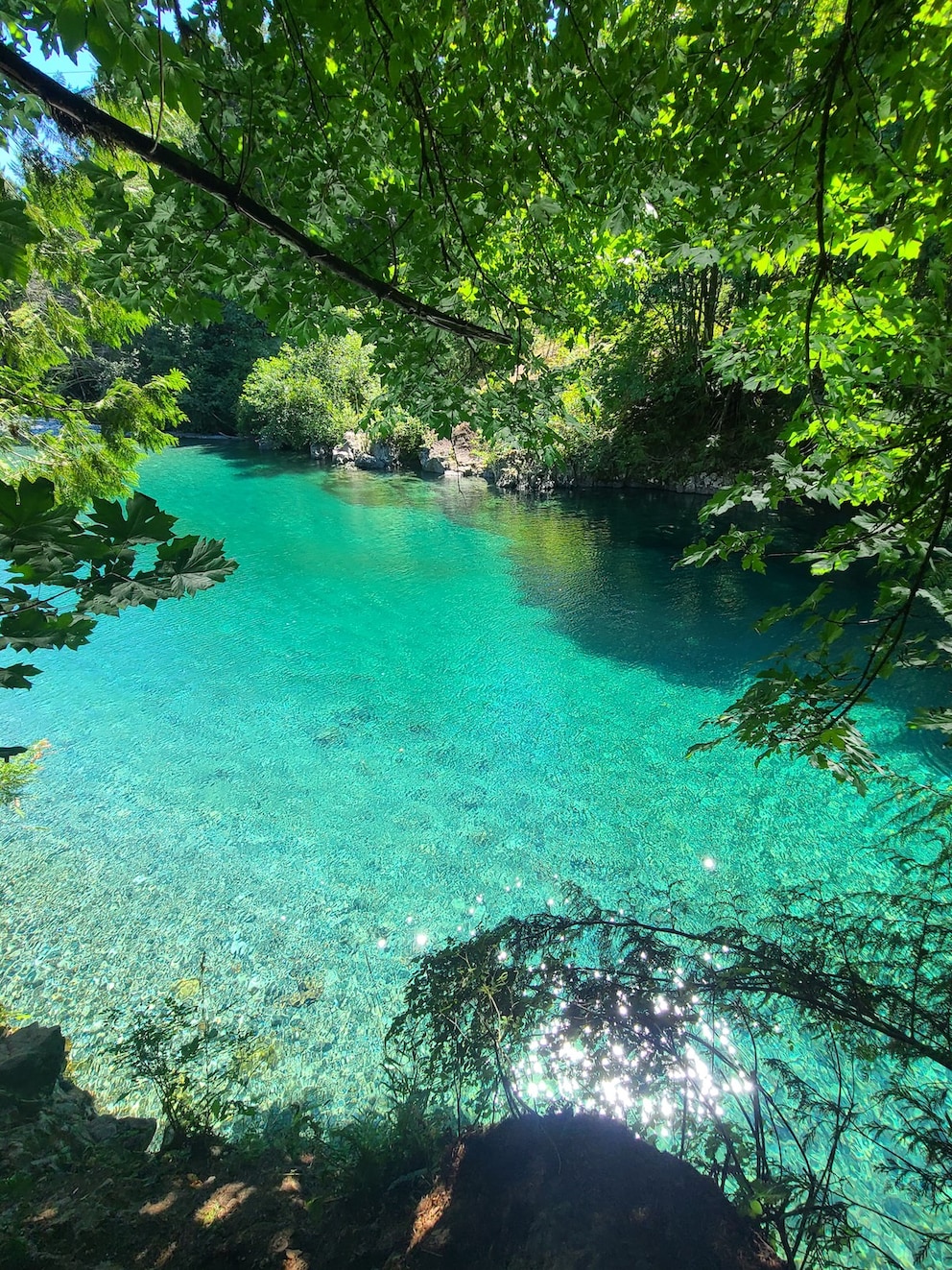
About 25 miles from Port Alberni, visitors will find a breathtaking natural swimming pool with crystal-clear, blue-green water so stunningly beautiful it takes your breath away. It looks more like a place in the warm, sunny Caribbean than a body of water in cool Canada. In the warmer months, this spot is ideal for swimming, stand-up paddling, and cliff jumping into the cool depths. Visitors can take Instagram-worthy photos from various locations and heights around the pool, picnic at one of the available tables, or even charge their electric car while exploring the surrounding forests and rock formations.
Even though it looks like a remote tropical atoll, don’t be fooled, as the water temperatures are anything but warm. The natural swimming pool is fed by glacial water and is therefore ice cold most of the year. The warmer summer months are the best time to visit if you want to take the plunge into the picturesque depths.
Swimming in Wally Creek
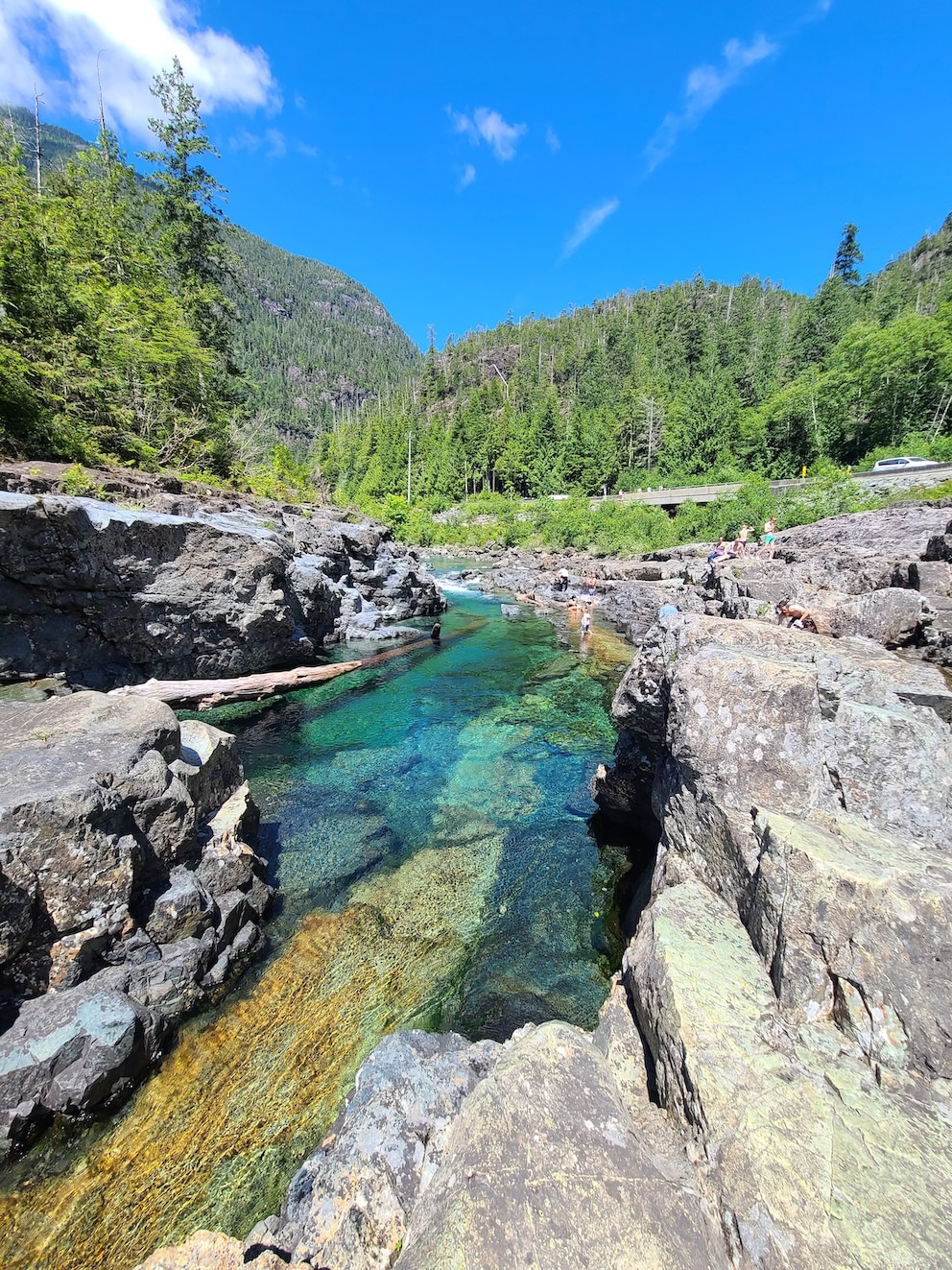
About 15 minutes further lies Wally Creek. It is also part of the Taylor River system; its mountainous terrain and course along the Kennedy River Falls create cascading waterfalls, natural swimming pools, and fabulous rapids. You can’t miss it, as there’s a large totem pole at the parking lot.
Here, too, you’ll find numerous postcard-worthy scenes that are incredibly beautiful. Along the riverbank, there’s even a fence for love locks, where couples can leave a token of their connection as a keepsake. Before you go into the water, be aware of the dangers of swimming in the park’s fast-flowing, turbulent waters. Due to snowmelt, the current and water power are particularly strong in spring and early summer; there have been several cases where swimmers had to be rescued from the creek’s rapids.
Vancouver’s English Bay Beach Is the Most Extraordinary Urban Beach in the World
7 Things You Shouldn’t Miss in Vancouver
Waterfalls and Lush Nature
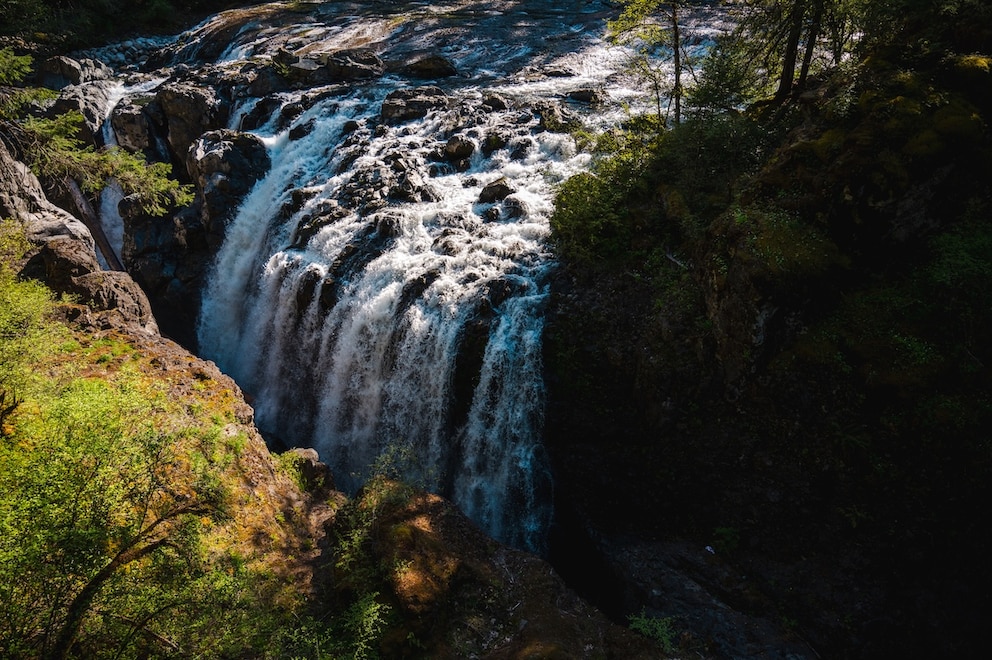
The next day, we head to the Englishman River. The Englishman River Falls Park is about 31 miles from Nanaimo and features two impressive waterfalls that cascade over the sloping riverbed into a deep gorge. This picturesque destination–nestled in a lush forest of old-growth Douglas firs, cedars, hemlocks, and maples–is an ideal starting point to explore the vast diversity of Vancouver Island. This includes the nearby Cathedral Grove, the Pacific Rim region, and the sandy beaches of Parksville and Qualicum.
The park has a large day-use area and a campground, offering hiking trails that wind through the forest and along the river. Visitors can expect spectacular views, especially from two bridges that span the river where it plunges through a narrow rock gorge into calmer waters. The lower waterfall flows into a deep, crystal-clear pool–an ideal swimming spot in summer when water levels are low and a great place to watch spawning salmon in the fall.
An Island Like in the Tropics
Our last destination on our tour of Vancouver Island is Hornby Island. It is separated from its western neighbor Denman Island by the approximately 0.9-mile-wide Lambert Channel. Hornby Island is only 3.7 miles long and up to 2.2 miles wide. The island is known for its turquoise waters, white sandy beaches, and dramatic coastal landscape that feels more tropical than Canadian. That’s why it’s often called the “Hawaii of the North.”
Accessible by two short ferry rides, Hornby offers iconic stops like Tribune Bay Park: It features an almost one-kilometer-long beach with fine, white sand that merges into the warm waters of the Strait of Georgia. Along the coast, there are views of unusual rock formations, and in summer, numerous wildflowers bloom there.
It’s an island made for slow travel–perfect for beach days, cliff hikes, swimming, and disconnecting from everything else.