

March 9, 2026, 5:47 pm | Read time: 4 minutes
Travelers surely know that the wheels of their rolling suitcases carry the dirt from the places they’ve visited—so it’s best not to carelessly roll them through the house. However, a rather inconspicuous travel item is, on average, even more heavily contaminated with germs. This was the finding of a recent study. Can you guess what it is?
This Is the Dirtiest Item in Luggage, According to a Study
It might also seem obvious that the clothes worn on a trip are full of microorganisms. Therefore, shoes and coats, among other items, were part of the study conducted by JRPass.com. The experiment aimed to show which items typically carried on trips are particularly dirty, meaning germ-laden. The results were published in a marketing report in February and later picked up by media outlets such as “Travel + Leisure.”
Today, many travelers are well aware that suitcases transported on streets and dirty luggage belts must be heavily contaminated with germs. They also know that microorganisms can quickly accumulate on frequently used surfaces. That’s why disinfectant is a staple in many travel bags. However, an item that can also be heavily contaminated with germs is rarely cleaned by most people. And this is despite the fact that it is frequently handled and passed around during a trip. But before revealing the answer, let’s look at the study’s methodology.
Details of the Study
For the study, JRPass.com conducted a microbiological analysis. Using a petri dish test, the research team aimed to find out which surfaces harbor the most microorganisms. Swabs were taken from six different types of travel items:
- Carry-on luggage
- Checked luggage
- Shoes
- Smartphones
- Clothing items (e.g., shoes, coats, or jackets)
- Passports
To make the results more comparable, three individual objects per category were examined. In total, the study was based on 18 tested items.
Measuring Microbial Contamination
The researchers used the nutrient agar for their study. This is a nitrogen-rich gel-like substance commonly used in microbiology as a culture medium for bacteria and to determine the germ count. When samples from surfaces are transferred to the gel and then incubated, existing microorganisms begin to grow and form visible colonies.
After incubation, the researchers counted the so-called Colony Forming Units (CFU)—a common unit in microbiology to measure how many bacterial colonies can grow on a surface. The higher the CFU count, the more heavily contaminated a surface is with microbes.

Tested! Where Germs Lurk in German Water Parks

Can you guess the location of the most germs on an airplane?
Passport Is the Dirtiest Item in Luggage—Here’s Why
For the passport, the team counted 436 CFU—significantly more than other typical items found in travel luggage. Next, with a wide margin, was the checked luggage with 97 CFU. Shoes followed with an average of 65 CFU, and carry-on luggage with 56 CFU. Smartphones showed 45 CFU in the study, while the analyzed clothing items had only 15 CFU. This means the microbial contamination of passports was more than four times higher than that of the next item.
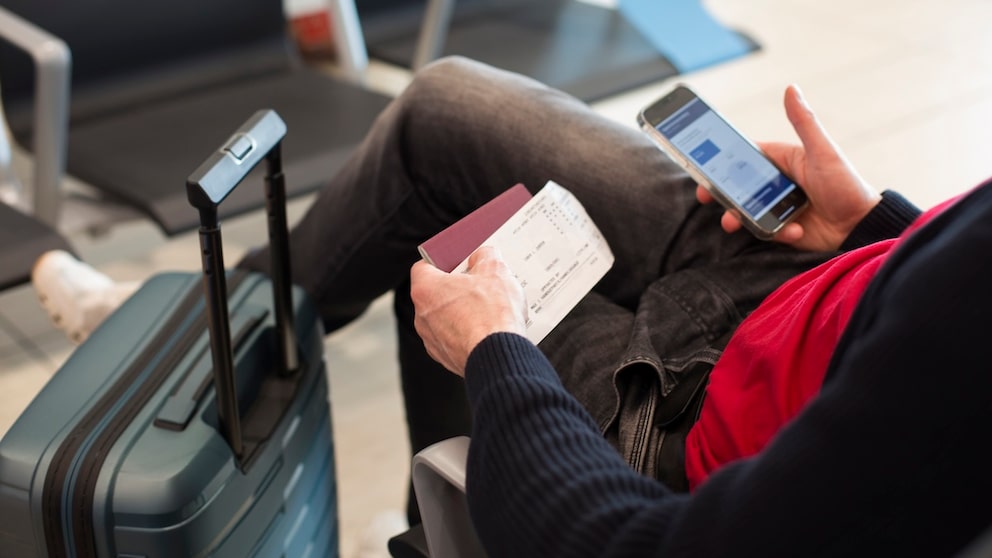
The “Travel + Leisure” article explains the high microbial contamination of passports mainly through contact with various hands. Hands are a primary route for the spread of infectious diseases, as emphasized by the Federal Institute for Public Health (BIÖG). That’s why remote controls, door handles, or telephone receivers are known to be major germ hotspots in hotel rooms. An additional factor for passports is that the hands touching them often belong to people at busy transportation hubs. Airport staff, security personnel, or border officials come into contact with travelers (or their documents) who have previously touched potentially contaminated surfaces like check-in kiosks, luggage carts, or escalator handrails. This way, microorganisms easily transfer to the passport, which, unlike other personal items, is rarely cleaned.
Interpreting the Study Results
Some results might be surprising. For instance, the smartphone, which is constantly held in hands, fares much better than the passport. One possible explanation is that many users occasionally remember to clean their smartphones with a disinfectant wipe. Additionally, it usually stays in the owner’s hands during travel and comes into contact with foreign surfaces less frequently.
Nevertheless, the study should not be overvalued. On one hand, the sample size of only 18 tested items is very small, and on the other hand, there is a lack of detailed information on many aspects, such as how many people the items came from and how, where, and when the samples were taken. Therefore, it is more of a small experiment that merely provides an indication of possible differences between various items. The results do not allow for definitive conclusions about microbial contamination during travel.