

July 23, 2025, 4:49 am | Read time: 5 minutes
Many people would love to go on a cruise but refrain due to concerns about potential health issues at sea. However, this is addressed: The ships have a well-equipped onboard hospital staffed by several doctors. One of them is former heart surgeon Dr. Reinhard Friedl, who is passionate about his profession. So passionate that he wrote an entire book about his experiences as a ship’s doctor. In a TRAVELBOOK interview, he shared fascinating insights from his daily life at sea–from the most common to the most unusual medical issues and what cruise passengers with the best intentions often get wrong.
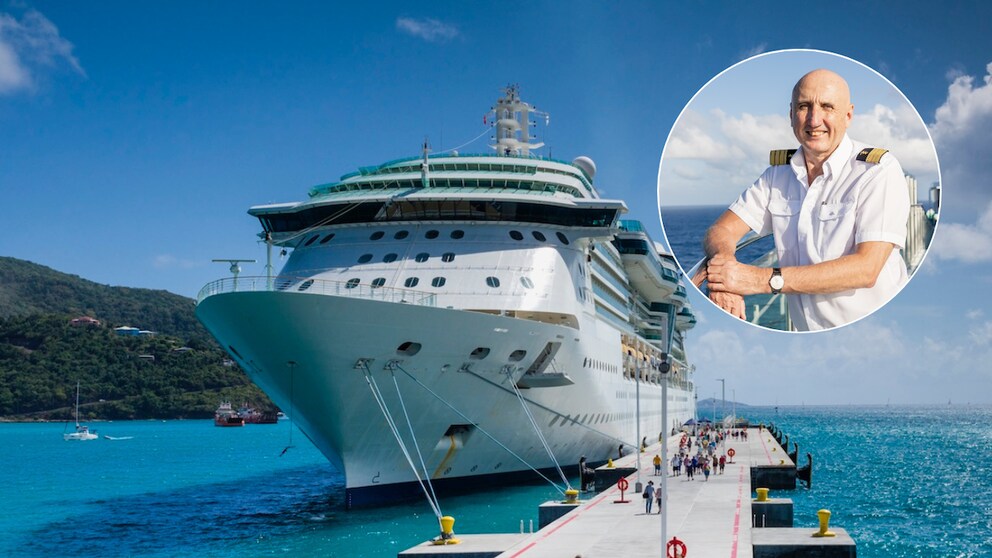
Typically, cruises last between seven and 14 days. Naturally, you’d want to spend this time in good health. But passenger ships, like other communal facilities, are places where infectious diseases can spread easily and quickly. This is evident from the noticeable increase in norovirus outbreaks in recent months (TRAVELBOOK reported). In fact, other medical issues on board are even more common, assures Dr. Reinhard Friedl. The former heart surgeon swapped his surgical gown for the uniform of a ship’s doctor on a German cruise line fleet after around 3,000 operations–fulfilling a childhood dream: “I wanted to explore the world as a sailor,” he says. In his book “A Doctor for Every Wave” (Goldmann Verlag), he shares stories from his exciting work life, as he did in the TRAVELBOOK interview. Although “daily life” is hardly the right term.
Common and Rare Medical Issues on Cruises
Dr. Friedl’s crews have so far been spared from the mentioned norovirus–or at least from severe outbreaks that would have led to a ship’s shutdown–thanks to strict hygiene measures. The most common medical issues on cruises, however, initially sound harmless: respiratory illnesses, circulatory problems, minor injuries.
But more unusual incidents also occur. “Once, a passenger was bitten by a monkey, another stepped on a sea urchin. That doesn’t happen often in Munich,” jokes the ship’s doctor. His advice: don’t feed animals and wear water shoes. He fondly recalls a curious experience. “Once, a lady came in with nausea, thinking she was seasick. An ultrasound revealed a tiny, beating heart in her belly.” The woman’s joy was immense.
Unlike the film series “Das Traumschiff”, known for its positive and often overly sentimental happy endings, real events on cruise ships don’t always end happily. Dr. Friedl was particularly affected by the loss of a young crew member who died at sea from a brain hemorrhage. “We tried everything. But even with the best intensive care, some things can’t be stopped.”
How Well Is an Onboard Hospital Equipped?
Speaking of intensive care, how well is the onboard hospital equipped–could you theoretically perform an appendectomy? “The equipment on board is comparable to an emergency room on land: several consultation rooms, lab, pharmacy, X-ray, ultrasound, an operating room, and an intensive care unit.” And: “Yes, we could perform an appendectomy. But such procedures are the absolute exception.”
The procedure is generally to ensure the survival of critically ill people in the intensive care unit and operating room of the cruise ship. They are then transferred to a land-based clinic as quickly as possible. “In most cases, transport is by helicopter,” explains the ship’s doctor. The catch: The helicopter can’t land on the ship, so the patient is picked up from the deck by a steel cable, usually accompanied by an emergency doctor. Coast guard rescue boats are also used when wind and waves permit.
»Many Illnesses on Board Could Have Been Avoided
Interesting: According to Dr. Friedl’s experience, many illnesses on board could be avoided with good preparation. In other words, many cruise passengers tend to make the same health mistakes. For example, they board when they’re already feeling unwell, “and buy remedies from drugstores that often don’t work as expected,” reports the doctor. “Some of them only come to the hospital when a cold has already turned into bronchitis.”


Increasing Norovirus Cases on Cruise Ships–Here’s How to Protect Yourself!

Why dying during a flight is often not technically possible
Medication Mistakes Are the Most Common
There are various sources of error regarding medication. According to Dr. Friedl, a general practitioner should not change medications that affect blood clotting or blood pressure just a few days before the cruise. “This should happen at least four weeks before the trip.” Equally important: Medications belong in carry-on luggage. “If someone accidentally didn’t bring enough medication, don’t halve or simply skip doses, but visit the onboard hospital.”
Also interesting: This Cruise Is for Women Only
What You Should Bring (and Have Done) on Cruises
“For minor ailments, it’s advisable to bring ointment for mosquito bites, sunburn, and bruises, and paracetamol for colds and pain. Additionally, travelers should take out international health insurance. But most importantly, enjoy the healthy climate at sea every day–it boosts the immune system and brings joy.”