

September 24, 2025, 2:55 pm | Read time: 4 minutes
The German Nature Conservation Union (NABU) has released its cruise ranking for 2025. Fourteen cruise lines were evaluated regarding their efforts in environmental and climate protection. The results remain sobering–but there are bright spots.
In the current ranking by the environmental organization NABU, it is evident: The cruise industry continues to make slow progress in climate protection. While none of the major cruise lines completely ignore environmental and climate issues, NABU says their ambitions are often too low.
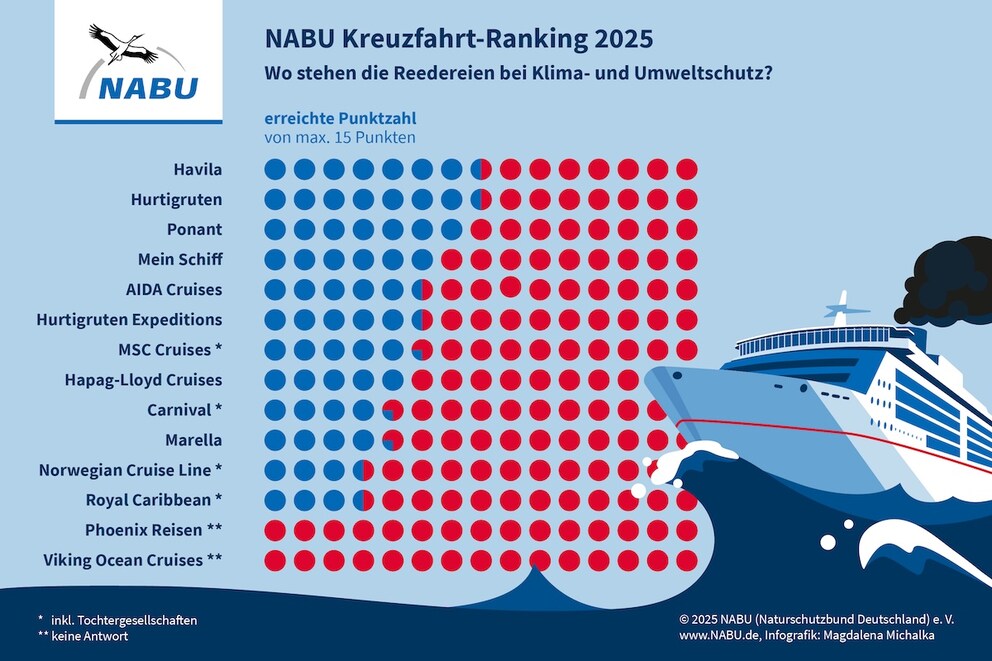
The NABU Cruise Ranking 2025
NABU surveyed 14 globally operating cruise providers relevant to German customers. They were evaluated on climate strategies, climate protection measures, the use of alternative fuels, and the utilization of shore power. The ranking is based on the cruise lines’ own information.
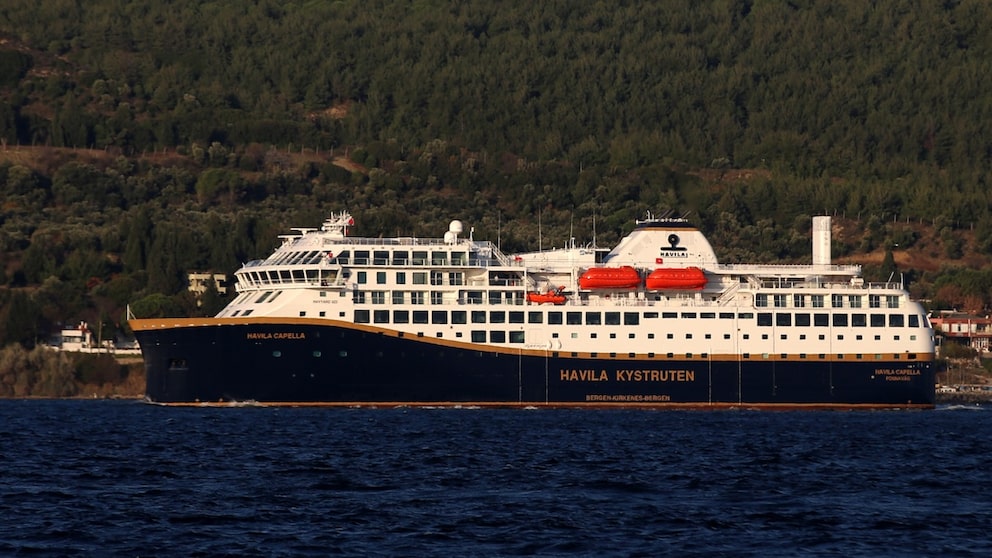
This year, the Norwegian cruise line Havila takes the top spot, impressing with modern technology and a fully shore-power-capable fleet. It surpasses the previous year’s leader, also Norwegian, Hurtigruten, known for its relatively ambitious environmental measures for years. The French cruise line Ponant secures third place, already experimenting with wind assistance. The German brand Mein Schiff ranks fourth, taking a step toward alternative fuels with the methanol-capable “Mein Schiff 7.” Just behind is AIDA Cruises, increasingly equipping its fleet with batteries. Hurtigruten Expeditions completes the top group, ranking sixth–also focusing on smaller, modernized ships and initial steps toward greater efficiency.
In the middle field are MSC Cruises (seventh place) and Hapag-Lloyd Cruises (eighth place). Carnival, with its numerous brands such as Costa, Cunard, or Carnival Cruise Line, again lands in one of the lower positions (ninth place), followed by Marella and Norwegian Cruise Line. Royal Caribbean also ranks low. As in previous years, Phoenix Reisen and Viking Ocean Cruises did not provide information.
Environmental and Climate Burden Remains High
According to NABU, Norwegian providers benefit from stricter national regulations and more modern, smaller ships. However, it remains true: A truly climate-friendly cruise does not yet exist.
NABU makes it clear: Even in 2025, no cruise will be offered that does not impact the environment and climate. Nevertheless, the leaders show progress. This includes energy-saving construction, reduced speed, and the use of batteries, fuel cells, and for the first time, wind assistance on individual ships. Additionally, all providers now have shore-power-capable ships, with some like Havila, Hurtigruten, Hurtigruten Expeditions, and Mein Schiff having fully equipped fleets. However, it remains unclear how often the cruise lines actually use this technology.
Also interesting: The world’s longest climate-neutral cruise starts in November
World’s Longest Climate-Neutral Cruise Sets Sail in November

These New Cruise Ships Will Set Sail in 2026
Choice of Fuel as the Main Problem
The fuel issue remains particularly critical. Only four of the cruise lines examined completely avoid using heavy fuel oil. Most continue to rely on the toxic, cheap fuel–often combined with exhaust gas scrubbers, whose residues pollute the seas. LNG, often touted as a “transitional solution,” proves to be a dead end according to NABU, as large amounts of methane escape during operation. Biofuels with palm oil content are also considered harmful to the climate.
Instead, NABU calls for investments in renewable fuels of non-biological origin, known as eFuels like methanol or ammonia. Here, TUI Cruises stands out slightly with the methanol-capable “Mein Schiff 7,” but overall, the industry remains unambitious in new constructions.
Conclusion: Much to Do for the Industry
The ranking shows significant differences between providers. While some companies lead with targeted measures, environmental and climate protection seem to have little priority for others. The main issue remains the almost universal use of fossil fuels, which continues to exacerbate the climate crisis and biodiversity loss.
Thus, even in 2025, the most sustainable cruise is the one that doesn’t take place. Although emissions per passenger tend to decrease slightly, this cannot offset the increase in passenger numbers. Without a rapid shift to climate-neutral eFuels, the industry will hardly achieve its net-zero target by 2050.